
MVP Development Services
Fast and focused MVP development built to scale. Leverage nearly 10 years of expertise to validate your core idea, skip bloated development cycles, and get to market faster with our startup-ready approach.





Trusted by industry-leading brands


A proven track record of delivering scalable, high-impact digital solutions across diverse business needs.

Nearly a decade of refining expertise, engineering precision, and evolving with modern digital technologies.

Deep cross-domain experience delivering tailored software solutions across startups, enterprises, and emerging markets.

Long-term partnerships built on trust, consistent performance, and solutions that continuously deliver value.

MVP Development Services We Deliver
Our expertise spans a wide spectrum of services for building a minimum viable product. From concept validation to quality assurance, we ensure end-to-end custom MVP development.
Concept Validation
We validate your idea through rigorous market research to analyze the potential real-world demand and minimize project risks.
Learn MoreFeature Prioritization
Our MVP developers evaluate your idea and assess the right suite of high-impact features for your minimum viable product.
Learn MoreClickable Prototypes
We map the core user journey, design high-fidelity user interface screens, and link interactive triggers to test usability and gather feedback before code.
Learn MoreCustom MVP Development
Our MVP application development team works closely with you to understand your vision and align methodology to ensure need-aligned product development.
Learn MoreAPI Integration
We accelerate your MVP launch by integrating third-party APIs to save you months of coding and reduce development costs.
Learn MoreQuality Assurance
As an experienced MVP development company, we rigorously test your product to deliver a secure, reliable, and bug-free solution to users.
Learn MoreInvest in Smarter MVP Development
Validate your core idea, skip bloated dev cycles, and get to market faster
Start Your Build
MVP Development Tailored to Every Business Stage
Different businesses have different reasons for building minimum viable products. Our development approach adapts to where you are today and where you want the product to go next.

Startups
Move from idea to market with our experience in MVP development for startups. Our team helps startup founders define the core idea, validate market fit, prioritize features, build the first release, and establish a technical foundation for future growth.

SMEs
We help teams test new digital products, services, or revenue opportunities. Our SME-aligned MVP application development experts validate new concepts while keeping the product aligned with existing business operations and requirements.

Enterprises
Our team validates new products, internal platforms, AI integration initiatives, and more through MVP development. We work with enterprise stakeholders to balance innovation, security, governance, and scalability from the start.
MVPs We Develop
Our minimum viable product development expertise covers different product formats and business models. We build MVPs across platforms, technologies, and business models.
Web App MVP
Launch browser-based products with the functionality required to test your core business products. Our MVP website development capabilities cover all the precise product development requirements.
Mobile App MVP
We develop MVP apps for iOS, Android, or cross-platform. Our expert mobile app team includes features aligned to your specific needs and keeps the architecture aligned for future functionality.
AI-Powered MVP
Invest in AI-first MVP development that precisely caters to specific needs. Our team has experience across AI models, Generative AI, automation, NLP integration, and other intelligence capabilities.
SaaS MVP
Build your need-aligned SaaS minimum viable product. Our SaaS MVP development services help businesses validate the core SaaS proposition before expanding into a broader product ecosystem.
Marketplace MVP
Architect MVPs around the core interaction between the buyer, seller, administrators, and other participants. With hands-on experience, we build secure multi-vendor platforms with the required features.
Enterprise MVP
Build a requirement-ready minimum viable product for your enterprise. We infuse our industry-aligned expertise to help enterprises validate new product ideas without committing to full-scale development upfront.
EitBiz’s Excellence in Industry-Wide MVP Development
Our MVP application development team has worked across different industry requirements and delivered high-fidelity, need-focused products. Our team adapts the development approach to workflows, integrations, and user requirements specific to different sectors.

Healthcare
- Digital health platforms
- Patient applications
- Healthcare workflows
- Connected systems

InsurTech
- Insurance platforms
- Customer portals
- Claims workflows
- Policy applications

EdTech
- Learning platforms
- Student applications
- Assessment systems
- Education marketplaces

Retail & eCommerce
- Commerce platforms
- Shopping applications
- Digital retail experience
- Customer portals

Manufacturing
- Operational applications
- Workflow Platforms
- Fleet dashboard
- Connected systems

Real Estate
- Property listing apps
- Customer portals
- Property management solutions
- Transaction workflows

Logistics & Supply Chain
- Tracking applications
- Logistic platforms
- Workflow automation
- Operational dashboards
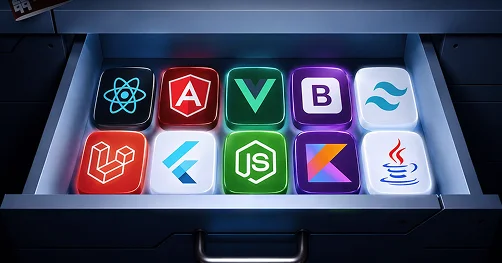
Tech Stack Powering Our Minimum Viable Product Development
As an experienced MVP development company, we hand-pick technologies specific to the requirements of every project type. Our team chooses technology around the product rather than forcing any MVP into the same stack.
Front-End


Cloud & Infrastructure


Databases


Design


Front-End
Cloud & Infrastructure
Databases
Design
Why Do Businesses Trust EitBiz for MVP Development?
We have delivered real results over the years in minimum viable product development. Our experts have a practical understanding of what should actually go into a minimum viable product to attract early adopters and secure your next round of funding.
Quick POC & MVP Execution
We keep the initial scope focused so your product can move from concept toward validation without unnecessary development cycles.
Feasibility-First Solution
Our team proficiently evaluates the technical feasibility, product requirements, and potential constraints before they become expensive development mistakes.
User-Centric Development
We design minimum viable products around actual user journeys, behavior, and products to ensure the development remains connected to user preferences.
Applied AI Expertise
Our experts are proficient in integrating virtual assistants, chatbots, NLP capabilities, and more into MVP solutions to identify practical opportunities for AI adoption.
High-Fidelity UI/UX Strategy
We create intuitive product interfaces that help users understand and experience your value proposition from the first interaction.
Enterprise-Grade Security
As a top MVP development company, we build products with data protection, access control, and future compliance requirements in mind.
Build Investor-Ready Minimum Viable Products
Move from concept to a functional, high-fidelity product designed to capture real user data.
Start Building Now!
Our Strategic MVP Development Process
We follow a systematic process for startup MVP development to enterprise product building. Our process is structured around the decisions that determine whether an MVP is worth building and what determines its worth.
Discuss Your Project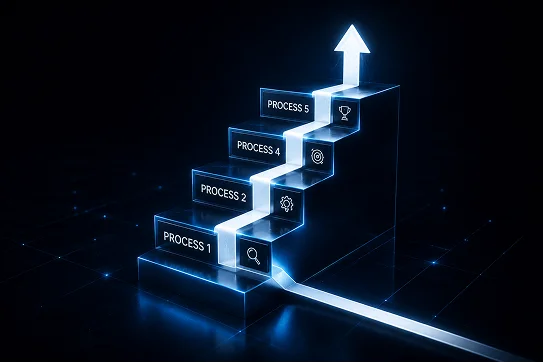
Initial Discovery
Our MVP experts collaborate with you to understand even the minute details, business model, competitive environment, and objectives.
MVP Planning
Based on that, we prepare a foolproof build-up plan that defines the MVP scope, prioritizes features, and creates the initial product roadmap.
Design Validation
Next, we create wireframes and high-fidelity mockups to validate the design of your minimum viable product, make changes, and ensure it is need-aligned.
Tech Stack Selection
Our experts select the most prominent and lightweight technology or framework for building a startup-aligned minimum viable product.
Agile Development
As an MVP development company, we proceed further with an iterative process, keeping every feature and function aligned to your specific needs.
QA & Launch
Our MVP application development team rigorously tests the product across different standards to ensure a bug-free and launch-ready solution.
Market Validation
Once your MVP reaches users, we help interpret feedback, analytics, and product behavior to determine the next development priorities.
Engagement Models We Offer
As an experienced MVP development company, we offer different hiring models suitable to meet different project requirements. Find the model that fits precisely to your needs.
Fixed Price
Best suited for MVPs with clearly defined requirements and a delivery cycle.
Get Started- Defined project scope
- Predictable budget
- Defined timeline
Dedicated Team
Build a dedicated product team that works exclusively on your project.
Build Dedicated Team- Complete control
- Better collaboration
- Continuous development
Staff Augmentation
Quickly hire MVP app development talent temporarily.
Hire MVP Experts- Access specialized talent
- Easy scaling
- Maintain control
Time & Material
A flexible hiring model suitable for projects with evolving MVP development requirements.
Hire on T&M- Flexible scope
- Add or reprioritize features
- Pay-as-you-go
Your Go-to Guide for MVP Development
What are the benefits of SaaS MVP Development?
SaaS MVP
development gives businesses a practical way to test a software
product before investing in a complete platform build-up.
Instead of developing every planned feature upfront, you launch a focused
version that delivers the product’s core value and allows you to learn from
real users. The key benefits of SaaS MVP development include:
• Validate the product idea: Test whether your SaaS solves
a genuine customer problem or improves modern tech accessibility before
committing to full-scale development.
• Launch faster: A focused feature set reduces development
effort and helps you reach early users sooner.
• Control initial investment: Building only essential
functionality can reduce the upfront MVP development cost.
• Collect real user feedback: Early users provide insights
that assumptions and internal discussions cannot.
• Prioritize future features: Usage data and feedback help
determine which features deserve development next.
• Test the business model: An MVP can help you evaluate
pricing, subscriptions, user acquisition, and retention.
• Reduce product risk: Early validation can reveal
usability, technical, or market issues before they become expensive to
fix.
• Create a scalable foundation: A properly planned SaaS MVP
can evolve into a larger product as demand becomes clearer.
Your objective should be to build the right product to validate the
opportunity and make better decisions about what comes next.
How much does it cost to build a SaaS MVP?
The cost of building a SaaS-focused minimum viable product typically ranges from $6,000 to $300,000 or more, depending on the product scope, integrations, number of workflows, user flows, UI/UX complexity, and technical requirements.
| SaaS MVP Type | Typical Cost Range | Project Scope |
|---|---|---|
| Lean MVP | $6,000 - $15,000 | Core workflow, basic authentication, user dashboard |
| Standard MVP | $15,000 - $27,000 | Multiple workflows, user flows, payments, admin panel |
| Advanced MVP | $27,000 - $85,000 | Multi-tenancy, analytics, integrations, complex workflows |
| Enterprise-Ready MVPs | $85,000 - $300,000+ | Advanced security, SSO, compliance, complex architecture |
*Note: This is just an approximation of the MVP development cost. It might differ in real-world settings.
Pricing Variance by Region & Team Type
The true cost of your MVP depends entirely on who builds it. The pricing may also differ by region and team type:
| Development Path | Lean MVP | Standard / Advanced MVP | Enterprise-Ready MVP |
|---|---|---|---|
| Offshore Agency / Dedicated Squad | $6,000 – $15,000 | $18,000 – $55,000 | $60,000 – $120,000 |
| Onshore US / Western Europe Agency | $30,000 – $60,000 | $65,000 – $150,000+ | $200,000 – $500,000+ |
| Freelancer Marketplaces | $3,000 – $8,000 | $8,000 – $20,000 | Not recommended for this tier |
| No-Code Tools | $2,000 – $6,000 | $6,000 – $15,000 | Rarely feasible for enterprise tech |
Key Factors that Drive SaaS MVP Costs Higher
If you are planning your budget, keep in mind that the scopes
defined in your image's table are accurate, but the following "hidden
components" will push you toward the higher end of the estimates:
• Complex Data & Architecture: Adding real-time
collaboration pipelines, complex state management, or multi-tenant databases
doubles backend effort.
• AI/ML Implementations: Integrating custom LLM wrappers,
vector databases, RAG, or training foundational models adds substantial
implementation costs.
• Payment Complexity: A simple single-tier checkout (via
Stripe or Razorpay) is inexpensive. However, metered, usage-based, or
multi-currency subscription billing engines require deep architecture
work.
• Compliance Overheads: If your app handles health data
(HIPAA) or financial transactions, preparing for SOC 2 compliance or
regional data acts (like the EU's GDPR) can instantly add $10,000+ to
structural costs.
The ideal way to have a clear understanding of the cost is to consult with
an MVP development company.
What is the difference between MVP vs Prototype vs PoC?
Although MVP, Prototype, and PoC are often used interchangeably, they serve different purposes during product development.
| Aspect | Prototype | PoC (Proof of Concept) | MVP (Minimum Viable Product) |
|---|---|---|---|
| Primary purpose | Test the experience | Test technical feasibility | Test the product in the market |
| Users | Stakeholders/design reviewers | Technical teams | Real users/customers |
| Functionality | Often limited or simulated | Focused on technical capability | Working core functionality |
| Market-ready? | No | No | Yes, for initial validation |
| Main question | “How could it work?” | “Can we build it?” | “Will users use it?” |
What are the 5 stages of SaaS MVP Development?
A structured SaaS MVP development process helps teams avoid
building features before understanding what the product actually needs to
prove.
• Product Discovery: The first stage is discovery. This
helps you understand the target users, the problem, the business model, the
competitors, and the product's objectives. As a result, it will establish
what the SaaS MVP needs to achieve.
• Feature Prioritization: After product discovery, the next
step is to decide which features are core, suitable, and align with the
specific needs of an MVP development. Also, this stage separates core
features from future enhancements based on user value and validation
requirements.
• UX/UI Design: Once features are prioritized and
separated, the next step is to design the UI/UX by defining the user journey
across the design. MVP development team curates wireframes and high-fidelity
interfaces around the prioritized functionality. Afterwards, prototypes can
be reviewed and finalized before engineering begins.
• MVP Development: An MVP application
development company will help you select the right technology stack
and architecture used for building the functional product. Development
typically happens in iterative cycles, allowing stakeholders to review
progress and refine requirements.
• Launch & Validation: Once the product is developed
and tested, real users begin interacting with it. Their feedback, behavior,
analytics, and business outcomes provide evidence for the next product
decisions.
These stages are not necessarily isolated. Discovery, design, development,
and validation often overlap, especially when the product is being built in
agile iterations.
The goal is to move from assumption to evidence while keeping the initial
product focused.
Why is Feature Prioritization Crucial in MVP Development?
Feature prioritization is one of the most important decisions in
minimum viable product development because an MVP is designed to validate a
product, not reproduce its entire future roadmap.
Without prioritization, teams can easily add features that increase
development time, cost, and complexity without contributing to the initial
validation objective.
Effective prioritization helps you:
• Define the MVP scope: Establish exactly what needs to be
included in the first release.
• Focus on core user needs: Prioritize functionality that
directly solves the problem your product is addressing.
• Control development effort: Avoid spending resources on
features that can wait.
• Improve time to market: A focused scope allows the team
to concentrate on essential functionality.
• Reduce unnecessary costs: Fewer non-essential features
can help control the initial investment.
• Create clearer development priorities: Designers,
developers, and QA teams have a shared understanding of what matters
most.
• Learn more effectively: When the MVP has a clear purpose,
user feedback becomes easier to interpret.
A useful way to approach prioritization is to evaluate each feature against
user value, business impact, technical feasibility, and its importance to
the MVP's core hypothesis.
Your Go-to Guide for MVP Development
SaaS MVP
development gives businesses a practical way to test a software
product before investing in a complete platform build-up.
Instead of developing every planned feature upfront, you launch a focused
version that delivers the product’s core value and allows you to learn from
real users. The key benefits of SaaS MVP development include:
• Validate the product idea: Test whether your SaaS solves
a genuine customer problem or improves modern tech accessibility before
committing to full-scale development.
• Launch faster: A focused feature set reduces development
effort and helps you reach early users sooner.
• Control initial investment: Building only essential
functionality can reduce the upfront MVP development cost.
• Collect real user feedback: Early users provide insights
that assumptions and internal discussions cannot.
• Prioritize future features: Usage data and feedback help
determine which features deserve development next.
• Test the business model: An MVP can help you evaluate
pricing, subscriptions, user acquisition, and retention.
• Reduce product risk: Early validation can reveal
usability, technical, or market issues before they become expensive to
fix.
• Create a scalable foundation: A properly planned SaaS MVP
can evolve into a larger product as demand becomes clearer.
Your objective should be to build the right product to validate the
opportunity and make better decisions about what comes next.
The cost of building a SaaS-focused minimum viable product typically ranges from $6,000 to $300,000 or more, depending on the product scope, integrations, number of workflows, user flows, UI/UX complexity, and technical requirements.
| SaaS MVP Type | Typical Cost Range | Project Scope |
|---|---|---|
| Lean MVP | $6,000 - $15,000 | Core workflow, basic authentication, user dashboard |
| Standard MVP | $15,000 - $27,000 | Multiple workflows, user flows, payments, admin panel |
| Advanced MVP | $27,000 - $85,000 | Multi-tenancy, analytics, integrations, complex workflows |
| Enterprise-Ready MVPs | $85,000 - $300,000+ | Advanced security, SSO, compliance, complex architecture |
*Note: This is just an approximation of the MVP development cost. It might differ in real-world settings.
Pricing Variance by Region & Team Type
The true cost of your MVP depends entirely on who builds it. The pricing may also differ by region and team type:
| Development Path | Lean MVP | Standard / Advanced MVP | Enterprise-Ready MVP |
|---|---|---|---|
| Offshore Agency / Dedicated Squad | $6,000 – $15,000 | $18,000 – $55,000 | $60,000 – $120,000 |
| Onshore US / Western Europe Agency | $30,000 – $60,000 | $65,000 – $150,000+ | $200,000 – $500,000+ |
| Freelancer Marketplaces | $3,000 – $8,000 | $8,000 – $20,000 | Not recommended for this tier |
| No-Code Tools | $2,000 – $6,000 | $6,000 – $15,000 | Rarely feasible for enterprise tech |
Key Factors that Drive SaaS MVP Costs Higher
If you are planning your budget, keep in mind that the scopes
defined in your image's table are accurate, but the following "hidden
components" will push you toward the higher end of the estimates:
• Complex Data & Architecture: Adding real-time
collaboration pipelines, complex state management, or multi-tenant databases
doubles backend effort.
• AI/ML Implementations: Integrating custom LLM wrappers,
vector databases, RAG, or training foundational models adds substantial
implementation costs.
• Payment Complexity: A simple single-tier checkout (via
Stripe or Razorpay) is inexpensive. However, metered, usage-based, or
multi-currency subscription billing engines require deep architecture
work.
• Compliance Overheads: If your app handles health data
(HIPAA) or financial transactions, preparing for SOC 2 compliance or
regional data acts (like the EU's GDPR) can instantly add $10,000+ to
structural costs.
The ideal way to have a clear understanding of the cost is to consult with
an MVP development company.
Although MVP, Prototype, and PoC are often used interchangeably, they serve different purposes during product development.
| Aspect | Prototype | PoC (Proof of Concept) | MVP (Minimum Viable Product) |
|---|---|---|---|
| Primary purpose | Test the experience | Test technical feasibility | Test the product in the market |
| Users | Stakeholders/design reviewers | Technical teams | Real users/customers |
| Functionality | Often limited or simulated | Focused on technical capability | Working core functionality |
| Market-ready? | No | No | Yes, for initial validation |
| Main question | “How could it work?” | “Can we build it?” | “Will users use it?” |
A structured SaaS MVP development process helps teams avoid
building features before understanding what the product actually needs to
prove.
• Product Discovery: The first stage is discovery. This
helps you understand the target users, the problem, the business model, the
competitors, and the product's objectives. As a result, it will establish
what the SaaS MVP needs to achieve.
• Feature Prioritization: After product discovery, the next
step is to decide which features are core, suitable, and align with the
specific needs of an MVP development. Also, this stage separates core
features from future enhancements based on user value and validation
requirements.
• UX/UI Design: Once features are prioritized and
separated, the next step is to design the UI/UX by defining the user journey
across the design. MVP development team curates wireframes and high-fidelity
interfaces around the prioritized functionality. Afterwards, prototypes can
be reviewed and finalized before engineering begins.
• MVP Development: An MVP application
development company will help you select the right technology stack
and architecture used for building the functional product. Development
typically happens in iterative cycles, allowing stakeholders to review
progress and refine requirements.
• Launch & Validation: Once the product is developed
and tested, real users begin interacting with it. Their feedback, behavior,
analytics, and business outcomes provide evidence for the next product
decisions.
These stages are not necessarily isolated. Discovery, design, development,
and validation often overlap, especially when the product is being built in
agile iterations.
The goal is to move from assumption to evidence while keeping the initial
product focused.
Feature prioritization is one of the most important decisions in
minimum viable product development because an MVP is designed to validate a
product, not reproduce its entire future roadmap.
Without prioritization, teams can easily add features that increase
development time, cost, and complexity without contributing to the initial
validation objective.
Effective prioritization helps you:
• Define the MVP scope: Establish exactly what needs to be
included in the first release.
• Focus on core user needs: Prioritize functionality that
directly solves the problem your product is addressing.
• Control development effort: Avoid spending resources on
features that can wait.
• Improve time to market: A focused scope allows the team
to concentrate on essential functionality.
• Reduce unnecessary costs: Fewer non-essential features
can help control the initial investment.
• Create clearer development priorities: Designers,
developers, and QA teams have a shared understanding of what matters
most.
• Learn more effectively: When the MVP has a clear purpose,
user feedback becomes easier to interpret.
A useful way to approach prioritization is to evaluate each feature against
user value, business impact, technical feasibility, and its importance to
the MVP's core hypothesis.
What Our Clients Say


We’re here to help
Reach out to us with any questions or support needs.
Answer to questions you may have
Do I own the code and IP after the MVP is built?
Yes. Once agreed payments are completed, you own the delivered source code and IP, subject to the terms outlined in our contract.
Will the MVP be built with our long-term product vision in mind, or is it disposable code?
We build MVPs for validation without sacrificing scalability. Our architecture considers your long-term vision, making future improvements, integrations, and scaling easier.
What if we need to pivot or change direction mid-development?
We are open to that. We can adjust scope, priorities, and features through an agreed-upon change management process while keeping timelines and budget transparent.
How involved do we need to be during development?
During MVP development, your involvement will be focused and manageable. We’ll need timely feedback, decisions, and product insights while our team handles technical execution.
Can you build the MVP if we're a non-technical founder with no in-house engineering team?
Absolutely. We regularly work with non-tech founders and provide the technical expertise required to build a functional minimum viable product.
Do you provide a dedicated project manager or point of contact throughout development?
Yes. You will have a dedicated point of contact who coordinates communication, tracks progress, manages milestones, and keeps you informed throughout the process.
What security and data protection standards do you follow during MVP development?
We follow secure development practices, access controls, data protection measures, and industry-standard security principles. Specific requirements can be incorporated based on your product.
Do you sign a contract with fixed milestones and deliverables?
Yes. We establish clear contracts that cover scope, milestones, deliverables, and commercial terms. This gives both sides a transparent framework for MVP development.
Can you take over an MVP another agency started or left incomplete?
Yes. We can assess the existing codebase, documentation, architecture, and project status, then recommend a practical takeover, stabilization, or redevelopment plan.
Build Your SaaS Product Today
Share a brief about your SaaS app development needs, and our experts will help you map out a custom product roadmap.