Key Takeaways
- Healthcare app development in 2026 is driven by AI, mobile technology, and data analytics, making care more connected, efficient, and patient-focused.
- The rise of telehealth, fitness, chronic care, and hospital management apps shows how digital solutions are reshaping every layer of healthcare delivery.
- AI in healthcare apps enables predictive analytics, smarter diagnostics, chatbots, and personalized treatment plans, improving both speed and accuracy of care.
- Healthcare apps significantly improve accessibility, patient engagement, operational efficiency, and cost reduction, benefiting both patients and providers.
- Emerging trends like wearables integration, blockchain security, voice technology, and remote patient monitoring are shaping the future of healthcare apps.
- Success in healthcare app development depends on focusing on user needs, compliance, scalability, and long-term value creation.
Healthcare is no longer confined to hospitals, clinics, or waiting rooms. It now lives in your pocket, on your smartphone. Whether it’s booking a doctor’s appointment, tracking your heart rate, or consulting a specialist remotely, mobile technology has fundamentally changed how care is delivered and consumed.
Let’s ground this with a few important realities:
- The global digital health market is projected to exceed $964.04 billion by 2030 (Grand View Research).
- Over 70% of patients prefer digital interactions for basic healthcare services.
- Telehealth usage is still 38x higher than pre-pandemic levels (McKinsey).
- Nearly 60% of healthcare providers are actively investing in mobile-first digital platforms.
These numbers are not just trends; they signal a structural transformation in healthcare delivery.
Behind this transformation lies one major force: mobile apps.
From remote diagnostics to AI-powered decision support, mobile applications are enabling faster, more accessible, and data-driven healthcare. And in 2026, this evolution is accelerating thanks to advancements in artificial intelligence, cloud computing, IoT devices, and real-time data analytics.
This blog will explain how healthcare app development is transforming the industry in 2026, covering its benefits, key use cases, latest trends, development cost, and the role of AI in shaping the future of digital healthcare.
Let’s dive in.
Understanding the Rise of Healthcare Apps
The surge in mobile apps in the healthcare industry isn’t accidental; it’s the result of several fundamental shifts that are reshaping the way care is delivered and consumed. From patient expectations to provider efficiency and data-driven decision-making, the landscape is evolving rapidly. Let’s break down the key drivers behind this transformation.
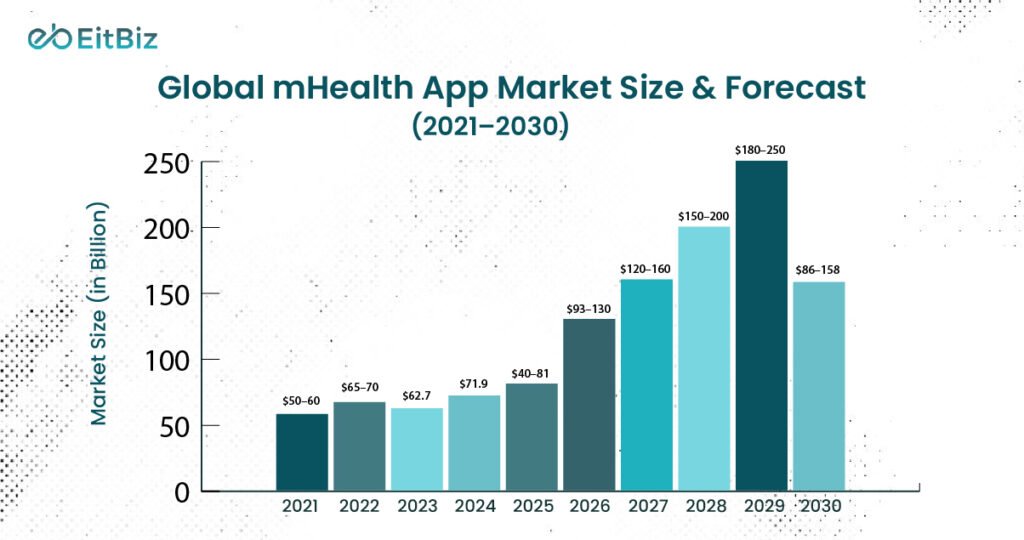
1. Patient Expectations Have Changed
Today’s patients are no longer satisfied with waiting in long queues or booking appointments weeks in advance. They expect healthcare to be:
- On-demand: Quick consultations, instant prescription refills, and real-time access to medical advice.
- Personalized: Tailored treatment plans, reminders, and health insights that reflect individual needs.
- Accessible from anywhere: Mobile access means patients can consult doctors, track vitals, and manage medications from home, work, or even on the go.
This shift in expectation is strongly influenced by digital-first industries like e-commerce and fintech. Just as users expect Amazon or PayPal to be fast, seamless, and user-friendly, they now anticipate the same level of convenience from their healthcare experiences. Healthcare mobile apps trends reflect this demand, with patient-centric designs and intuitive interfaces becoming standard rather than optional.
2. Provider Efficiency Needs
Healthcare providers face mounting operational pressures. Hospitals and clinics struggle with:
- Staff shortages: Overworked personnel are common, making it harder to maintain quality care.
- Administrative overload: Manual paperwork and complex workflows slow down operations.
- Rising operational costs: Managing resources efficiently while delivering quality care is a constant challenge.
Here’s where apps step in. By automating appointment scheduling, patient record management, and billing, healthcare apps improve workflow efficiency and reduce unnecessary strain on staff. For example, telemedicine platforms allow providers to see more patients virtually, cutting down waiting times and optimizing staff utilization. These developments are key healthcare industry trends, highlighting a shift toward digital-first operations.
3. Data-Driven Care
Modern healthcare is increasingly powered by data. Decisions based on accurate, real-time information can dramatically improve patient outcomes. Healthcare apps facilitate:
- Continuous monitoring: Wearables and mobile apps track vital signs, activity, and medication adherence in real-time.
- Real-time reporting: Patients and providers gain instant access to health metrics, enabling timely interventions.
- Predictive analytics: AI and machine learning can predict potential health risks before they escalate, allowing preventive care.
This move toward data-driven care is not just a convenience; it’s a strategic advantage. Organizations leveraging these insights are better positioned to reduce hospital readmissions, personalize treatments, and improve overall healthcare delivery. Together, these elements shape the modern healthcare technology trends and solidify the central role of mobile apps in the sector.
What are the Latest Healthcare App Development Trends in 2026?
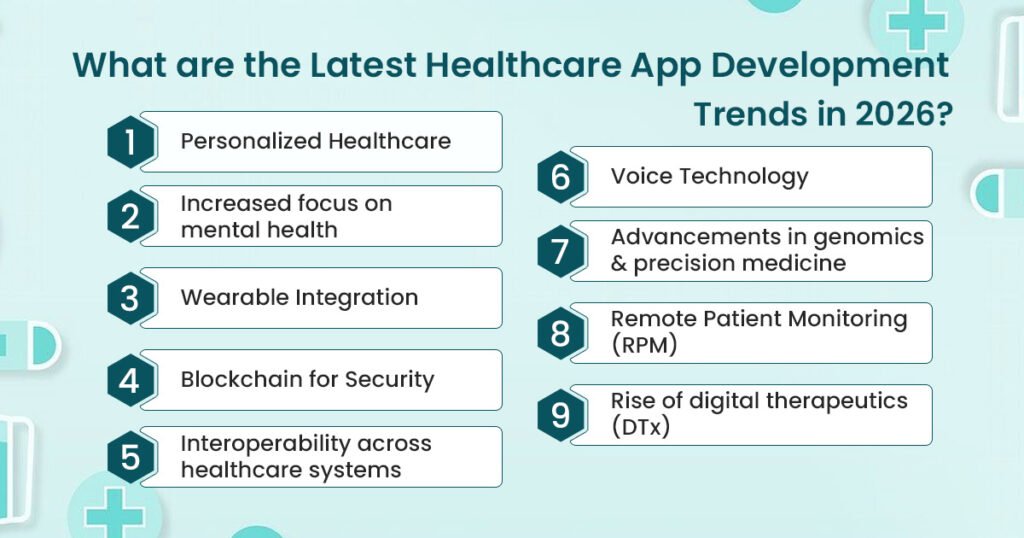
Staying ahead in healthcare app development requires understanding the latest trends that shape user expectations, provider needs, and regulatory standards. In 2026, several innovations are defining the future of mobile health technology.
Personalized Healthcare
Personalization is at the forefront of healthcare app trends. Modern apps provide custom treatment plans and AI-driven recommendations, ensuring that care is tailored to individual patient needs. Personalized healthcare not only improves patient outcomes but also encourages engagement and adherence, making apps an integral part of preventive and ongoing care.
Increased focus on mental health
Mental health is now a core part of healthcare delivery. Digital platforms are offering therapy sessions, AI-based emotional support, meditation tools, and stress management programs. This trend reflects growing awareness of mental wellness as an essential part of overall health.
Wearable Integration
Integration with wearable devices allows apps to offer real-time health monitoring and continuous data collection. From heart rate tracking to sleep analysis, wearables provide a constant stream of actionable insights, helping both patients and providers make informed decisions. This trend reflects the growing emphasis on proactive, data-driven care in healthcare technology trends.
Blockchain for Security
With sensitive patient data, security is paramount. Blockchain technology ensures data integrity and secure patient records, reducing risks of breaches or tampering. Its adoption in healthcare apps strengthens trust between providers and patients while aligning with modern digital health solutions.
Interoperability across healthcare systems
One of the biggest challenges in healthcare has been fragmented data systems. Interoperability aims to solve this by enabling seamless data exchange between hospitals, labs, pharmacies, insurance providers, and healthcare apps. This ensures that patient information is always up-to-date and accessible, leading to better coordination, fewer medical errors, and improved continuity of care.
Voice Technology
Voice-enabled assistants are enhancing accessibility, particularly for elderly users or those with limited mobility. Hands-free interaction allows patients to check records, schedule appointments, or receive reminders without navigating complex interfaces, reflecting the trend toward inclusive, user-friendly design.
Advancements in genomics and precision medicine
Genomic research and DNA-based insights are enabling a new level of personalized healthcare. Doctors can now design treatment plans based on a patient’s genetic makeup, lifestyle, and risk factors. This helps in early disease detection, more effective treatments, and reduced trial-and-error in medication selection, especially in complex diseases like cancer.
Remote Patient Monitoring (RPM)
Remote patient monitoring is a cornerstone of modern healthcare apps. By enabling continuous tracking of vital signs and reducing unnecessary hospital visits, RPM improves chronic disease management, early intervention, and patient convenience. This is a key element of emerging healthcare mobile apps trends and broader app development trends.
Rise of digital therapeutics (DTx)
Digital therapeutics are software-based medical interventions designed to prevent, manage, or treat medical conditions. These are especially useful in areas like mental health, diabetes management, and addiction recovery. Unlike general wellness apps, DTx solutions are often clinically validated and prescribed by healthcare professionals.
What are the Healthcare Tech Trends to Embrace in 2026?
Alongside these industry shifts, technology is playing a major role in reshaping how healthcare is delivered. These healthcare technology trends are enabling faster, smarter, and more connected healthcare systems that improve both patient outcomes and operational efficiency.
• Artificial Intelligence (AI) in healthcare
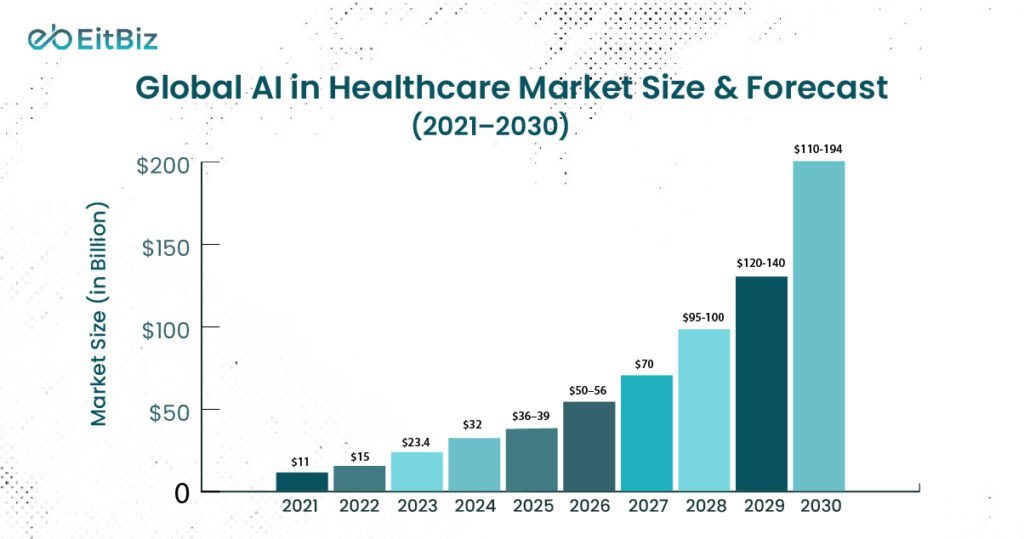
AI is transforming healthcare by improving diagnostics, automating administrative tasks, and enabling predictive care. It is widely used in medical imaging, disease prediction, virtual assistants, and personalized treatment recommendations. AI helps doctors make faster and more accurate decisions while reducing human error.
• Internet of Medical Things (IoMT)
IoT connects medical devices, wearables, and sensors to healthcare systems, enabling real-time data collection and monitoring. Devices like smartwatches, ECG monitors, and glucose trackers continuously send patient data to healthcare providers, improving early detection and ongoing care management.
• Cloud-based healthcare systems
Cloud technology is becoming the backbone of modern healthcare infrastructure. It allows hospitals and clinics to securely store and access patient records from anywhere, ensuring better coordination between departments and improving scalability. Cloud systems also support faster data sharing and disaster recovery.
• Blockchain for data security
Blockchain is being used to enhance data security, transparency, and trust in healthcare systems. It ensures that patient records are tamper-proof, securely shared, and accessible only to authorized users. This is especially important in maintaining compliance with regulations like HIPAA and GDPR.
• Big data analytics in healthcare
Healthcare organizations are using big data to analyze large volumes of patient and clinical information. This helps identify disease patterns, improve treatment outcomes, optimize hospital operations, and support research and drug development. Data-driven insights are becoming central to modern healthcare decision-making.
• AR/VR in medical training and treatment
Augmented reality (AR) and virtual reality (VR) are being used in medical training, surgical simulations, and patient education. Surgeons can practice complex procedures in a risk-free virtual environment, while patients can better understand treatments through interactive visualizations. These technologies are also being explored for pain management and rehabilitation therapy.
What are the Key Healthcare App Categories in 2026?
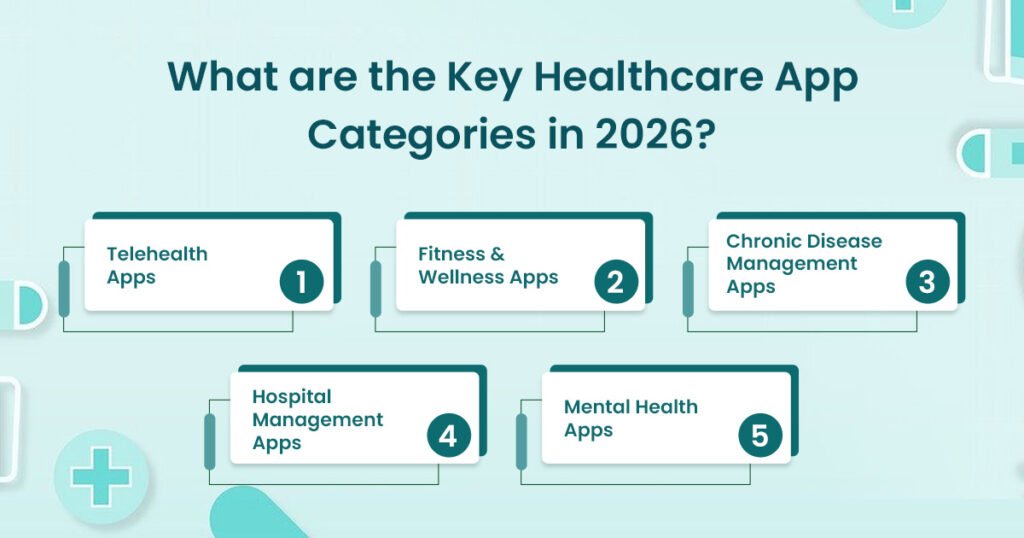
The healthcare app ecosystem in 2026 is diverse, and there’s no one-size-fits-all solution. Each category is designed to address specific patient needs, provider requirements, or operational challenges. Understanding these categories is essential for anyone planning healthcare app development or exploring digital health solutions.
2.1 Telehealth Apps
At the core of telehealth app development, these apps are transforming how patients access care. Telehealth apps offer:
- Video consultations: Patients can connect with doctors from home, reducing travel and wait times.
- E-prescriptions: Prescriptions can be issued and sent directly to pharmacies digitally.
- Remote diagnostics: Wearables and connected devices feed real-time health data to providers, enabling virtual monitoring of chronic conditions or acute illnesses.
Telehealth remains a cornerstone of healthcare mobile apps trends, reflecting a shift toward remote, patient-centric care.
2.2 Fitness & Wellness Apps
Fitness and wellness apps are a major driver in fitness app development, helping users maintain healthy lifestyles and prevent illness. Key features include:
- Activity tracking: Steps, workouts, and physical activity are monitored and analyzed.
- Nutrition planning: Users receive personalized meal plans and dietary recommendations.
- Sleep monitoring: Apps track sleep patterns to improve overall wellness.
2.3 Chronic Disease Management Apps
Managing long-term conditions has never been easier thanks to specialized apps. These are essential for:
- Diabetes tracking: Monitoring blood sugar levels and insulin usage.
- Cardiac monitoring: Real-time heart rate tracking and alerts for anomalies.
- Medication reminders: Ensuring adherence to prescribed treatments.
2.4 Hospital Management Apps
These apps focus on streamlining provider operations, a crucial aspect of healthcare technology trends. They include:
- Patient records: Digital storage and easy retrieval of medical histories.
- Appointment scheduling: Automated booking systems reduce administrative workload.
- Billing systems: Efficient management of payments, insurance claims, and reporting.
2.5 Mental Health Apps
Mental health is a rapidly growing focus area in 2026. Apps in this category provide:
- Therapy sessions: Virtual consultations with licensed therapists.
- Meditation and mindfulness tools: Stress reduction, sleep support, and emotional well-being.
- AI chat support: Immediate guidance for anxiety, depression, or crises.
What are the Benefits of Healthcare Mobile Apps?
Healthcare mobile apps are transforming how patients access care and how providers deliver it. Their advantages go beyond convenience, touching every aspect of healthcare.
Improved Accessibility
A key benefit of mobile apps in healthcare is accessibility. Patients in rural areas can consult specialists remotely, elderly or mobility-impaired users avoid unnecessary travel, and emergency access becomes faster. Apps bridge geographic gaps and align with healthcare mobile apps trends focused on patient-centered care.
Better Patient Engagement
Apps boost patient engagement by supporting regular health tracking, medication reminders, and proactive care. This encourages adherence and accountability, while features like notifications and personalized dashboards reflect evolving healthcare technology trends.
Operational Efficiency
Healthcare apps streamline workflows, reduce paperwork, and speed up patient processing. By automating administrative tasks, hospitals and clinics can focus more on care delivery, a key shift in healthcare industry trends.
Cost Reduction
Digital consultations and remote monitoring reduce hospital visits, readmission rates, and administrative overhead, making care more affordable. This trend highlights the growing importance of digital health solutions in cost-effective healthcare delivery.
Real-Time Data Monitoring
Continuous health tracking enables early detection of issues, better treatment adjustments, and faster responses to emergencies. This demonstrates the powerful impact of mobile technology in healthcare on personalized, proactive care.
Role of AI in Healthcare Apps
Artificial intelligence has become the backbone of modern healthcare apps, transforming the way care is delivered, monitored, and analyzed. The rise of AI in the healthcare industry is reshaping critical areas such as diagnostics, patient interaction, and clinical decision-making, making healthcare more precise, personalized, and proactive. AI integration allows apps to move beyond basic tracking and communication, turning them into intelligent platforms capable of predicting, analyzing, and assisting at scale.
Overview of AI Adoption
The adoption of AI in healthcare is no longer experimental—it’s mainstream. From improving diagnostic accuracy to enabling smarter patient engagement, AI-driven solutions are enhancing every layer of healthcare delivery. Modern apps leverage AI to interpret vast datasets, streamline clinical workflows, and even assist in decision-making for complex cases. This integration aligns with broader AI technology in healthcare trends, where automation and intelligence are essential for efficiency and better outcomes.
How is AI Used in Healthcare?
The question “how is AI used in healthcare” spans multiple practical applications:
Predictive Analytics
AI can analyze patient data to predict disease risks and hospital readmissions, enabling preventive care and reducing emergency interventions. Predictive analytics empowers providers to act before conditions worsen, a key benefit of AI in the healthcare industry.
Medical Imaging
AI significantly improves the accuracy of medical imaging, including X-rays, MRI scans, and CT scans. Machine learning algorithms can detect anomalies faster and with higher precision than traditional methods, supporting early diagnosis and more effective treatment plans.
Chatbots & Virtual Assistants
AI-powered chatbots are revolutionizing patient interaction. They can answer queries, perform symptom checks, schedule appointments, and guide users through care pathways, making healthcare more accessible and responsive.
Drug Discovery
AI accelerates drug development by shortening research timelines and optimizing clinical trials. Algorithms analyze massive datasets to identify potential drug candidates faster, reducing costs and bringing life-saving treatments to patients more quickly.
How to Build a Dedicated Healthcare App?
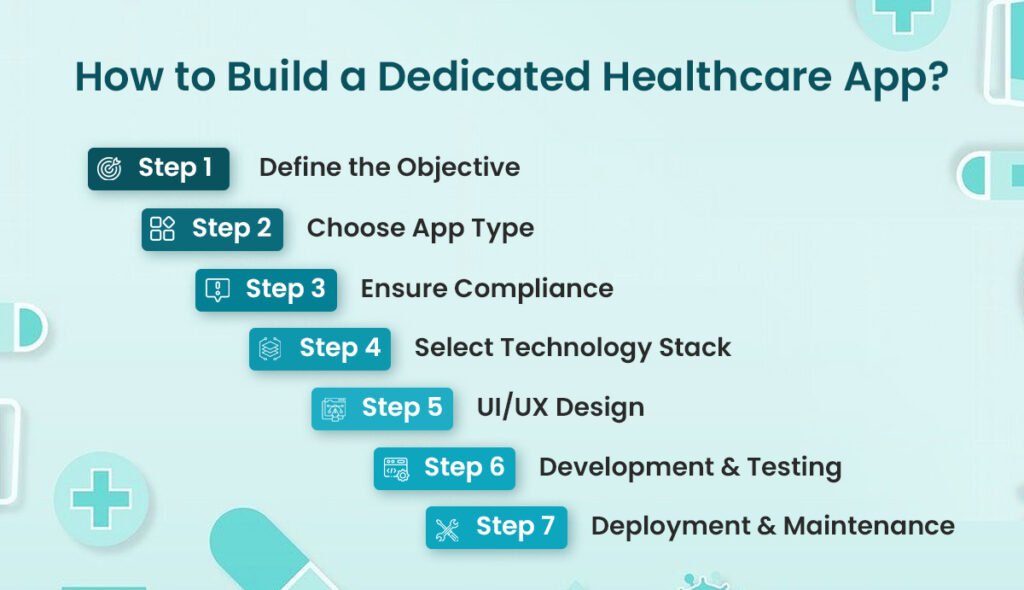
Building a healthcare app requires careful planning, clear objectives, and a structured approach. Following a step-by-step process ensures your app delivers value to patients, providers, and the healthcare ecosystem.
Step 1: Define the Objective
Every successful app starts with a clear goal. Identify your target audience, whether patients, healthcare providers, or administrators, and define the specific problem to solve. A well-defined objective ensures your app addresses real needs and aligns with broader healthcare app trends.
Step 2: Choose App Type
Next, decide the type of app you want to develop. Options include:
- Telehealth apps for remote consultations and virtual care
- Fitness apps focused on wellness, activity tracking, and preventive care
- Hospital management apps for streamlining operations, patient records, and billing
Selecting the right type ensures your development aligns with user expectations and mobile apps in the healthcare industry standards.
Step 3: Ensure Compliance
Healthcare apps handle sensitive patient data, so regulatory compliance is critical. Follow laws like HIPAA in the US or GDPR in Europe to secure data and maintain trust. Compliance is a fundamental part of healthcare technology trends, especially for apps involving AI or cloud-based services.
Step 4: Select Technology Stack
Choosing the right technology stack sets the foundation for performance and scalability. Common technologies in healthcare app development include:
- Cloud computing for secure storage and scalability
- AI frameworks for predictive analytics and decision support
- APIs to integrate with wearable devices, EHRs, and third-party systems
A strong tech stack ensures your app can evolve with future healthcare mobile app trends.
Step 5: UI/UX Design
User experience is critical in healthcare apps. Focus on simplicity and accessibility so patients of all ages can navigate easily. Clean interfaces, intuitive workflows, and clear instructions improve engagement and adherence, a key factor in the benefits of mobile apps in healthcare.
Step 6: Development & Testing
During development, prioritize security and scalability. Test thoroughly to eliminate bugs, ensure smooth performance, and validate that sensitive health data is protected. Rigorous testing aligns with best practices in digital health solutions and ensures compliance with industry standards.
Step 7: Deployment & Maintenance
Once the app is live, regular updates and maintenance are essential. Monitor performance, gather user feedback, fix issues, and roll out new features. Continuous improvement keeps your app relevant and aligns with ongoing app development trends.
Healthcare App Development Cost in 2026
Understanding the healthcare app development cost is a key step in planning any digital health solution. In 2026, costs vary widely depending on app complexity, features, compliance requirements, and the technology stack used. From simple wellness apps to advanced AI-powered platforms, every layer of functionality impacts the final budget.
8.1 Average Cost Breakdown
The cost of building a healthcare app depends primarily on its complexity and functionality. Below is a general estimate:
| App Type | Estimated Cost |
|---|---|
| Basic App | $5,000 – $20,000 |
| Mid-Level App | $25,000 – $40,000 |
| Advanced App | $40,000 – $50,000+ |
Basic apps typically include features like appointment booking or health tracking, while mid-level solutions may include telemedicine, integrations, and dashboards. Advanced applications often involve AI, real-time monitoring, and complex backend systems.
8.2 Factors Affecting Cost
Several factors directly influence the overall development cost:
a) Features
The more advanced the features, the higher the cost. AI capabilities, video consultations, chat systems, analytics dashboards, and real-time monitoring significantly increase development effort and investment.
b) Platform
Choosing between iOS, Android, or cross-platform development affects both time and cost. Cross-platform solutions may reduce cost, but native apps often provide better performance and user experience.
c) Development Team
The location, experience, and expertise of the development team play a major role. Teams in different regions have varying hourly rates, and specialized healthcare developers typically cost more due to domain expertise.
d) Compliance Requirements
Healthcare apps must follow strict regulations such as HIPAA or GDPR. Implementing strong security, encryption, and compliance-ready architecture adds to development complexity and cost.
8.3 Mobile App Development Cost
Overall, the mobile app development cost is not fixed; it depends on multiple variables such as project scope, timeline, and chosen technology stack. Faster delivery timelines or highly scalable architectures usually require higher budgets. Similarly, integrating advanced technologies like AI, IoT, or blockchain increases both development effort and cost.
What are the Challenges in Healthcare App Development?
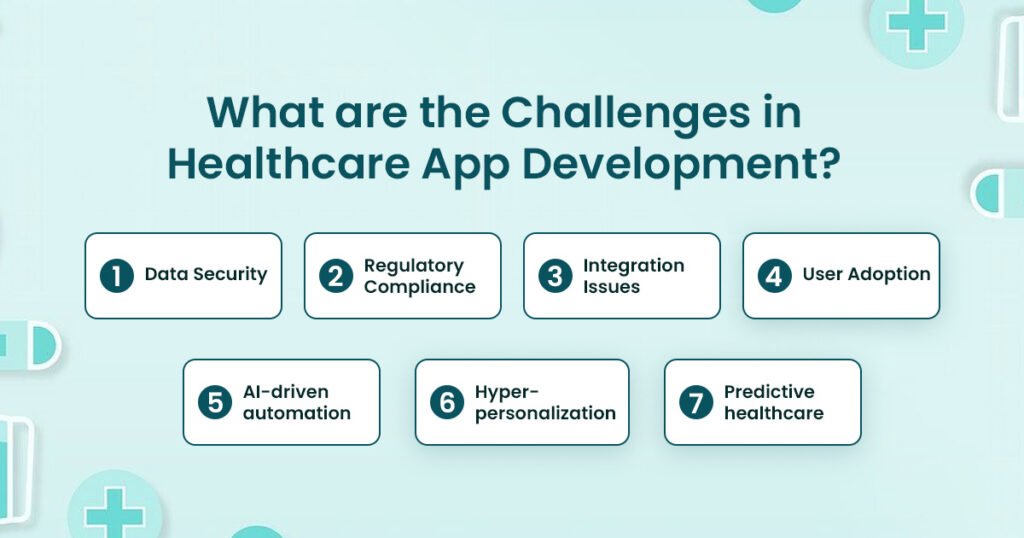
While healthcare apps offer immense value, building them comes with several challenges that must be addressed early in the development process.
Data Security
Healthcare applications deal with highly sensitive patient information. Ensuring strong encryption, secure authentication, and safe data storage is critical to prevent breaches and maintain user trust.
Regulatory Compliance
Healthcare is one of the most regulated industries. Developers must comply with strict legal frameworks such as HIPAA, GDPR, and other regional standards, which adds complexity to both design and development.
Integration Issues
Modern healthcare apps often need to integrate with EHR systems, hospital databases, and medical devices. Ensuring smooth interoperability between different systems can be technically challenging and time-consuming.
User Adoption
Even the most advanced healthcare app can fail if users don’t adopt it. Elderly patients or non-tech-savvy users may struggle with complex interfaces, making simple UI/UX design and accessibility essential for success.
Future Outlook of Healthcare Apps
The future of healthcare apps is moving toward smarter, more connected, and prevention-focused systems. Key developments include:
AI-driven automation
Healthcare apps will increasingly automate routine tasks such as appointment scheduling, symptom checking, patient support, and preliminary diagnosis, reducing manual effort and improving efficiency.
Hyper-personalization
Apps will deliver highly tailored experiences based on user behavior, medical history, and real-time health data, offering personalized treatment plans, reminders, and lifestyle recommendations.
Predictive healthcare
With advanced analytics and AI models, apps will shift from reactive care to early detection, identifying potential health risks before symptoms become serious.
These advancements align with evolving healthcare trends and healthcare market trends, pushing the industry toward a more preventive, data-driven, and patient-centric future.
How EitBiz is Driving the Future of Healthcare Innovation?
Mobile apps are at the center of the shift from reactive care to predictive, preventive, and personalized healthcare. At EitBiz, we specialize in developing secure, scalable, and user-focused healthcare apps that align with these emerging trends, helping organizations deliver impactful digital health solutions.
With a strong focus on innovation, the company combines AI, mobile development, and secure cloud infrastructure to help healthcare providers deliver smarter, faster, and more personalized care. By aligning with evolving healthcare needs and industry standards, EitBiz enables organizations to move from traditional systems to fully digital, future-ready healthcare ecosystems.
Building AI-powered healthcare solutions
We develop intelligent healthcare apps using AI to enable predictive analytics, smarter diagnostics, and personalized patient care.
Delivering end-to-end healthcare app development
From telehealth platforms to hospital management systems, we create scalable and secure digital health solutions tailored to real-world healthcare needs.
Focusing on compliance and data security
Every solution is built with strict adherence to healthcare regulations like HIPAA and GDPR, ensuring patient data safety and trust.
Enhancing patient experience through UX-focused design
We prioritize simple, accessible, and user-friendly interfaces to improve engagement for both patients and healthcare providers.
Integrating modern healthcare technologies
The company leverages cloud computing, IoT, wearable integration, and APIs to build connected and efficient healthcare ecosystems.
Supporting digital transformation in healthcare
We help healthcare organizations modernize their operations, reduce inefficiencies, and adopt future-ready digital health systems.
Ready to bring your healthcare app idea to life? Visit EitBiz & let’s build the future of digital health together.