Imagine.
You have just cracked a bumper app idea in your mind and you’re super excited to share it with your friends!
But just wait for a while!
If you ever make this mistake, you cannot make it big in your business.
For that reason, thousands of businesses have failed while those who kept the idea in mind have become multi-billionaires like Facebook, YouTube, Instagram, and more.
If you’re bothered that someone might take it away from you and use it before you do then you should “Patent the App Idea”.
Patenting an app idea is important to protect it from hackers and stealers who could use your idea and make something big. Remember that your app idea should be new and must adhere to patent law. Otherwise, you might not be granted the patent of your idea.
Did you know?
As per the research conducted by the USPTO (United States Patent and Trademark Office), around 646,855 patent applications were filed in FY22, out of which only 382,559 patents were granted.
Now, you might have understood that not all patents are granted!
But the question is- How to Patent Your App Idea in 2026? What are the types of patent applications? How much does it cost to patent a mobile app idea?
Without further ado, let’s dive in!
Understanding Patenting an App Idea
In simple terms, patenting an app idea means protecting your intellectual property from unauthorized usage. It protects your app idea and prevents others from using or selling it even if they stole your idea. Generally, you can patent your idea in the UK, Australia, China, and the United States. As a rule of thumb, each country has its own set of requirements and conditions.
This is where the importance of eligibility criteria comes in!
Eligibility Criteria to Patent an App Idea
No matter what kind of app idea it is, there’s no need to patent every single idea that comes to your mind. There are certain eligibility criteria that you should know.
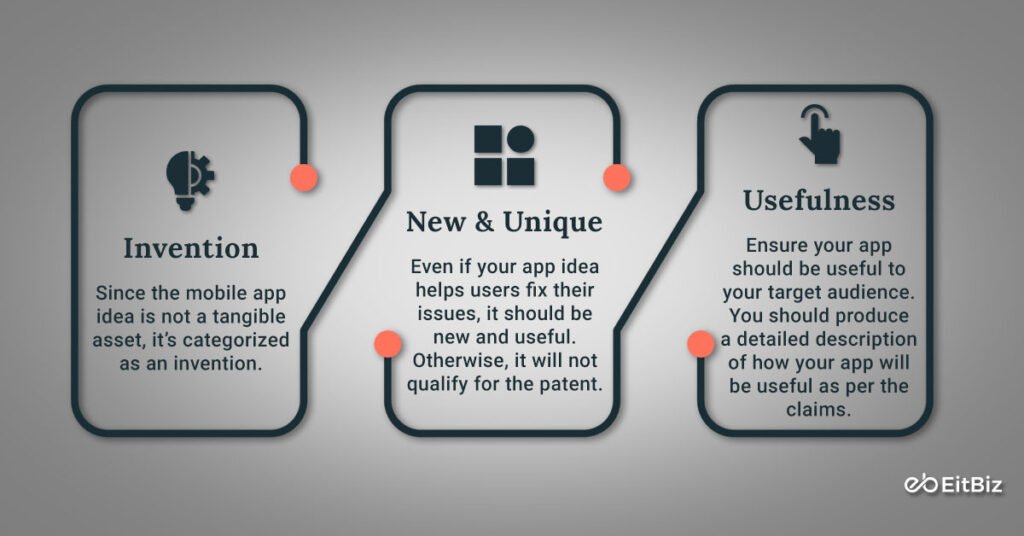
| Parameters | Details |
| Invention | Since the mobile app idea is not a tangible asset, it’s categorized as an invention. |
| New & Unique | Even if your app idea helps users fix their issues, it should be new and useful. Otherwise, it will not qualify for the patent. |
| Usefulness | Ensure your app should be useful to your target audience. You should produce a detailed description of how your app will be useful as per the claims. |
Though the list of parameters under eligibility criteria isn’t too long, it doesn’t mean you can patent any kind of mobile app.
Not all mobile apps are eligible for patents. Let’s move ahead to know the types of mobile apps you can patent.
Types of Mobile Apps Eligible for Patent
Let’s look at the different types of mobile app ideas you can patent.
- Mobile Gaming App
If your mobile game app ideas contain new gaming styles, concepts, and mechanics that none of your competitors has ever done then it’s eligible for a patent.
- AR/VR Based Apps
If your app idea is about engaging with users in a different and better way then it’s eligible for a patent. It does matter how your audience interacts with the app and what uniqueness your app is offering.
- IoT Apps
Remember that your app should offer innovative controls, data processing, monitoring, and other aspects that not just solve real-life problems but help make things easier.
- Education & Learning Apps
If your eLearning app includes basic information and regular visual elements then it might not be ideal for patent. Ensure your mobile app idea should contain unique app ideas and approaches to come under eligibility criteria.
- Social Media Networking Apps
If you have a special app idea related to social media networking then you should patent it as soon as possible. Your app should include some special messaging or calling features that make it stand out.
Steps to Patent Your Mobile App Idea: Key Insights
If your app idea matches the aforementioned eligibility criteria then it’s time to get started with patenting your mobile app idea.
Step 1: Select the Patent Type You Want for Your App
Even if any sudden idea strikes the doors of your mind, there is no way you will just run into patenting it. There are a lot of considerations and aspects involved. Before you even file for a patent, there are two types of patents to know.
- Design Patents
When you have a mobile app idea, it’s quite certain you will also have something about UI/UX-related ideas. If you have a unique design in mind, you can patent it to protect it from stolen.
- Utility Patents
This kind of patent deals with the functionalities, processes, mechanics, and other associated technicalities of the app. If you have a unique app idea that is unique in functionality, technology, and integrations, ensure you patent it to keep it yours for life.
Step 2: Don’t Hesitate to Research
In the second step, you should conduct extensive market research to find out whether your app idea is already taken. If you, however, don’t do research or talk to other companies that might have already patented your idea then you may land in big trouble later. You may get an unexpected legal notice from other companies.
If none of your competitors have built apps similar to your idea then there are higher chances of getting the payment.
Step 3: Prepare Yourself for the Patent Process
Once you have researched the app’s idea that is not patented, you can start the process of patenting your app idea. During the process of filing a patent, ensure you describe key facts about the patent application.
- Describe the App’s Invention
- Functionality of the App (How Does it Work?)
- Diagrams & Pictorial Visualization, Wherever Possible
- App’s Data Sheet
- Cover & Fee Sheet
- Entity Status Form
- App’s Layout
While filing the claim, you should provide complete information about your app to find out whether your idea is new, innovative, and useful.
Step 4: Decide Whether to File a Provisional or Non-Provisional Patent Application
It is the most important decision one can make while filing a patent for a mobile app idea. To help you decide between the two, here’s a quick difference!
If you have ample time to work on an invention and can spend extra bucks then you should opt for a provisional patent. On the other hand, if you think your invention is ready and doesn’t require changes then you may opt for a non-provisional patent protection.
To understand the patent fee structure for your specific country, check the official website of the patent office.
Step 5: Give Prompt Replies to Office Queries or Concerns
Once you have filed the patent for your mobile app idea, ensure you keep an eye on the process. If any action is taken on it or someone from the office asks you about the idea then you should be quick enough to answer their queries. There are chances that the examiner may ask you to change or bring more clarification on the app idea.
If anything like this goes on then it’s wise to respond to their actions on time. Ensure you don’t delay the process as it might not give a good impression of your reputation.
Step 6: Pay a Maintenance Fee Once your App is Patented
Congratulations- Your mobile app is now patented! It’s yours now, no one can steal it from your pocket! But it doesn’t end here! Now, you will need to maintain it regularly to keep it in force. If you want your app patent to remain active, you will need to pay a certain amount.
Since getting a patent for an app idea isn’t a cakewalk. If you don’t have time and want a helping hand then hire professionals to manage your patents efficiently.
What is the Cost to Patent a Mobile App?
No fixed amount is required to patent a mobile app. It may vary on a multitude of factors, including the complexity of the app, patent office fees, type of patent, professional fees, and more. Remember that your patent fees are categorized into the following areas, including;
- Patent Search
- Application Filing
- Patent Examination, Issue, & Publication
- Maintenance Cost
- Trial & Appeal
- Post-Issuance
- Patent Petition
- Service Fee
- Patent Enrollment
Speaking of the two categories of patent, namely provisional and non-provisional, both have different fee ranges. The former’s cost starts from $2000 and may go up to $5000. On the other hand, the latter may cost you anywhere around $10000.
It is no secret that patenting an app idea is time-consuming and drains your money and effort.
But how about going through some other alternatives? Well, fortunately, some options offer similar protection.

What are Other Alternatives to Patenting Your App Idea?
If you want to explore some other alternatives to patenting your app idea then here is a list of the popular options.
- Copyright
It is one of the popular forms of patent alternative that protects the original work of ownership. Once you claim the copyright of any form of creative idea or content, you can prevent it from stealing or copying.
- Trademark
This form of protection helps protect the app’s logos, icons, content, and other important elements. When you opt for a trademark, you can prevent others from using your app’s idea or any unique element similar to yours.
- Non-Disclosure Agreement
It is a form of a legal agreement or a contract that enables you to sign it with your partner who is involved in the app development process. The agreement stops your partner from disclosing any information or revealing anything about the project.
What Does “EitBiz” Have to Say about it?
Patent protection becomes important when an app idea is being developed into a real business product. Before starting mobile app development, it is worth understanding whether the underlying invention can qualify for patent protection and what needs to be documented.
The process can involve prior-art research, technical details, and specific filing requirements. For businesses, addressing these areas early can help protect the product while avoiding unnecessary IP risks during development.
EitBiz approaches app development with these considerations in mind, helping businesses turn validated product ideas into scalable mobile applications while keeping the technology and development strategy aligned with their goals.
Final Thoughts
So, there you have it! Patenting your mobile app idea is an intelligent method to protect your unique idea. Not only does it help prevent your competitors but it also enables you to establish a robust market foothold with your out-of-the-box innovation.
But before you think about patenting your app idea, you should check whether your app idea is novel, innovative, and useful. It should solve the problem of the masses.