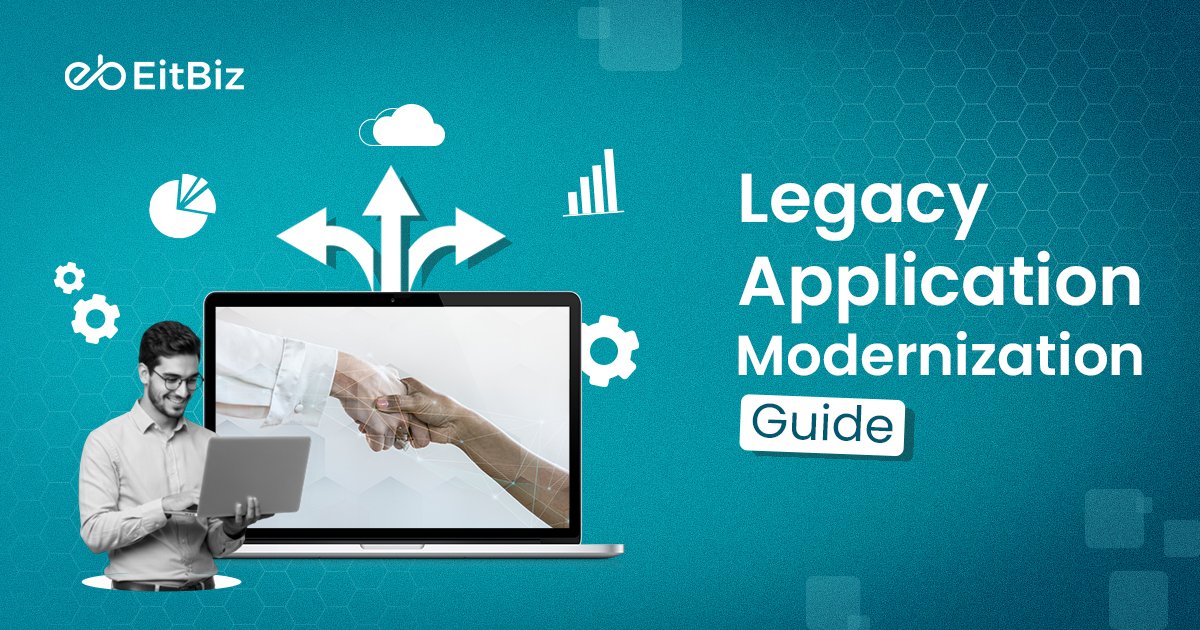
Business dynamics are changing, and in 2026, the changes will be substantial!
And if you want to stay ahead in this competitive landscape, you need to upgrade to modernization strategy to make your projects successful.
Modernizing a legacy application isn’t just about “moving to the cloud” or rewriting code.
It’s about rethinking how the system supports current and future business goals. Companies today need platforms that are secure, flexible, and capable of integrating with modern tools and customer experiences.
Did you know?
The application modernization services market is projected to reach USD 51.45 billion by 2031. (Source: Markets & Markets).
Now, the question arises – What’s driving the growth of legacy app modernization?
Well, the answer lies in the growing digital transformative initiatives, rising cloud adoption, and the need to improve business agility and cost efficiency.
Are you excited to transform your ordinary app into a legacy app?
What Is Legacy Application Modernization?
Legacy application modernization is the process of updating, enhancing, or transforming outdated software systems so they can perform reliably in today’s digital environment. Legacy systems often run on outdated architectures, legacy programming languages, or on-prem infrastructure that can no longer support modern scalability, security, or integration requirements.
Modernization doesn’t always mean rebuilding an application from scratch. Furthermore, it can involve rehosting it on the cloud, refactoring code, replacing outdated components with managed services, or rearchitecting the entire system to align with cloud-native principles. The goal is simple: preserve the core business value while removing the bottlenecks that slow innovation.
Why is There a Need for Legacy Application Modernization?
Legacy systems worked well in their time, but today they often struggle to keep up with evolving business demands. Here’s why modernize legacy applications has become essential:
1. Rising Maintenance Costs
Older applications typically require constant patching, hardware upgrades, and manual fixes. These hidden costs accumulate quickly and drain IT budgets.
2. Security & Compliance Risks
Legacy systems often rely on unsupported software, outdated libraries, and vulnerable architectures, increasing exposure to data breaches and compliance violations.
3. Limited Scalability
Modern digital experiences demand applications that scale instantly. Traditional on-premise systems struggle to handle unpredictable workloads.
4. Integration Challenges
Newer tools, such as AI tools, analytics platforms, CRM systems, and cloud services, don’t integrate smoothly with outdated systems, limiting innovation.
5. Reduced Operational Speed
Legacy applications slow down development cycles, delaying updates, customer features, and competitive improvements.
In short, legacy system modernization helps businesses reduce risk, accelerate innovation, improve customer experience, and future-proof their technology landscape.
What are the Strategies for Legacy App Modernization?
Modernization strategies vary depending on the application’s complexity, criticality, and business impact. Choosing the right approach ensures cost efficiency, minimizes risks, and maximizes long-term business value. The widely adopted legacy application modernization strategies include:
1. Rehost (“Lift and Shift”)
Rehosting involves migrating the application from on-premises infrastructure to a cloud environment without significant changes to the codebase or architecture. This approach is often the fastest way to reduce infrastructure costs, improve reliability, and achieve basic cloud benefits such as scalability and high availability. While it doesn’t enhance application functionality, it provides an immediate operational advantage and lays the foundation for future modernization efforts.
Best for: Quick migrations, cost reduction, improved system reliability, and organizations aiming for a low-risk entry into the cloud.
2. Replatform
Replatforming is a step beyond rehosting. Here, select optimizations are applied, such as migrating databases to managed cloud services, updating middleware, or containerizing applications, without fully altering the application’s core architecture. This allows businesses to benefit from cloud-native services like automated backups, better performance, and reduced operational overhead while minimizing disruption.
Best for: Applications that need moderate modernization, faster improvements, and operational efficiency without a full-scale redesign.
3. Refactor
Refactoring involves restructuring and optimizing the application’s codebase to improve maintainability, performance, and scalability. This may include modularizing monolithic components, removing redundant code, and updating frameworks or libraries. Refactoring keeps the core business logic intact while reducing technical debt, making the application easier to update, enhance, and scale.
Best for: Applications that function well but are expensive to maintain, slow to update, or difficult to integrate with new technologies.
4. Rearchitect
Rearchitecting is a deeper modernization approach that redesigns the application’s architecture, often converting monolithic systems into microservices, adopting event-driven patterns, or integrating with cloud-native platforms. This strategy significantly improves scalability, resilience, and flexibility, allowing the application to better handle high traffic, complex workflows, or future enhancements.
Best for: Critical systems experiencing performance bottlenecks, scalability challenges, or requiring long-term flexibility for evolving business needs.
5. Rebuild / Rewrite
Rebuilding or rewriting involves developing a new application from scratch using modern technologies and design principles. This approach is suitable when the existing system is severely outdated, difficult to maintain, or unable to support new business requirements. While it requires a larger investment and longer timeline, it provides a future-proof solution with optimized performance, security, and user experience.
Best for: Legacy systems with no long-term value in their current form, or when modernization is more cost-effective than continuous patching.
6. Replace
Replacing a legacy system means adopting an off-the-shelf SaaS solution or commercial software to perform the same business function. This is often the most practical choice for commodity applications where heavy customization is not required, such as HR, payroll, or CRM systems. Replacement reduces maintenance overhead, speeds up deployment, and ensures access to continuous vendor-driven updates and support.
Best for: Standardized, non-differentiating business functions where speed, cost efficiency, and vendor-managed updates are prioritized.
Note: If you want an estimated cost of legacy application modernization, a discovery assessment is essential, which evaluates your system, identifies gaps, and calculates a realistic modernisation budget.
What Are the Best Practices for Legacy App Modernization?
Here are the best ways to modernize applications without making mistakes.
1. Start with a detailed assessment
Understand your system’s architecture, dependencies, performance issues, and business value before choosing a modernization path.
2. Prioritize business impact
Modernize systems that directly enhance revenue, customer experience, or operational efficiency first.
3. Adopt an incremental approach
Avoid risky “big-bang” migrations. Use the strangler pattern to gradually transition functionality.
4. Implement strong DevOps foundations
Automated CI/CD, testing pipelines, and monitoring tools speed up modernization and reduce risks.
5. Focus on security from day one
Address vulnerabilities, update libraries, and embed security checks throughout the modernization process.
6. Use cloud-native services wisely
Leverage managed databases, serverless functions, containers, and scalable architectures to reduce maintenance overhead.
7. Communicate early and often
Align business, IT, security, and operations teams to ensure smooth transitions.
{Also Read: Application Modernization Challenges}
Final Thoughts
So, there you have it! That’s a wrap to the strategies, best practices, and more of legacy app modernization in 2026! Legacy modernization is not just a technology upgrade, it’s a strategic investment in your organization’s future. By modernizing outdated systems, you unlock agility, cost savings, innovation, and long-term resilience.
However, a successful modernization journey requires expertise, careful planning, and a partner who understands the complexities of transforming outdated systems. That’s where EitBiz comes in.
EitBiz offers the best legacy application modernization services that may help turn old systems into powerful, future-ready solutions. We have deep experience in legacy modernization, cloud migration, custom software development, and digital transformation that help deliver measurable business value.
Ready to transform your legacy applications into future-ready digital assets? If so, get in touch with EitBiz today!
Frequently Asked Questions
- Will modernization disrupt my business operations?
Modernization can be planned in phases to reduce downtime. Many strategies support parallel operations, ensuring your business continues to run smoothly during the transition.
- Can modernization improve security?
Yes. Modern platforms offer advanced security features, regular updates, and stronger protection against cyber threats, thereby making modernization a key step in safeguarding your data and systems.
- How long does a modernization project take?
Timelines vary based on system complexity, data volume, chosen legacy app modernization strategy, and integration requirements. Projects can range from a few weeks for simple migrations to several months for full-scale transformations.