More than 83% of all internet traffic today is driven by APIs, according to recent cloud industry reports.
Every time you book a cab, make an online payment, check the weather, or log in using Google, an API is working quietly in the background.
But if APIs run so much of modern business, why do so many business owners still ask: “Do I really need to understand this?”
If you’ve ever felt that APIs sound too technical or “only for developers,” you’re not alone. Many founders and decision-makers use software daily without knowing what connects everything behind the scenes.
The problem isn’t that APIs are complicated. The problem is that they’re rarely explained in business language. When you don’t understand APIs, you risk making poor tech decisions, overspending on development, or missing automation opportunities.
In this blog, we’ll discuss;
- What APIs actually are
- Why APIs matter to your business operations
- How APIs enable web apps, mobile apps, and integrations
- What questions business owners should ask before building or buying API-driven software
This guide focuses on clarity over complexity. You don’t need to code. You just need to understand how APIs create value.
What Are APIs?
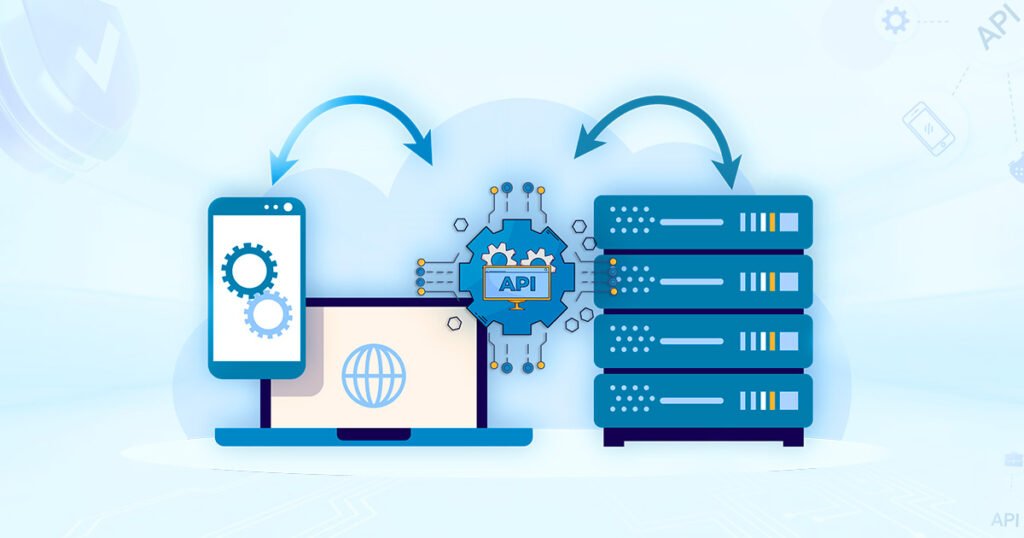
At their core, what are APIs?
An API (Application Programming Interface) is a set of rules that allows two software systems to talk to each other.
Think of an API like a waiter in a restaurant:
- You (the user or app) place an order.
- The waiter (API) takes it to the kitchen (server).
- The kitchen prepares the food (data or action).
- The waiter brings it back to you.
You never enter the kitchen. You don’t need to know how the food is cooked. You just get the result.
That’s the API meaning in business terms:
APIs allow systems to exchange data or trigger actions without exposing their internal workings.
How do APIs Work?
Understanding how APIs work gives you an edge when you’re evaluating software, vendors, or custom development proposals. You don’t need to understand the code. You just need to understand the flow of value.
At a high level, APIs follow a simple, repeatable process that happens behind the scenes, often in milliseconds.
Here’s what that flow looks like from a business perspective:
1. One application sends a request
This request could be for data (such as customer details) or for an action (such as processing a payment or creating an order).
Example: Your website asks a payment gateway to charge a customer.
2. The API checks permissions and rules
The API verifies whether the request is allowed. It checks security keys, access rights, and predefined rules. This step protects your data and systems from unauthorized access.
3. The receiving system processes the request
Once approved, the system performs the task, fetching data, updating records, or triggering a workflow. This happens automatically, without human involvement.
4. A response is sent back
The API returns a response to the original application. This could be:
- A success confirmation
- The requested data
- An error message if something goes wrong
All of this usually happens in less time than it takes to blink.
What are the Real-World API Examples Business Owners Already Use?
APIs aren’t abstract or experimental. They power everyday business operations, often without you realizing it. Below are practical API examples that most business owners already rely on, sometimes dozens of times a day.
1. Payment Gateways (Stripe, Razorpay, PayPal)
When a customer clicks “Pay Now,” your system doesn’t process the payment itself.
Instead:
- Your app sends payment details to the payment provider’s API
- The API validates the transaction and processes the payment
- A confirmation or failure response is sent back instantly
This entire exchange happens securely and in seconds. Without APIs, online payments at scale would not be possible.
2. Log in with Google or Facebook
When users log in using a social account, your app doesn’t handle passwords or identity verification.
Here’s what happens:
- Your app requests identity verification from Google or Facebook’s API
- The API confirms the user’s identity
- Your app receives permission to log the user in
This improves security, speeds up onboarding, and reduces friction for users.
3. Shipping and Tracking Tools
eCommerce businesses depend heavily on courier APIs.
- Order details are sent to a logistics provider’s API
- Shipping labels and tracking IDs are generated automatically
- Real-time delivery updates are returned and displayed to customers
This eliminates manual coordination and keeps customers informed without extra effort.
4. Analytics Tools
Every time someone visits your website or app, data is sent through APIs.
- User actions are captured and sent to analytics APIs
- The data is processed and organized
- Reports and insights are displayed in dashboards
This allows you to track performance, user behavior, and conversions in near real time.
API Integration: What It Is and Why It Matters
API integration means connecting two or more systems so they can share data automatically.
For business owners, this is about efficiency and accuracy.
Instead of:
- Downloading spreadsheets
- Uploading files manually
- Copy-pasting data between tools
APIs allow systems to sync in real time.
1. Reduces operational overhead
API integration removes repetitive manual work from day-to-day operations. Tasks like updating records, syncing customer data, or transferring order details happen automatically in the background. This reduces dependency on manual processes, shortens turnaround time, and allows teams to focus on strategic, revenue-generating work instead of administrative tasks.
2. Improves data consistency
When systems are connected through APIs, data flows from a single source of truth. This means the same customer, sales, or inventory data appears consistently across all platforms. As a result, reporting becomes more reliable, teams trust the numbers they see, and decision-making improves. It also minimizes confusion caused by duplicate or outdated data.
3. Enables automation at scale
As your business grows, transaction volumes increase. Manual workflows break under pressure, but APIs scale smoothly. Whether you process hundreds or thousands of transactions, API-driven systems can handle the load without adding complexity or headcount. This makes growth predictable and operationally manageable.
4. Saves long-term costs
While API integration may require upfront investment, it significantly lowers costs over time. Automated workflows reduce human error, eliminate rework, and decrease support and maintenance expenses. Over the long term, businesses spend less fixing issues and more building value, making API integration a cost-efficient strategy rather than a technical luxury.
REST API Explained (The Most Common API Type)
You’ll often hear developers mention REST APIs. Let’s break it down.
REST API explained simply:
- REST stands for Representational State Transfer
- It’s a standard way to design APIs over the internet
- It uses common web actions like GET, POST, PUT, DELETE
Why businesses prefer REST APIs:
- Easy to scale
- Works across platforms
- Lightweight and fast
- Widely supported
Most modern SaaS platforms use REST APIs because they’re reliable and flexible.
As a business owner, you don’t need to design REST APIs, but you should know that most integrations rely on them.
How Do APIs Power Modern Web Development?
APIs in web development power almost every modern website you interact with today. They act as the bridge between what users see on the screen and the systems that store and process data behind the scenes.
Common web-based API use cases include:
- A frontend website fetching data from a backend server to display content
- An eCommerce site pulling real-time product inventory and pricing
- A business dashboard displaying live sales, performance, or user reports
Without APIs, websites would be static, unable to update content dynamically or interact with other systems. They would require constant manual updates and offer limited functionality.
APIs enable web applications to:
- Update content in real time
Data changes instantly without page reloads or manual intervention.
- Connect with third-party services
Payment gateways, analytics tools, CRM platforms, and marketing software integrate seamlessly through APIs.
- Scale without rebuilding everything
New features and integrations can be added without redesigning the entire website.
If a website feels slow, disconnected, or unreliable, the issue often lies in poor API architecture rather than the user interface itself.
Why Are APIs Critical in Mobile App Development?
APIs in mobile app development are even more critical because mobile apps are intentionally lightweight. Most of the heavy processing happens on external servers, accessed through APIs.
Mobile apps rely on APIs to:
- Fetch user profiles and personalized content
- Process payments securely
- Send push notifications and alerts
- Sync data across multiple devices in real time
Almost every tap, swipe, or action in a mobile app triggers an API call. When APIs are slow or unstable, users feel it immediately.
For business owners investing in mobile apps, API quality directly impacts:
- App speed: Faster APIs mean smoother interactions
- Reliability: Fewer crashes and failed actions
- User experience: Consistent performance builds trust
- Scalability: The ability to handle more users without performance drops
A mobile app may look polished on the surface, but without strong APIs underneath, it will struggle to retain users and scale.
Conclusion
APIs are no longer just a technical concept. They are a core business enabler. From payments and analytics to web platforms and mobile apps, APIs quietly power the speed, reliability, and scalability of modern digital businesses.
For business owners, understanding APIs isn’t about learning to code. It’s about making informed decisions, choosing the right tools, building scalable systems, and avoiding costly inefficiencies caused by poor integrations. When APIs are designed and implemented correctly, they reduce manual work, improve data accuracy, and create a foundation for long-term growth.
At EitBiz, we help businesses design, build, and integrate APIs that actually support growth, not slow it down. Whether you’re developing a web platform, a mobile app, or integrating multiple systems, our team focuses on secure, scalable, and business-ready API solutions.
Connect with EitBiz today and let’s build systems that move data faster, scale effortlessly, and grow with your business.
Frequently Asked Questions
- What are APIs in simple terms?
APIs are interfaces that enable different software systems to communicate and exchange data automatically.
- How do APIs work in web and mobile applications?
Web and mobile apps send requests to APIs to retrieve data or execute actions. APIs process those requests and return responses instantly.
- What is API integration and why does it matter?
API integration connects different tools so that data flows automatically. It matters because it saves time, reduces errors, and improves efficiency.
- What is a REST API, and how is it different from other APIs?
A REST API follows standardized web rules, making it easier to scale and integrate compared to older or proprietary API types.