Let’s start with an uncomfortable truth.
Most real estate apps don’t fail because of bad ideas.
They fail because of bad decisions made before development even begins.
Today, nearly 76% of homebuyers search for properties using mobile devices, yet the average real estate platform converts only about 4.7% of visitors into leads.
Think about that for a moment.
Out of 100 people actively looking for a home, 95 leave without taking action.
That gap is not a marketing problem.
And businesses often realize this only after spending months (and sometimes hundreds of thousands of dollars) building an app that users quietly abandon.
The demand for digital property platforms has exploded worldwide.
- Over 650 million users globally interact with real estate apps for listings, transactions, and property exploration.
- Nearly 70% of consumers now prefer digital real estate interactions instead of traditional offline processes.
- The global PropTech market is projected to grow past $185 billion by 2034, driven by mobile-first property experiences.
On the surface, this looks like a massive opportunity.
But here’s the catch!
In most cases, businesses don’t fail because of poor ideas. They fail due to avoidable Real Estate App Development Mistakes made during planning and execution. Companies often underestimate the complexity of mobile app development for real estate, treating it as a standard marketplace rather than a high-trust decision-making platform.
From weak search experiences to unverified listings and scalability issues, these errors create serious Challenges in real estate app development and lead to low adoption, rising costs, and disappointing ROI.
This blog solves that problem.
Instead of theory or marketing hype, you’ll learn the most common real estate mobile app development mistakes, why they happen, and how to avoid them using practical, experience-based insights.
If you’re planning to build a real estate app or improve a property platform, this guide will help you build smarter from day one.
Why Real Estate Apps Fail More Often Than Expected
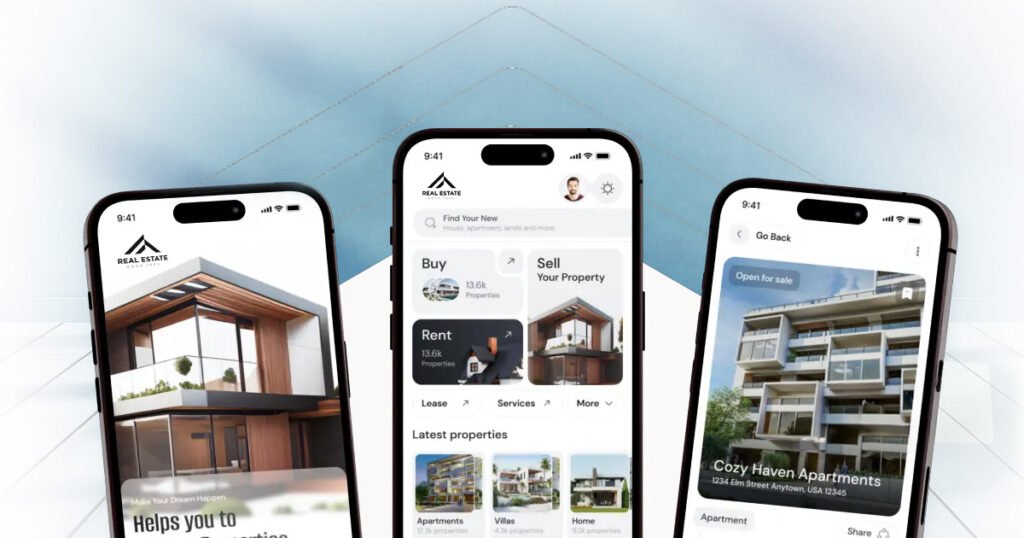
At first glance, real estate apps look simple. You display property listings, add filters, integrate maps, and allow users to contact agents. Many businesses assume the process is similar to launching an eCommerce platform or classifieds platform.
In reality, it is far more complex.
Real estate apps fail more often because they operate in a high-trust, high-value decision environment. Users are not casually browsing products; they are making life-changing financial decisions. A buyer may spend weeks comparing options before taking action. If the app creates even a small amount of friction during that journey, users leave immediately.
This misunderstanding leads to several Real Estate App Development Mistakes right from the planning stage.
1. Businesses Treat Real Estate Apps Like Generic Marketplaces
One of the most common mistakes in real estate mobile app development is copying marketplace models without adapting them to property behavior.
Buying a home is different from buying a product because users need:
- Accurate location insights
- Verified listings
- Detailed property information
- Easy comparison tools
- Reliable agent communication
When apps prioritize design trends instead of decision support, users struggle to trust the platform.
2. The Technical Complexity Is Often Underestimated
Many companies begin mobile app development for real estate without fully understanding backend requirements.
A real estate app must handle:
- Thousands of high-resolution images
- Map-based searches with real-time updates
- Dynamic filtering systems
- Large databases of listings
- Messaging between buyers and agents
These systems must work together seamlessly. Even small performance issues can break the experience.
This is why teams frequently encounter unexpected Challenges in real estate app development, such as slow loading times, inaccurate search results, or server crashes during traffic spikes.
3. Data Accuracy Becomes a Constant Battle
Unlike static apps, property platforms depend on constantly changing information. Listings expire, prices change, and availability updates daily.
Managing these updates is one of the biggest issues in building property listing apps.
Without strong data management:
- Users see unavailable properties
- Duplicate listings appear
- Pricing becomes inconsistent
Once users encounter unreliable information, trust declines quickly, and trust is difficult to rebuild.
4. User Expectations Are Extremely High
Modern users compare every digital experience with apps they already love. They expect:
- Instant loading
- Smart recommendations
- Smooth navigation
- Accurate search results
If an app feels slow or confusing, users switch platforms within seconds. Many Property Marketplace App Mistakes occur because businesses focus on adding features rather than simplifying user journeys.
More features do not equal a better experience. Clarity does.
5. Lack of Strategic Planning Before Development
Another major reason apps fail is jumping straight into coding without a product strategy.
Businesses often skip:
- User journey mapping
- Monetization planning
- Scalability architecture
- Long-term growth vision
As a result, development teams build features that do not solve real user problems. Later changes require expensive redevelopment.
Experienced real estate app development services providers typically emphasize planning first because fixing structural mistakes after launch costs far more than preventing them early.
{Also Read: How to Build a Real Estate App Like Zillow?}
What are the Top 10 Real Estate App Development Mistakes?
Before investing time and budget into development, businesses must understand the most common mistakes that cause real estate apps to underperform or fail. Below are the top 10 real estate app development mistakes that companies frequently make, along with practical insights to help you avoid them and build a scalable, user-focused platform.
Mistake #1: Starting Development Without Market Validation
One of the biggest Real Estate App Development Mistakes is building before validating demand.
Businesses often assume:
“People search for homes online, so our app will work.”
But success depends on solving a specific problem, not entering a popular market.
What Goes Wrong
Companies skip research and jump straight into UI design or coding. They fail to answer:
- Who is the primary user?
- Buyers, renters, agents, or investors?
- Urban or suburban markets?
- Premium or affordable properties?
- B2B or B2C focus?
Without clarity, the app becomes generic.
Generic apps struggle because established platforms already dominate broad markets.
Real Impact
- High development costs with low adoption
- Poor product-market fit
- Confusing user journeys
How to Avoid It
Before development:
- Conduct user interviews.
- Analyze competitor gaps.
- Validate demand using MVP prototypes.
- Study regional property behavior.
Answer engines (AEO) reward apps that solve precise problems. Specificity wins.
Mistake #2: Ignoring User Experience in Search and Filters
Real estate apps live or die by search functionality.
Poor filtering is among the most common mistakes in real estate mobile app development.
Users don’t browse randomly. They search with intent.
Users Expect:
- Price range filters
- Locality selection
- Property type sorting
- Amenities filtering
- Commute distance
- School or infrastructure proximity
If users cannot find relevant listings within seconds, they leave.
Common UX Errors
- Overloaded filter panels
- Slow search results
- Incorrect map positioning
- Filters reset automatically
- Non-intuitive navigation
Why This Happens
Businesses focus on visual design instead of interaction design.
A beautiful app design that cannot help users find properties quickly fails.
Solution
Design search flows before designing UI screens.
Focus on:
- Predictive search
- Saved preferences
- Smart recommendations
- Fast backend indexing
Think like a buyer in urgent search mode, not a designer showcasing features.
Mistake #3: Underestimating Data Accuracy and Listing Verification
Trust is the currency of real estate platforms.
One of the biggest issues in building property listing apps is managing listing authenticity.
The Problem
Many apps allow unrestricted property uploads without verification systems.
This leads to:
- Duplicate listings
- Fake properties
- Outdated availability
- Incorrect pricing
Users lose trust quickly.
Why It’s Costly
Once credibility drops, marketing spend increases dramatically to regain users.
Trust is easier to build early than repair later.
Smart Solutions
Implement:
- Agent verification workflows
- Listing approval moderation
- Automated duplicate detection
- Expiry dates for listings
- User reporting systems
Reliable data directly improves SEO, GEO discoverability, and user retention.
Mistake #4: Trying to Build Too Many Features at Launch
Many founders want an “all-in-one” app immediately.
This leads to classic Property Marketplace App Mistakes.
Feature Overload Examples
- Mortgage calculators
- Chat systems
- AR tours
- Investment analytics
- Rental management
- Legal documentation tools
- AI recommendations
All added before validating core usage.
The Result
- Development delays
- Budget explosion
- Performance issues
- Confused users
Better Approach
Start with:
- Property listings
- Search & filters
- Contact/lead system
- Saved properties
- Map integration
Everything else comes later.
Successful platforms evolve gradually.

Mistake #5: Weak Performance Optimization
Real estate apps are media-heavy.
High-resolution images, videos, and maps can significantly slow down apps.
This is one of the most overlooked Real Estate App Development Mistakes.
Common Performance Problems
- Long loading times
- App crashes
- Laggy scrolling
- Map freezing
- High battery consumption
Users abandon apps that load slowly.
Why Performance Matters for GEO & AEO?
Search engines increasingly consider:
- App speed
- Engagement time
- Bounce rates
Slow apps rank poorly and convert less.
Fixes
- Image compression
- Lazy loading
- CDN integration
- Efficient API architecture
- Backend caching
Performance is not a technical luxury; it’s a growth strategy.
Mistake #6: Ignoring Scalability From Day One
Many startups build apps for current traffic, not future growth.
When usage increases, systems collapse.
This is a major contributor to Challenges in real estate app development.
Scaling Challenges
- Thousands of simultaneous searches
- Large database queries
- Location indexing
- Chat message storage
- Media hosting
What Happens Without Scalability
- Server downtime
- Lost leads
- Poor user reviews
- Emergency redevelopment costs
Smart Planning
Choose:
- Cloud-native infrastructure
- Microservices architecture
- Modular backend systems
Invest early. Scaling later is expensive.
Mistake #7: Poor Monetization Strategy
Businesses often delay revenue planning.
But monetization affects product design itself.
A common issue in real estate mobile app development is unclear revenue modeling.
Common Monetization Models
- Featured listings
- Agent subscriptions
- Lead generation fees
- Advertisement placements
- Transaction commissions
Mistake Businesses Make
They add ads randomly later, ruining UX.
Better Strategy
Define monetization before development.
Design placements that feel natural:
- Promoted listings within search results
- Premium visibility tiers
- Analytics dashboards for agents
Revenue should enhance value, not interrupt users.
Mistake #8: Neglecting Legal and Compliance Requirements
Real estate is subject to regulations that vary by region.
Ignoring compliance is one of the most expensive real estate mobile app development mistakes.
Compliance Areas Often Missed
- Property advertising laws
- Data privacy policies
- Payment regulations
- Brokerage licensing rules
- User data storage compliance
Risks
- Legal penalties
- App store removal
- Reputation damage
Prevention
Work with legal consultants during development.
Include:
- Clear listing disclosures
- Verified ownership indicators
- Transparent pricing
Trust signals improve both conversions and search visibility.
Mistake #9: Choosing the Wrong Development Partner
Not every development company understands real estate workflows.
Selecting inexperienced vendors leads to recurring Property Marketplace App Mistakes.
Warning Signs
- No marketplace experience
- Unrealistic timelines
- Lack of scalability discussion
- No post-launch support plan
What Good Partners Provide
Professional mobile app development services should include:
- Business consultation
- UX strategy
- Architecture planning
- Testing frameworks
- Maintenance support
Choosing the cheapest option often becomes the most expensive decision.
Mistake #10: Launching Without a Continuous Improvement Strategy
Many businesses treat launch as the finish line.
In reality, launch is only the beginning.
Apps that fail to evolve quickly lose relevance.
Post-Launch Needs
- User analytics tracking
- Feature iteration
- Bug monitoring
- Performance updates
- Market adaptation
Data You Must Track
- Search behavior
- Drop-off points
- Popular locations
- Conversion funnels
Continuous updates signal reliability to users and algorithms alike.
Practical Framework for Building a Successful Real Estate App
Building a successful property platform is not about launching fast; it’s about launching right. Many businesses fall into common Real Estate App Development Mistakes because they treat development as a technical task instead of a structured business process.
A clear framework helps reduce risk, control costs, and solve real user problems from the beginning. Below is a practical, experience-driven roadmap that companies can follow to avoid typical real estate mobile app development mistakes and build scalable products.
Step 1: Define the Problem and Target Users
Before writing code, identify exactly who your app serves and what problem it solves.
Real estate audiences differ widely:
- Home buyers
- Renters
- Property investors
- Real estate agents
- Builders and developers
Trying to serve everyone usually leads to weak positioning – one of the early Challenges in real estate app development.
Ask practical questions:
- Are users searching for affordable housing or luxury property?
- Is your focus rentals, sales, or both?
- Which geographic market are you targeting first?
A focused niche improves adoption and reduces development complexity.
Step 2: Validate the Idea With Market Research
Many businesses skip validation and move directly into design. This creates expensive rework later.
Validation helps confirm demand before investing heavily in mobile app development for real estate.
Effective validation methods include:
- Competitor gap analysis
- User interviews with agents and buyers
- Prototype testing
- Landing page experiments
- Early waitlists
The goal is simple: ensure your app solves a real problem users already face.
Step 3: Plan Core Features (Build an MVP First)
One of the biggest Property Marketplace App Mistakes is building too many features at launch.
Instead, create a Minimum Viable Product (MVP) with essential functionality:
- Property listings
- Advanced search and filters
- Map integration
- Property detail pages
- Contact or inquiry system
- User accounts and saved listings
These features address the primary user need: finding and evaluating properties quickly.
Advanced features like AI recommendations or virtual tours can come later.
Step 4: Design User Experience Around Decisions, Not Screens
Real estate apps must support decision-making, not just browsing.
Poor UX creates major issues in building property listing apps, especially when users cannot compare properties easily.
Focus on:
- Fast search results
- Clear property information hierarchy
- Simple navigation flows
- Saved searches and alerts
- Easy agent communication
Design should reduce effort for users who compare multiple options daily.
Step 5: Build Scalable Architecture From Day One
Growth often exposes technical weaknesses. Many startups experience performance breakdowns because scalability was ignored early, a common contributor to real estate mobile app development mistakes.
Plan for:
- Cloud-based infrastructure
- Efficient database indexing
- Media optimization
- API-driven architecture
- Modular backend systems
Scalable architecture prevents costly rebuilds later.
Step 6: Implement Data Accuracy and Verification Systems
Trust determines success in real estate platforms.
Address common Challenges in real estate app development by implementing:
- Listing verification workflows
- Duplicate detection
- Expiry timelines for properties
- Agent authentication
- User reporting mechanisms
Reliable data improves user retention and platform credibility.
Step 7: Define Monetization Early
Revenue strategy should guide product decisions, not follow them.
During mobile app development for real estate, choose monetization models such as:
- Featured listings
- Subscription plans for agents
- Lead generation fees
- Premium analytics tools
Design monetization placements naturally within user journeys to avoid disrupting the experience.
Step 8: Test Extensively Before Launch
Testing prevents post-launch failures.
Focus on:
- Performance testing under heavy traffic
- Search accuracy validation
- Device compatibility
- Security testing
- User usability testing
Professional real estate app development services typically include structured QA processes to minimize launch risks.
Step 9: Launch Strategically (Not Perfectly)
Avoid waiting for perfection.
Release the app with validated core features and gather real user feedback. Early usage reveals insights no internal testing can replicate.
Monitor:
- User behavior patterns
- Drop-off points
- Search trends
- Lead conversions
Data should guide future updates.

Conclusion
Creating a successful property platform requires both technical expertise and industry understanding. This is where EitBiz stands out.
EitBiz delivers end-to-end real estate app development services designed specifically for scalable marketplace platforms. Our real estate app developers focus on strategy, user experience, performance optimization, and long-term growth, helping businesses avoid costly Property Marketplace App Mistakes from the start.
Whether you are launching a startup platform or transforming an existing real estate business digitally, EitBiz combines practical experience with modern development practices to build secure, high-performing applications tailored to real market needs.
If you’re ready to turn your real estate app idea into a reliable, growth-driven product, partnering with the right experts can make all the difference. For any queries, contact us today!
FAQs
1. What are the most common real estate app development mistakes businesses make?
The most common real estate app development mistakes include poor market research, weak search and filter functionality, unverified property listings, lack of scalability planning, and launching with too many features. These issues often lead to poor user engagement and high redevelopment costs.
2. How much does it cost to develop a real estate mobile app?
The cost of mobile app development for real estate typically ranges from $5,000 to $50,000+, depending on features, platform (iOS/Android), integrations, design complexity, and scalability requirements. Advanced features like AI recommendations or virtual tours increase development costs.
3. What are the biggest challenges in real estate app development?
Major challenges in real estate app development include managing accurate property data, building fast search systems, handling large media files, ensuring app scalability, and maintaining user trust through listing verification and secure communication.
4. What features are essential for a successful property listing app?
A successful property listing app should include advanced search filters, map integration, verified listings, property detail pages, saved searches, user accounts, and direct agent communication. These core features solve the primary issues in building property listing apps and improve user retention.