
Building a mobile app today is no longer a luxury; it’s almost a necessity for businesses looking to compete in the digital world.
But before diving into development, one of the first and most crucial questions founders, product managers, and entrepreneurs ask is: “How much is this going to cost?”
If you’re considering React Native, the answer isn’t a simple number. The cost and timeline of React Native app development depend on multiple factors: the app’s complexity, the development team’s expertise, design requirements, features, and even post-launch maintenance.
React Native has emerged as a leading framework for cross-platform app development, allowing developers to write code once and run it on both iOS and Android.
Big names like Facebook, Instagram, and Discord have successfully used React Native to speed up development while maintaining a high-quality user experience.
According to Statista, the global mobile app revenue is expected to reach $613 billion by 2025.
This growth signals a huge demand for efficient, cost-effective app development solutions, and React Native often fits that bill.
So, let’s break down the Average React Native App Development Cost, explore what drives react native cost, and understand how you can budget for your project.
Understanding React Native Development
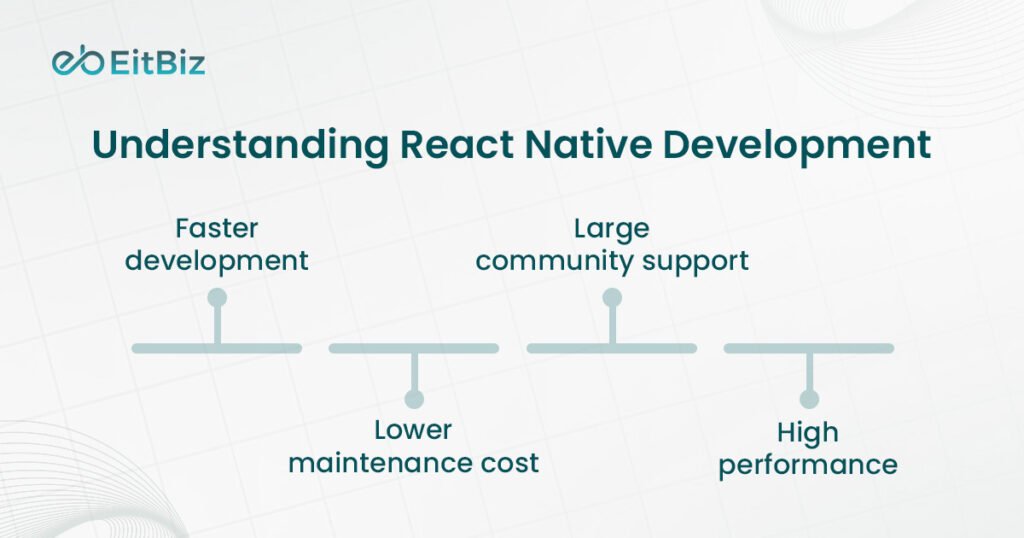
React Native is a JavaScript framework developed by Facebook (now Meta) that enables developers to build mobile apps using a single codebase. This approach allows businesses to save both time and money because they don’t have to develop separate native apps for iOS and Android.
Key advantages include:
- Faster development: One codebase runs on multiple platforms.
- Lower maintenance cost: Updates only need to be applied once.
- Large community support: Plenty of open-source libraries, tools, and tutorials.
- High performance: Native-like experience with responsive UI.
However, despite these benefits, react native cost isn’t uniform. Factors like app complexity, team location, feature requirements, and UI/UX sophistication can significantly influence pricing.
React Native Developer Hourly Rate and Team Composition
Your react native developer’s hourly rate depends on experience, location, and project complexity. Here’s a general breakdown:
| Region | Hourly Rate (USD) |
| North America | $50 – $150 |
| Europe | $40 – $100 |
| India & Asia | $20 – $50 |
| Latin America | $25 – $60 |
A typical React Native development team includes:
- Project Manager
- UI/UX Designer
- Frontend Developer (React Native)
- Backend Developer
- QA Engineer
To save costs, some companies hire remote teams or freelance developers. But remember, lower rates sometimes mean longer timelines or inconsistent quality.
Cost to Hire React Native Developers
Hiring developers can be done in several ways, each affecting the overall cost and timeline of React Native app development:
- Freelancers: Best for small projects or MVPs. Cost varies based on expertise and location.
- In-house team: Good for long-term projects but comes with salaries, benefits, and infrastructure costs.
- Dedicated development agencies: Offers end-to-end solutions, usually more expensive but reliable.
The cost to hire React Native developers is estimated as:
- Freelancers: $20–$80/hour
- In-house: $60,000–$120,000/year per developer
- Agency: $30–$100/hour depending on experience and services
Tip: For fast MVP development, hiring a skilled freelancer or an agency might be cost-effective compared to building a full in-house team.
Timeline of React Native App Development
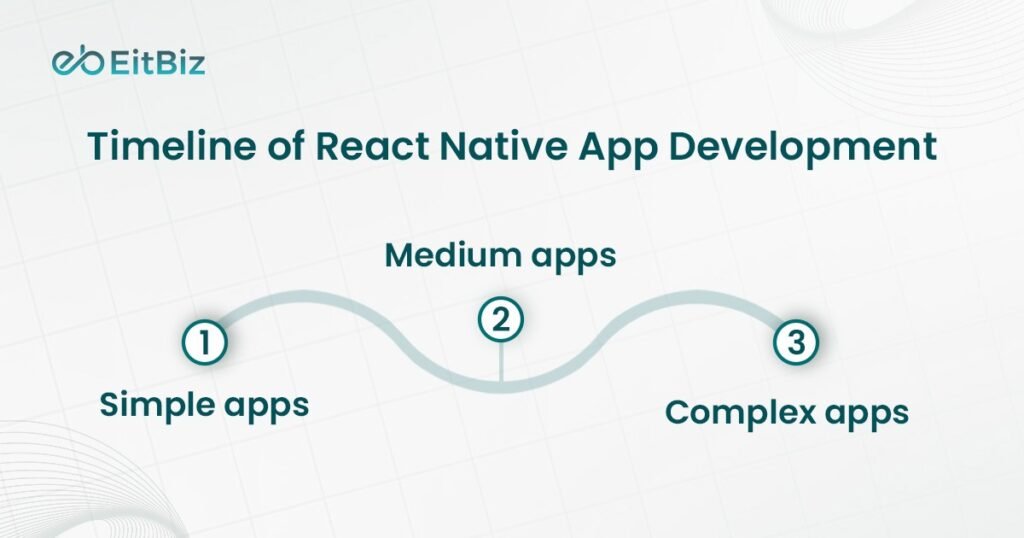
The timeline directly affects the react native cost. Here’s a rough estimate based on project complexity:
- Simple apps: 1–3 months
- Medium apps: 3–6 months
- Complex apps: 6–12 months
Factors impacting timelines include:
- Feature complexity
- API integration requirements
- Number of platforms
- QA and testing cycles
Example: Instagram initially developed its mobile app in a few months, but React Native allowed them to implement updates across iOS and Android simultaneously, drastically reducing maintenance time.
Average React Native App Development Cost by Feature
Breaking down react native cost feature-wise gives better clarity:
| Feature | Estimated Cost (USD) |
| User Authentication | $1,000–$3,000 |
| Social Media Integration | $1,500–$4,000 |
| Push Notifications | $500–$2,000 |
| Chat/Messaging | $3,000–$10,000 |
| Payment Gateway Integration | $2,000–$5,000 |
| Analytics & Dashboard | $1,000–$5,000 |
| Advanced Animations | $2,000–$7,000 |
| Offline Mode | $1,500–$5,000 |
Adding multiple advanced features quickly pushes the total Average React Native App Development Cost toward $50,000 or more.
Key Factors That Influence React Native Cost
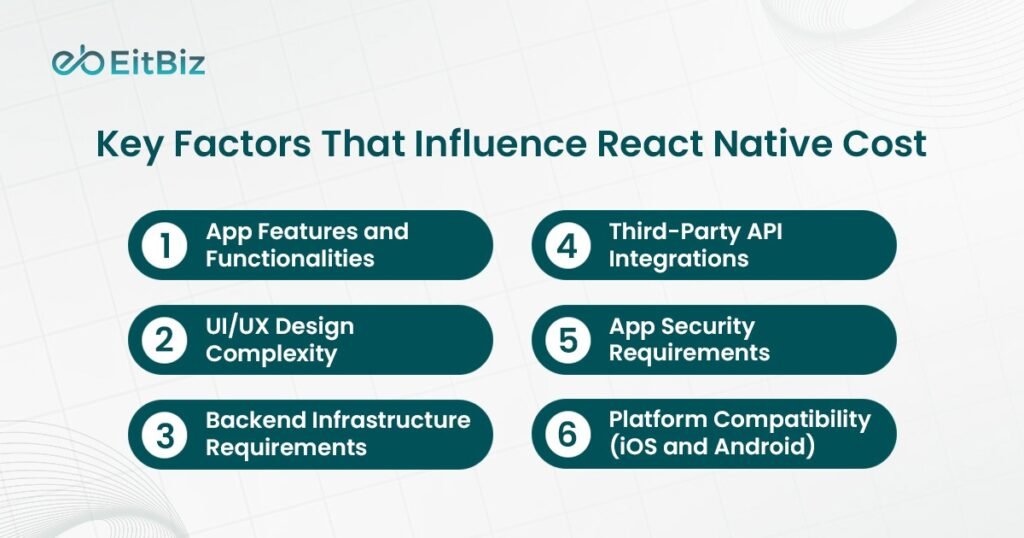
When businesses plan to build a mobile app, one of the biggest questions is how much it will cost. The react native cost is not a fixed number because several variables affect the final price. Each app is unique. Its design, features, integrations, and development team all contribute to the overall cost.
Understanding these factors helps businesses plan their budget more accurately and avoid unexpected expenses during development. Below are the most important factors that influence the overall cost and timeline of React Native app development.
1. App Features and Functionalities
The number and complexity of features play the biggest role in determining the Average React Native App Development Cost. A simple app with basic functions requires less development time compared to an app with advanced capabilities.
For example, an app that only displays information or basic content will require minimal coding and testing. In contrast, an app that includes user accounts, real-time messaging, payment systems, or location tracking requires more development work and backend infrastructure.
Common features that impact react native cost include:
- User registration and login
- Social media integration
- Real-time chat and messaging
- Push notifications
- Payment gateway integration
- In-app purchases
- GPS and location tracking
- Video or audio streaming
- Offline functionality
Each additional feature increases development time. For instance, implementing a secure payment gateway may require backend configuration, testing, and compliance with security standards. As a result, the overall cost and timeline of React Native app development increase.
Businesses often reduce costs by starting with a Minimum Viable Product (MVP). An MVP focuses on core features first and allows companies to expand functionality later.
2. UI/UX Design Complexity
User interface (UI) and user experience (UX) design are critical elements of any mobile application. A well-designed interface improves usability and keeps users engaged. However, design complexity can significantly influence the react native cost.
A basic UI with standard components such as buttons, menus, and simple layouts requires less design effort. Developers can use existing UI libraries and templates to speed up development.
On the other hand, custom interfaces with animations, transitions, gestures, and interactive elements require additional design and development time. Designers must create detailed wireframes, prototypes, and user flows before development begins.
Examples of design elements that increase cost include:
- Custom animations and transitions
- Interactive dashboards
- Advanced gesture controls
- Personalized user experiences
- Multi-language interface design
Design iterations also affect the overall cost and timeline of React Native app development. If businesses request multiple revisions or major design changes during development, the project timeline may extend, which increases the total cost.
Investing in good UI/UX design early in the process can reduce long-term expenses. A clear design strategy minimizes rework and ensures smoother development.
3. Backend Infrastructure Requirements
Backend development is another major factor that affects the Average React Native App Development Cost. The backend is responsible for handling data storage, server logic, authentication, APIs, and communication between the mobile app and databases.
Some apps require minimal backend infrastructure. For example, a simple content-based app may only need a small database and basic API integration.
However, feature-rich apps often require advanced backend systems that handle large amounts of data and user activity. Examples include:
- Real-time chat systems
- Cloud-based storage
- Content management systems
- Recommendation engines
- Data analytics and reporting
Developers often use cloud platforms such as AWS, Google Cloud, or Firebase to build scalable backend systems. These platforms help manage user data, push notifications, and server operations.
While cloud services simplify development, they also add ongoing operational costs. Businesses must consider hosting fees, database usage, and API requests when calculating the total react native cost.
The complexity of backend architecture also influences the react native developer hourly rate required for the project. Experienced backend developers often charge higher rates due to their specialized skills.
4. Third-Party API Integrations
Most modern apps rely on third-party services to provide additional functionality. Integrating these services can significantly influence the react native cost.
Third-party APIs allow developers to add features without building everything from scratch. This approach saves development time but may involve subscription fees or licensing costs.
Common third-party integrations include:
- Payment gateways (Stripe, PayPal)
- Social media login (Google, Facebook, Apple)
- Map and location services
- Analytics tools
- SMS and email notifications
- Cloud storage services
Each integration requires configuration, testing, and security validation. Developers must ensure that the APIs work smoothly with the React Native framework and backend systems.
In some cases, third-party APIs limit customization. Developers may need to build additional features around these services to meet specific business requirements. This extra work increases the overall cost and timeline of React Native app development.
5. App Security Requirements
Security is a critical factor for mobile applications, especially those that handle sensitive user data or financial transactions. Strong security measures protect both the business and its users.
Implementing advanced security protocols can increase the react native cost, but it is essential for building trustworthy applications.
Key security features that influence development costs include:
- Data encryption
- Secure authentication systems
- Two-factor authentication
- Secure payment processing
- GDPR or data privacy compliance
- Protection against cyber threats
For example, fintech or healthcare apps must comply with strict regulatory standards. These industries often require advanced encryption, secure data storage, and compliance audits.
Security testing is also part of the development process. Developers perform vulnerability assessments and penetration testing to identify potential risks. These processes increase development time but ensure that the app meets industry standards.
Businesses should treat security as a long-term investment rather than a cost. Poor security can lead to data breaches, legal issues, and reputational damage.
6. Platform Compatibility (iOS and Android)
One of the biggest advantages of React Native is its cross-platform capability. Developers can write a single codebase and deploy it on both iOS and Android devices. This approach significantly reduces the react native cost compared to building separate native apps.
However, some platform-specific adjustments may still be required. Differences in operating systems, hardware features, and design guidelines can affect development.
For example:
- Apple and Android have different design standards.
- Some device features may behave differently on each platform.
- Certain APIs may require platform-specific code.
Developers often perform additional testing to ensure that the app works smoothly on multiple screen sizes and operating systems. This testing process ensures consistent performance across both platforms.
Despite these adjustments, React Native still offers major cost savings. Businesses can avoid building two separate development teams for iOS and Android. As a result, the Average React Native App Development Cost remains significantly lower compared to traditional native development.

Hidden Costs in React Native App Development
Many entrepreneurs overlook post-development costs. Common hidden expenses include:
- App Store & Play Store registration fees ($25-$99)
- Maintenance and updates (15-20% of total cost annually)
- Cloud hosting and server fees ($20-$500/month depending on traffic)
- Third-party library subscriptions
Proper planning for these costs ensures no unpleasant surprises after launch.
Strategies to Reduce React Native App Development Cost
- Start with an MVP: Focus on core features first.
- Hire wisely: Freelancers or dedicated agencies can offer better rates than full in-house teams.
- Use ready-made libraries: Avoid building everything from scratch.
- Cross-platform efficiency: Leverage React Native fully to reduce separate iOS/Android costs.
- Continuous testing: Catching bugs early reduces costly rework.
Case Studies: Real-Life React Native Cost Scenarios
1. Facebook
Facebook uses React Native extensively for its Ads Manager app. Instead of separate iOS/Android teams, React Native allowed them to save thousands of developer hours. While their react native cost isn’t public, estimates suggest large-scale apps like this could exceed $50,000 in development, with ongoing maintenance costing tens of thousands per year.
2. Discord
Discord switched to React Native to unify mobile development. With React Native, they reduced release cycles, meaning the cost and timeline of React Native app development decreased significantly.
3. Instagram
Instagram integrated React Native into its existing app gradually. Initial investment was moderate, but long-term savings on updates and multi-platform maintenance were substantial.
Hiring the Right React Native Developer
Choosing the right developer is critical for managing react native cost efficiently:
- Look for proven experience in cross-platform apps.
- Check portfolios for apps with similar complexity.
- Evaluate knowledge of both frontend and backend integration.
- Consider communication and time zone compatibility for remote teams.
For a reliable option, explore “React Native development services” or “Hire React Native developers”.
Questions to Ask Before Hiring Developers
Hiring the right developers is one of the most critical steps in managing the cost and timeline of React Native app development. Choosing the wrong team can lead to delays, budget overruns, or even a product that doesn’t meet your expectations. To make a confident decision, you need to ask the right questions before bringing anyone on board.
Here’s a practical guide to the key questions you should ask when evaluating React Native developers or teams:
1. What is Your Experience with React Native?
Not all developers who know JavaScript or React can efficiently build a mobile app with React Native. Ask about their:
- Years of experience with React Native
- Number and types of apps developed
- Specific examples of apps published on the App Store or Google Play
Tip: A developer with experience in apps similar to yours will understand potential challenges and deliver faster results.
2. Can You Share Your Portfolio or Case Studies?
A portfolio is the best proof of skill. Look for apps that showcase:
- Clean and intuitive UI/UX
- Smooth performance across devices
- Features similar to what you need
Case studies that include challenges, solutions, and measurable results demonstrate their problem-solving skills and technical depth.
3. What is Your React Native Developer Hourly Rate or Pricing Model?
Understanding pricing upfront helps you plan your budget. Some developers charge:
- Hourly rates: Common for freelance developers or agencies
- Fixed project rates: Usually for clearly defined MVPs
- Retainer or ongoing contracts: For long-term maintenance or updates
Make sure to clarify whether the rate includes backend development, testing, and post-launch support. Hidden costs can inflate your react native cost if not discussed upfront.
4. How Do You Handle App Architecture and Code Quality?
A poorly structured codebase can cause problems down the line, especially when adding features or fixing bugs. Ask about:
- Code architecture (e.g., MVC, MVVM, or Redux for state management)
- Use of reusable components
- Testing procedures for code quality
Good developers follow best practices, maintain clean code, and ensure scalability—this directly impacts future maintenance costs.
5. How Do You Manage Communication and Project Updates?
Regular updates prevent misunderstandings and delays. Key points to clarify:
- Preferred communication channels (Slack, email, Zoom)
- Frequency of progress updates
- Project management tools used (Jira, Trello, Asana)
Clear communication ensures the cost and timeline of React Native app development stay on track.
6. What is Your Testing and QA Process?
Testing is crucial for app stability and performance. Ask about:
- Types of testing performed (unit, integration, UI/UX)
- Manual vs. automated testing strategies
- Bug-fixing policy after release
A thorough QA process reduces unexpected issues and prevents costly fixes after launch.
7. Can You Handle Backend and Third-Party Integrations?
Many React Native apps require backend support and third-party services. Check if they have experience with:
- APIs, cloud storage, and server-side logic
- Payment gateway integration (Stripe, PayPal)
- Push notifications and analytics platforms
Having developers who can manage both frontend and backend reduces delays and extra react native cost associated with hiring separate teams.
8. What Is Your Approach to App Security?
Security is non-negotiable, especially for apps handling sensitive data. Ask:
- How do you implement secure authentication?
- What data encryption methods do you use?
- Are you familiar with GDPR, HIPAA, or other compliance standards?
A developer who prioritizes security saves you from future legal and reputational risks.
9. Can You Provide Post-Launch Support and Maintenance?
Development doesn’t end at launch. Ask about:
- Bug fixes after app release
- Feature updates and enhancements
- Ongoing monitoring and support
Having a developer or team that offers post-launch support ensures smooth operation without additional hiring costs.
10. How Do You Estimate Timeline and Deliverables?
Finally, ensure the developer can provide a realistic project roadmap. They should clearly outline:
- Estimated cost and timeline of React Native app development
- Milestones and deadlines for each feature or phase
- Contingency plans for potential delays
A clear roadmap helps you avoid scope creep and unexpected budget increases.
Why Businesses Prefer to Hire React Native Developers?

In today’s fast-paced digital landscape, businesses want apps that are reliable, scalable, and cost-efficient. This is why many companies choose to hire React Native developers instead of building separate native teams for iOS and Android.
Here’s why this approach is so popular:
1. Cross-Platform Expertise Saves Time and Money
React Native allows developers to write a single codebase for both iOS and Android. Hiring a skilled React Native developer reduces the need for separate teams, which directly lowers development costs and shortens timelines. Businesses can launch apps faster while maintaining consistent quality across platforms.
2. Access to Experienced Talent
By hiring dedicated React Native developers, businesses gain access to professionals with expertise in both mobile and web technologies. Experienced developers understand best practices, know how to integrate third-party APIs, and can create smooth, responsive apps. This expertise minimizes bugs and improves user experience, which saves money in the long run.
3. Scalability and Flexibility
React Native developers are familiar with scalable architectures, state management solutions, and backend integrations. This ensures that apps can handle growing user bases, additional features, and complex business logic. Companies can start with a core MVP and gradually expand their app without rewriting it entirely.
4. Efficient Maintenance and Updates
Post-launch updates are inevitable. Hiring React Native developers ensures that your app can be maintained efficiently. They can implement new features, fix bugs, and optimize performance without causing major disruptions or delays. This reduces ongoing react native cost and ensures your app stays competitive.
5. Leveraging Community and Open-Source Libraries
React Native has a large developer community. Professionals know how to utilize open-source libraries and frameworks effectively, which accelerates development and reduces costs. Hiring someone familiar with these resources avoids unnecessary trial-and-error and ensures a smoother workflow.
Key takeaway: Businesses prefer to hire React Native developers because it balances cost, speed, and quality. Companies get a skilled professional who can handle full-cycle app development, from design to deployment and maintenance, without the need for multiple specialized teams.
For businesses looking to streamline development, exploring React Native development services or directly hiring React Native developers can be a strategic move to reduce costs and accelerate time-to-market.
Conclusion
The cost and timeline of React Native app development can range from $5,000 for a simple MVP to over $50,000 for a fully-featured, enterprise-grade app. Proper planning, prioritizing core features, and using scalable architectures can help businesses optimize costs while ensuring a high-quality user experience.
Looking to develop a high-quality, scalable mobile app without blowing your budget? EitBiz is your trusted partner for professional React Native development services. Our team of skilled developers specializes in building cross-platform apps that run seamlessly on both iOS and Android, helping businesses save time and reduce development costs.
Whether you want to launch an MVP quickly or scale a feature-rich enterprise app, you can hire React Native developers from EitBiz to ensure your project stays on schedule, secure, and optimized for performance. We combine industry expertise, best coding practices, and creative design solutions to deliver apps that delight users and drive business growth.
Ready to turn your app idea into reality? Contact EitBiz today and let our experts build a high-performing, cost-effective React Native app tailored to your business needs!