2026 is here!
And it’s no better time to run into dating app development! Sounds surprising, doesn’t it?
Well, the stats don’t lie!
Did you know?
The global online dating app market is expected to exceed USD 14.42 billion by 2030. (Source: Grand View Research).
That’s not just a trend. That’s a shift in how relationships begin, grow, and sometimes even end.
From casual swipes to long-term commitments, dating apps now shape real human connections at scale.
Let’s take an example to understand!
A couple meets on a dating app during a late-night scroll. One swipe leads to a chat. That chat turns into a coffee date. Two years later, they’re planning a wedding. This isn’t a rare story anymore; it’s everyday life.
So, here’s the real question:
If millions are finding love through apps, don’t you want your app to be the No. 1 platform for love seekers?
But building a dating app today isn’t just about matching profiles and adding a swipe button. Users expect more intelligent algorithms, safer interactions, seamless experiences, and real value, not empty matches.
- So how do you build a dating app that people actually trust, enjoy, and keep coming back to?
- What are the top dating app features that matter in 2026?
- How do successful platforms stand out in a crowded market?
- And what mistakes should you avoid before you even write your first line of code?
Let’s dive into everything you need to know about dating app development, so you can turn an idea into a dating platform that users genuinely love.
Why are Dating Apps Growing in 2026?
Dating apps are digital platforms that help individuals connect for romantic or social relationships. These applications allow users to create profiles, set preferences, and discover potential matches based on factors such as location, interests, behavior, and compatibility algorithms. Most dating apps operate on mobile devices and offer features like profile browsing, matching, messaging, and in-app communication tools.
Over time, dating apps have evolved from simple matchmaking tools into data-driven platforms that prioritize personalization, safety, and user engagement. Today, they play a central role in how people initiate relationships, making them a mainstream part of modern social interaction.
- Dating apps currently serve over 350 million active users worldwide, representing a significant portion of the global internet population.
- User adoption continues to grow, with mobile apps accounting for more than 90% of total dating platform usage.
- The industry supports more than 25 million paying subscribers globally, demonstrating a strong willingness to pay for enhanced visibility and features.
That’s how aggressively dating apps are growing!
What are the Types of Dating Apps to Build in 2026?
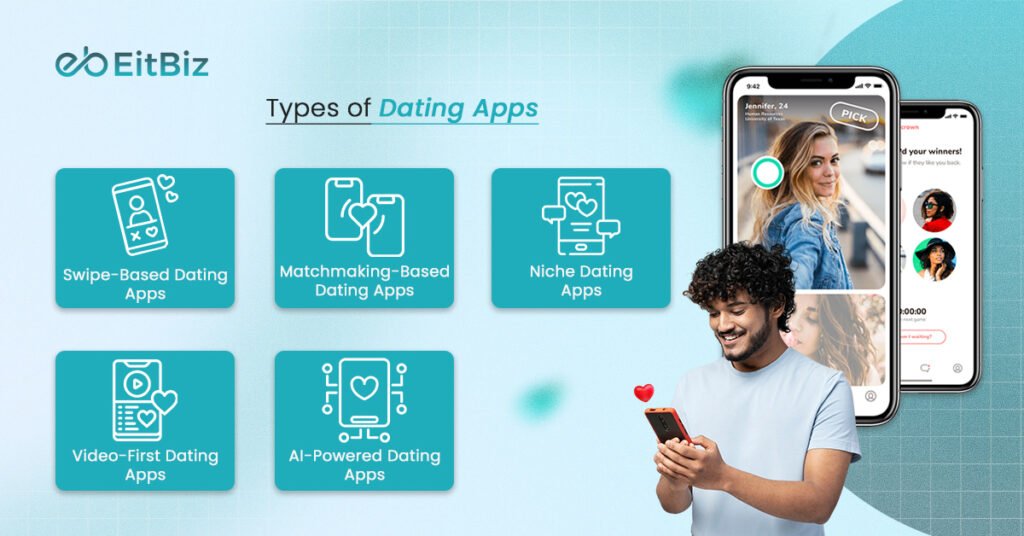
The dating app market continues to evolve as user expectations change and technology advances. In 2026, successful dating platforms will focus on personalization, trust, and meaningful connections rather than mass matching. Understanding the different types of dating apps helps businesses choose the right concept based on audience, monetization goals, and technical complexity.
1. Swipe-Based Dating Apps
Swipe-based dating apps remain popular due to their simplicity and speed. Users browse profiles and swipe to like or skip potential matches. A match occurs when both users show interest. These apps work best for large audiences and casual interactions. However, competition is high, so differentiation through smarter matching, safety features, or niche targeting becomes essential in 2026.
2. Matchmaking-Based Dating Apps
Matchmaking apps focus on compatibility rather than volume. They use questionnaires, preferences, and behavior analysis to suggest matches with higher intent. In 2026, many platforms will combine traditional matchmaking with AI-driven recommendations to improve match quality and user satisfaction.
3. Niche Dating Apps
Niche dating apps serve specific communities based on interests, profession, lifestyle, religion, or values. These platforms often attract highly engaged users because they address clear needs. As mainstream dating apps become crowded, niche platforms will continue to grow due to more substantial user alignment and retention.
4. Video-First Dating Apps
Video-first dating apps prioritize short videos, live streams, or video profiles over static photos. This format helps users assess personality and authenticity more effectively. In 2026, video-first platforms will benefit from improved mobile bandwidth, AI moderation, and rising user comfort with video interactions.
5. AI-Powered Dating Apps
AI-powered dating apps use machine learning to analyze user behavior, communication patterns, and preferences. These platforms deliver more brilliant match suggestions and adaptive recommendations. In 2026, AI will play a central role in matchmaking accuracy, safety monitoring, and user engagement optimization.
{Also Read: How to Make a Dating App Like Tinder: Things to Know}
What are the Must-Have Features for a Successful Dating App?
If you’re planning to build a successful dating app that has a competitive edge, incorporating the right features is crucial. Remember that in 2026, users expect speed, safety, personalization, and simplicity. Here are the must-have features for a successful dating app.
- User Registration & Profile Creation
Users expect to sign up via email, phone number, or social accounts, then complete a simple profile setup with photos, interests, preferences, and a short bio.
- Smart matching and discovery
A strong matching system is critical. The app should suggest profiles based on location, preferences, behavior, and compatibility signals.
- Swiping or browsing mechanism
Users need an intuitive way to explore profiles. Whether through swipes, lists, or curated suggestions, navigation must feel natural and responsive.
- In-app messaging and chat
Real-time messaging allows users to connect once a match occurs. Features such as read receipts, media sharing, emojis, and message controls improve conversation flow while maintaining privacy.
- Push notifications
Notifications keep users engaged by alerting them to new matches, messages, or profile activity.
- Profile verification and safety tools
Trust is essential. Photo verification, identity checks, reporting, blocking, and moderation tools protect users and reduce fake accounts. Safety features directly impact retention and brand reputation.
- Privacy and control settings
Users expect control over visibility, location sharing, and who can contact them. Clear privacy settings build confidence and encourage longer platform usage.
- AI-powered recommendations
Personalization improves outcomes. AI can refine matches over time based on user behavior, preferences, and interactions, increasing the likelihood of meaningful connections.
{Also Read: From Chatbots to AI Recommendations: Keeping Users Engaged Through Smarter Features}
- Video and voice interaction
Video profiles, voice notes, and in-app calls help users connect more authentically. These features reduce uncertainty and increase trust before meeting offline.
- Monetization features
Premium plans, boosts, advanced filters, and profile visibility upgrades support sustainable revenue. Monetization should enhance, not disrupt, the user experience.
- Analytics and performance tracking
Behind the scenes, analytics help track engagement, match success rates, monitor churn, and measure feature usage. These insights guide continuous improvement and product growth.
MVP vs Full-Scale Dating App: What Should You Build First?
When planning dating app development in 2026, founders often face a critical decision: build an MVP dating app or invest directly in a full-scale dating app. The right choice depends on validation goals, budget, time-to-market, and long-term growth strategy. This comparison breaks down both approaches to help you make a data-driven decision.
| Aspect | MVP Dating App | Full-Scale Dating App |
| Primary Goal | Validate the dating app idea and user demand | Scale the product and maximize revenue |
| Time to Market | Fast launch (8-12 weeks) | Longer development cycle |
| Core Features | User profiles, basic matchmaking, chat | Advanced AI matchmaking, video chat, subscriptions, safety tools |
| Development Cost | Lower initial investment | Higher upfront cost |
| User Feedback | Early, real-world validation | Optimized for existing user expectations |
| Scalability | Limited but extendable | Built for high traffic and global users |
| Risk Level | Low risk due to early testing | Higher risk without prior validation |
How to Build a Successful Dating App in 2026?
Building a dating app in 2026 requires focus, clarity, and smart execution. Instead of trying to do everything at once, successful products concentrate on a few critical areas that directly impact adoption, trust, and long-term growth. Below are six essential steps that explain how to build a dating app that can succeed in today’s competitive market.
1. Define the App Concept and Target Audience
Start by identifying who the app is for and what problem it solves. Decide whether your platform targets casual dating, serious relationships, or a specific niche. A clear concept guides feature selection, user experience, and marketing. Without this clarity, even well-funded dating application development projects struggle to gain traction.
2. Design a Simple and Engaging User Experience
User experience plays a decisive role in retention. The app must be easy to understand, fast to use, and visually clean. Smooth onboarding, intuitive navigation, and responsive design are critical. Strong UX reduces drop-offs and improves engagement throughout the dating mobile app development process.
3. Build Smart Matching and Discovery Features
Matching is the heart of any dating app. Use user preferences, location, and behavior data to suggest relevant profiles. Refine the discovery logic over time to improve compatibility and reduce low-quality matches. Well-designed matching directly increases user satisfaction and repeat usage.
4. Prioritize Safety, Privacy, & Trust
Trust determines whether users stay or leave. Implement profile verification, reporting, blocking, and moderation tools from the beginning. Protect personal data with strong security measures and transparent privacy controls. Investing in safety early helps manage dating app development costs by avoiding major fixes later.
5. Choose the Right Technology and Development Partner
Your technology stack should support scalability and performance. Cloud infrastructure, secure databases, and flexible APIs are essential. Partnering with an experienced dating app developer or the best dating app development company in the USA, like EitBiz, ensures reliable execution, faster delivery, and access to proven dating app development services.
6. Launch, Measure, and Improve Continuously
Start with a focused MVP and test it with real users. Track engagement, matches, and retention metrics. Use insights to refine features and improve performance. Continuous improvement keeps your app relevant and competitive in a fast-moving market.
Best Technology Stack for Dating App Development in 2026
When it comes to dating app development, integrating the right technology is inevitable. Let’s have a quick look at the top trending technology stack to consider while building a dating app.
| Layer | Recommended Technology |
| Mobile App Development | Flutter 4 (with Dart 3) |
| Web App Development | Next.js 14 (React 18+) |
| Backend Framework | Node.js & NestJS |
| Primary Database | PlanetScale (MySQL compatible, serverless) |
| Real-Time Data & Caching | Redis (Redis Stack / Cloudflare Workers KV for edge) |
| AI & Matchmaking Engine | PythonFastAPI PyTorch / TensorFlow |
| Cloud Infrastructure | AWS / Google CloudCloudflare Workers |
| Authentication & Identity | Auth0 / Supabase Auth (OAuth 2.0 + MFA + WebAuthn) |
| Real-Time Communication | WebSocketsWebRTC / Stream Chat API |
| Payments & Subscriptions | Stripe |
| Analytics & Monitoring | Firebase AnalyticsSentryPostHog |
How Dating Apps Make Money: Monetization Models That Work?
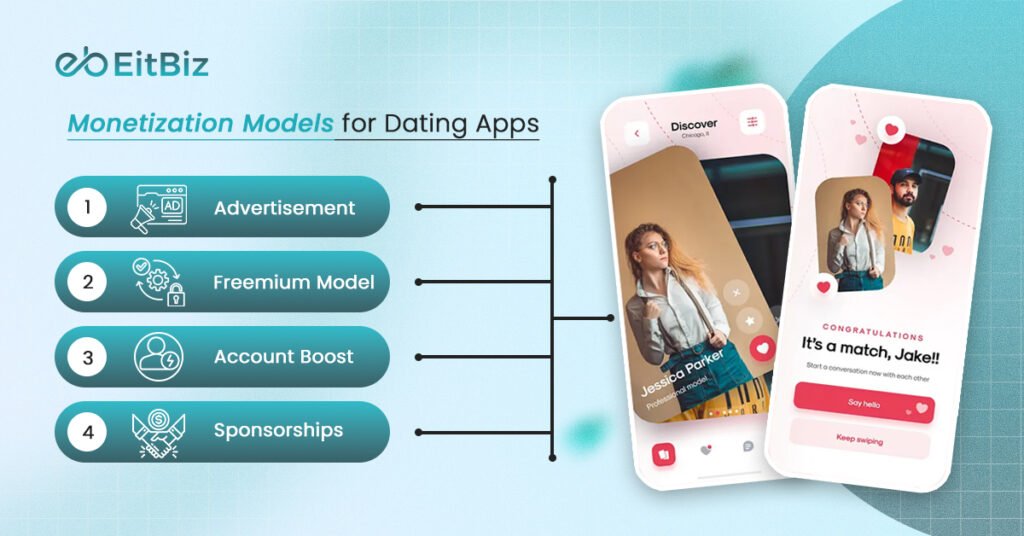
You built an app, great! But if you cannot generate money out of your dating app, your effort may go in vain. Don’t worry, we’ve compiled a list of the top monetization models that work well for your dating app so you can make money.
- Advertisement
The monetization model helps you display ads of other brands in your dating app (of different industry verticals). Whenever a user visits your app and clicks on the ad, the advertiser will pay you.
- Freemium Model
Under this dating monetization model, you’ll need to keep the basic app version free and offer the premium features at a price. When a user loves your basic free version, they will never hesitate to pay a price to unlock the full feature set.
- Account Boost
Integrate an account-boost feature and offer a paid version so users can boost their profiles and get the love of their life. In simple terms, if a user wants to boost their account for maximum visibility, they need to pay to reach the right audience.
- Sponsorships
If your app has everything it needs, then companies can approach you for paid partnerships or sponsorships. Simply promote their products or services through your app and get paid.
What are the Common Dating App Development Mistakes to Avoid in 2026?
Building a dating app in 2026 goes far beyond matching profiles and enabling chat. User expectations around safety, performance, and personalization continue to rise, and even small missteps can lead to low retention or trust issues. Below are the most common dating app development mistakes teams should actively avoid.
1. Ignoring User Safety and Trust Signals
Many dating apps still treat safety as an add-on instead of a core feature. When teams delay identity verification, moderation tools, or abuse-reporting systems, they risk eroding user trust. In 2026, users expect visible safety measures like profile verification, AI-driven fraud detection, and fast moderation responses. Apps that fail to prioritize trust struggle to retain users and damage their brand credibility.
2. Relying on Basic or Outdated Matchmaking Logic
Simple swipe-based logic no longer delivers meaningful connections. Apps that depend only on age, location, and photos miss opportunities to create real value. Modern users expect smarter matchmaking powered by behavioral data, preferences, and AI-driven recommendations. Without advanced matching algorithms, engagement drops and users quickly churn.
3. Underestimating Scalability and Performance
Many dating apps perform well during early launches but collapse when user activity spikes. Teams often overlook scalable backend architecture, real-time infrastructure, and cloud optimization. In 2026, apps must handle instant messaging, live updates, and global traffic without delays. Poor performance results in slow response times, failed matches, and negative reviews.
4. Overlooking Privacy and Data Compliance
Dating apps manage highly sensitive personal data, yet some teams still treat compliance as an afterthought. Ignoring data protection laws, consent management, or transparent privacy policies creates legal and reputational risks. Users now actively choose platforms that clearly explain how they store, process, and protect personal information. Strong privacy practices build long-term trust and authority.
5. Focusing on Features Instead of User Experience
Adding too many features often hurts usability. Many apps overload users with complex onboarding flows, excessive filters, or confusing interfaces. In 2026, successful dating apps focus on clarity, speed, and emotional comfort. Teams that design around real user behaviour, rather than feature checklists, see higher engagement and stronger retention.
How Much Does Dating App Development Cost in 2026?
This is usually the first question founders ask, and the honest answer is: it depends. The cost of building a dating app in 2026 varies widely based on what you want to develop, how fast you want to launch, and who builds it.
For a clearer starting point, many founders first estimate their budget using a mobile app cost calculator. It helps map features, platforms, and timelines before moving into development.
That said, most dating apps fall within a practical range of $5,000 to $50,000+.
Cost Breakdown by App Type
- Basic MVP dating app ($5,000 – $10,000)
This covers essential features like user profiles, basic matching, swiping, and chat. It’s ideal for testing your idea in the market with minimal risk.
- Mid-level dating app ($10,000 – $25,000)
This range includes better UI/UX, advanced filters, push notifications, and improved matching logic. Most startups choose this level to balance cost and quality.
- Advanced dating app ($25,000 – $50,000+)
Apps in this range include AI-powered recommendations, video profiles, real-time moderation, strong security, and scalable infrastructure. This is common for businesses planning rapid growth or long-term scalability.
Final Thoughts
Building a successful dating app in 2026 is not just about writing code or copying features from existing platforms. It requires a clear vision, a deep understanding of user expectations, and the ability to balance technology, trust, and experience. From choosing the right type of dating app to designing essential features, planning costs, and selecting a scalable development approach, every decision plays a role in long-term success.
The dating app market continues to grow, but users are more selective than ever. They expect smarter matching, safer interactions, and smooth performance across devices. Businesses that focus on quality, simplicity, and continuous improvement stand the best chance of creating apps that users return to and recommend.
This is where the right development partner makes a difference.
At EitBiz, we specialize in building secure, scalable, and user-focused dating applications tailored to modern market demands. As a trusted dating app development company, our team helps businesses turn ideas into high-performing platforms, whether you’re launching an MVP or scaling an advanced solution. From strategy and design to development and ongoing support, we deliver end-to-end dating app development services that align with your goals and budget. Thinking about building your dating app? Reach out to EitBiz and explore how we can help you build a dating app that’s ready for 2026 and beyond.