Key Takeaways
- Building a successful fintech product requires more than features; it depends on strong planning, secure architecture, and a clear understanding of user needs in fintech app development.
- Apps like Cash App succeed because they combine simplicity, speed, and trust, making mobile payment apps easy and accessible for everyday users.
- Security, compliance, and fintech app security solutions are not optional; they are essential foundations for building reliable financial applications.
- The overall app development cost varies widely based on features, integrations, and scalability, typically ranging from MVP-level builds to advanced platforms.
- Choosing the right team or deciding to hire fintech app developers can significantly impact product quality, time-to-market, and long-term success.
Take a moment and think about the last time you handled cash. Not checked your balance. Not tapped your phone. Actual physical cash.
For most people, that moment is getting rarer.
Today, sending money is as simple as typing a name, entering an amount, and tapping “send.” Whether it’s splitting a dinner bill, paying rent, or investing spare change, mobile payment apps have quietly become the default way people interact with money.
And this shift isn’t small, it’s massive.
According to recent data, the global fintech market is projected to reach $460.76 billionin 2026, continuing a rapid upward trend fueled by mobile adoption and digital payments. Even more striking, digital payment transactions alone crossed $13 trillion globally, showing just how central mobile payment apps have become in everyday life.
User behavior tells the same story. More than 78% of internet users worldwide now use at least one fintech service regularly, whether for payments, lending, or investing. In simple terms, fintech is no longer a niche; it’s mainstream.
So what’s driving this explosion?
- Smartphones are everywhere
- Internet access is faster and cheaper
- Users expect instant, frictionless services
- Traditional banking often feels slow and outdated
This is exactly where money apps like Cash App step in. They remove the complexity of traditional finance and replace it with speed, simplicity, and control, all wrapped in a clean, mobile-first experience.
For businesses and startups, this presents a clear opportunity. If millions of users are already comfortable managing money through apps, building the next generation of fintech products isn’t just viable, it’s expected.
But here’s the catch!
Building a fintech app isn’t just about coding a payment feature. It involves security, compliance, user trust, seamless design, and scalable architecture.
That’s exactly what this guide will walk you through: how to approach fintech app development step by step, what it costs, what features matter, and how to build an app that people actually trust with their money.
What Is a Fintech App?
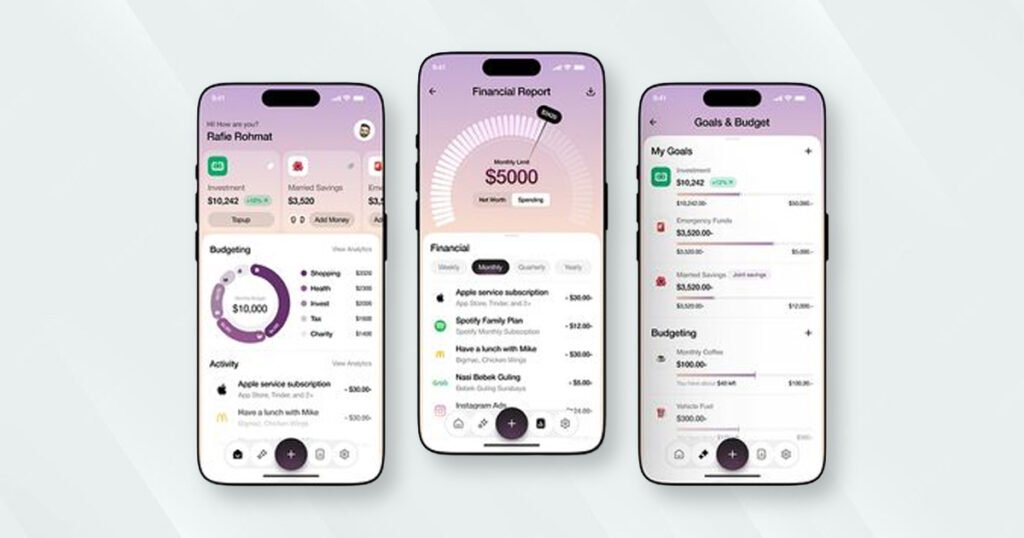
A fintech app is a software application designed to deliver financial services through digital platforms, primarily smartphones. Instead of visiting a bank or relying on traditional financial institutions, users can manage their money directly from an app.
From a fintech app development perspective, these apps are built to replace or enhance traditional financial processes. For example, instead of filling out paperwork at a bank, users can open an account in minutes through a mobile interface. Instead of waiting days for transfers, they can send money instantly using mobile payment apps.
There are several types of fintech apps, each serving a specific purpose:
- Payment apps for peer-to-peer transfers and bill payments
- Digital wallet apps that store money and enable quick transactions
- Investment apps for stocks, mutual funds, or crypto
- Lending apps that offer quick loans and credit services
What sets fintech apps apart from regular apps is their ability to handle sensitive financial data securely while delivering a smooth user experience. This is why fintech software development focuses heavily on encryption, compliance, and reliability alongside usability.
Why Money Apps like Cash App Are So Popular?
The popularity of apps like Cash App isn’t accidental; it’s the result of solving everyday financial problems in the simplest way possible while aligning with how people already use their smartphones.
Instant and frictionless transactions
One of the biggest reasons behind the success of apps like Cash App is speed. Users can send and receive money within seconds, without dealing with long processing times or complex steps. This level of convenience has set a new standard for mobile payment apps, where users expect real-time transfers and minimal effort. In payment app development, reducing friction at every step, login, transfer, and confirmation, is what keeps users coming back.
All-in-one financial functionality
Modern users don’t want multiple apps for different financial needs. Platforms like Cash App combine payments, wallet services, banking features, and even investments into a single interface. This approach is a key focus in fintech app development, where businesses aim to build comprehensive ecosystems rather than standalone tools. It simplifies money management and increases user retention.
Seamless user experience and simple design
A major factor behind widespread adoption is the clean and intuitive interface. Even first-time users can navigate the app without confusion. This highlights the importance of fintech app development services comes in, where design is not just about aesthetics but about usability. The easier it is to complete a transaction, the more likely users are to trust and use the app regularly.
Strong security and trust factors
Handling money requires a high level of trust, and successful apps prioritize security at every layer. Features like encryption, multi-factor authentication, and fraud detection systems are essential fintech app security solutions that protect user data and transactions. Without robust fintech app solutions focused on safety, even the most feature-rich app would struggle to gain traction.
Accessibility and mobile-first approach
Apps like Cash App are built primarily for smartphones, making them accessible anytime, anywhere. This mobile-first strategy aligns with the growing demand for on-the-go financial services. Businesses investing in wallet app development and broader mobile application development are focusing on creating lightweight, responsive apps that work seamlessly across devices, ensuring a wider reach and better engagement.
What are the Key Features of Successful Money Apps Like Cash App?
To build a competitive product in fintech app development, it’s essential to focus on features that directly impact usability, security, and transaction efficiency.
- User Registration and KYC Verification: Simple onboarding with secure identity verification ensures compliance and builds user trust from the start.
- Peer-to-Peer (P2P) Payments: Enables users to instantly send and receive money, which is the core functionality of most mobile payment apps.
- Wallet Integration: A built-in wallet allows users to store funds digitally and manage balances without relying on external systems.
- Bank Account Linking: Seamless connection with bank accounts ensures smooth transfers and enhances the usability of payment apps.
- Payment Gateway Integration: Reliable payment gateway integration enables secure and real-time processing of transactions within the app.
- Security and Fraud Detection: Advanced fintech app security solutions help protect sensitive data and prevent unauthorized transactions.
- Push Notifications: Real-time alerts keep users informed about transactions, updates, and security activities.
- Transaction History: Detailed records of all activities improve transparency and help users track their financial behavior easily.
Cash App vs PayPal: Understanding the Competitive Landscape
When planning your fintech app development strategy, comparing established platforms helps clarify what works, what users expect, and where you can differentiate. Two major players in this space are Cash App and PayPal, both offering digital payments but with different approaches to user experience, features, and scale.
| Feature | Cash App | PayPal |
|---|---|---|
| Primary Focus | Peer-to-peer payments with added financial tools | Global digital payments for individuals and businesses |
| User Experience | Minimal, mobile-first, highly intuitive | Feature-rich but slightly more complex interface |
| Onboarding Process | Quick and simple signup | More detailed verification process |
| Global Availability | Limited (mainly US & UK) | Available in 200+ countries |
| Peer-to-Peer Payments | Instant and core feature | Available but not the primary focus |
| Additional Features | Stocks, Bitcoin trading, debit card | Merchant payments, invoicing, subscriptions |
| Business Support | Limited | Strong ecosystem for businesses and merchants |
| Transaction Fees | Lower for basic transfers | Varies based on service and region |
Types of Fintech Apps You Can Build
Before starting with fintech app development, it’s important to decide what type of financial solution you want to offer, as each category serves a different user need and requires a different approach to features, compliance, and scalability.
Mobile Payment Apps
These are the most common payment apps, allowing users to send and receive money instantly through their smartphones; mobile payment apps focus heavily on speed, ease of use, and reliable payment gateway integration to ensure smooth transactions.
Digital Wallet Apps
Built through mobile wallet app development, these apps store user funds digitally and enable quick payments, bill settlements, and contactless transactions, making them a core part of modern fintech app solutions.
Investment and Trading Apps
These apps allow users to invest in stocks, cryptocurrencies, or mutual funds, requiring advanced dashboards, real-time data processing, and secure infrastructure as part of robust fintech software development.
Lending Apps
Lending apps provide quick loans and credit services, often using automation and artificial intelligence services to assess risk, verify users, and approve loans faster while maintaining strong fintech app security solutions.
Step-by-Step Guide to Fintech App Development
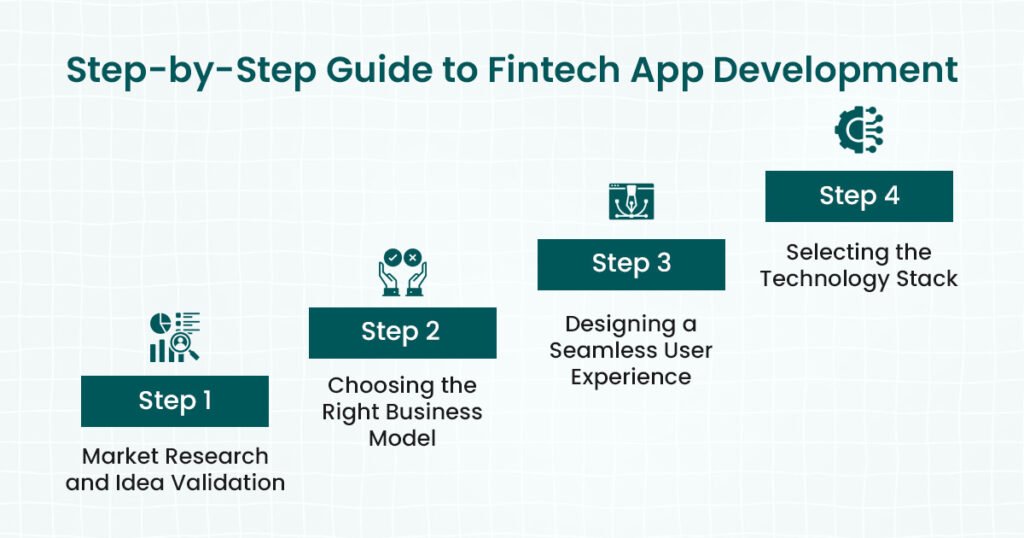
Building a successful product in fintech app development isn’t just about writing code; it’s about making the right decisions at every stage, from idea validation to launch and beyond.
1. Market Research and Idea Validation
Before building anything, you need to confirm that your idea solves a real problem. Start by identifying your target audience: Are you building for individuals, small businesses, or a niche segment like freelancers? Study existing payment apps and mobile payment apps to understand what they do well and where they fall short. Look at user reviews, pricing models, and feature gaps. This phase should end with a clear value proposition, what makes your app different and why users would switch to it.
2. Choosing the Right Business Model
Your business model determines how your app will make money and sustain itself. Common models in fintech app solutions include transaction fees, subscription plans, interchange fees (from cards), or premium features. For example, many payment apps offer free basic transfers but charge for instant withdrawals or business transactions. Choosing the right model early helps you design features and user flows that align with revenue generation without negatively impacting user experience.
3. Designing a Seamless User Experience
User experience can make or break your app. Financial apps deal with sensitive actions, so users expect clarity, speed, and reliability. A strong fintech app development service’s seamless user experience approach focuses on reducing the number of steps required to complete actions like sending money or checking balances. Clean interfaces, clear call-to-actions, and real-time feedback (like instant confirmations) are critical. The goal is to make even complex financial tasks feel simple and intuitive.
4. Selecting the Technology Stack
Choosing the right technology stack is essential for scalability, performance, and security. In fintech software development, this typically includes frontend frameworks like Flutter or React Native, backend technologies like Node.js or Python, and cloud platforms like AWS or Google Cloud. Your stack should support secure APIs, fast data processing, and easy integration with third-party services such as banks and payment gateway integration providers. A poor tech choice at this stage can lead to scalability issues later.
5. Development and Testing
This is where your idea turns into a working product. Development is usually done in phases, starting with a Minimum Viable Product (MVP) that includes core features like wallet functionality and transactions. During this stage, payment gateway integration is critical for enabling real-time transactions. Testing is equally important, covering functionality, usability, and especially security. Since financial data is involved, implementing strong fintech app security solutions like encryption, authentication, and fraud detection is non-negotiable.
6. Deployment and Launch
Once the app is tested and ready, it’s deployed on platforms like iOS and Android. But launch is just the beginning. You need to monitor performance, track user behavior, and fix issues quickly. Regular updates, feature improvements, and scalability planning are part of ongoing mobile application development. A successful launch also includes user onboarding strategies, support systems, and feedback loops to refine the product continuously.
Compliance and Regulations in Fintech App Development
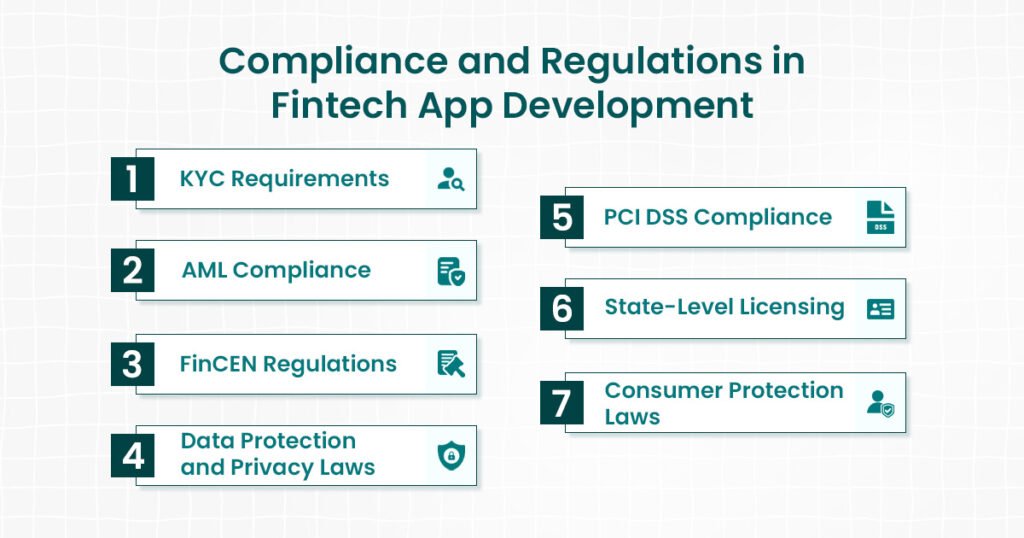
When building a product in fintech app development, compliance isn’t optional; it’s a core requirement. In the United States, fintech apps operate in a highly regulated environment designed to protect consumers, prevent fraud, and ensure financial transparency. Ignoring these regulations can lead to heavy penalties, legal issues, or even a shutdown.
Here are the key regulatory areas you need to understand:
1. KYC (Know Your Customer) Requirements
Fintech apps must verify user identity before allowing financial transactions. This includes collecting and validating personal information such as name, address, date of birth, and government-issued ID. KYC is essential for preventing identity theft and is a foundational part of secure fintech app solutions.
2. AML (Anti-Money Laundering) Compliance
Under U.S. law, fintech companies must implement AML programs to detect and prevent illegal financial activities. This includes monitoring transactions, flagging suspicious behavior, and reporting it to authorities when necessary. Many apps use AI app development techniques to automate fraud detection and risk analysis.
3. FinCEN Regulations
The Financial Crimes Enforcement Network (FinCEN) requires fintech apps dealing with money transfers to register as Money Services Businesses (MSBs). This involves maintaining records, reporting large or suspicious transactions, and implementing AML policies.
4. Data Protection and Privacy Laws
Apps must comply with data protection standards to safeguard user information. While the U.S. does not have a single unified data privacy law, regulations like the California Consumer Privacy Act (CCPA) require transparency in how user data is collected, stored, and used. Strong fintech app security solutions such as encryption and secure APIs are critical here.
5. PCI DSS Compliance
If your app handles card payments, it must comply with the Payment Card Industry Data Security Standard. This ensures that cardholder data is processed, stored, and transmitted securely, an essential requirement for any payment gateway integration.
6. State-Level Licensing
In addition to federal regulations, many US states require separate licenses for money transmission. This means your app may need to apply for licenses in multiple states, depending on where you operate, which can significantly impact your fintech app development cost and timeline.
7. Consumer Protection Laws
Agencies like the Consumer Financial Protection Bureau (CFPB) enforce rules that ensure fair treatment of users. This includes transparency in fees, dispute resolution processes, and clear communication of financial terms.
Cost Breakdown: Fintech App Development Cost
The fintech app development cost typically ranges between $5,000 to $50,000+, depending on the app’s complexity, features, and security requirements. Starting with a focused MVP helps keep costs controlled while allowing room to scale.
| Development Stage / Type | Estimated Cost | What’s Included |
| Basic MVP App | $5,000 – $10,000 | • User registration• Basic wallet• Simple transactions |
| Standard Fintech App | $10,000 – $25,000 | • Enhanced UI/UX• Bank integration• Payment gateway integration |
| Advanced Fintech App | $25,000 – $50,000+ | • Advanced features• High-level security• Scalable fintech app solutions |
| UI/UX Design | $2,000 – $8,000 | • Wireframes• User-friendly design• Seamless experience |
| Backend Development | $5,000 – $20,000 | • APIs• Database setup• Core logic |
| Security Implementation | $3,000 – $10,000 | • Encryption• Authentication• Fintech app security solutions |
| Testing & QA | $2,000 – $7,000 | • Functional testing •Performance checks• Bug fixes |
| Maintenance (Annual) | $3,000 – $15,000 | • Updates• Monitoring• Ongoing support |

Factors Affecting App Development Cost
The total app development cost for a fintech product isn’t fixed; it depends on multiple technical, business, and compliance-related factors. Understanding these variables helps you plan your budget more accurately and avoid unexpected expenses during fintech app development.
Feature Complexity
The more features you add, the higher the cost. A simple app with basic transfers will cost significantly less than a full-scale platform with investments, analytics, and multi-currency support. Advanced capabilities in payment app development like real-time syncing or AI-based insights, require more development time and expertise.
Security Requirements
Security is a major cost driver in fintech software development. Implementing encryption, multi-factor authentication, fraud detection, and other fintech app security solutions increases development effort but is essential for protecting user data and ensuring compliance.
Third-Party Integrations
Most fintech apps rely on external services such as banking APIs and payment gateway integration. Each integration requires development, testing, and sometimes ongoing usage fees, all of which add to the overall cost.
Platform Choice (iOS, Android, or Both)
Building for a single platform is more cost-effective, while developing for both iOS and Android increases time and budget. Cross-platform frameworks can reduce costs but may require trade-offs depending on performance needs in mobile application development.
UI/UX Design Complexity
A clean and intuitive design is critical for user retention. Investing in a high-quality interface aligned with fintech app development services seamless user experience may increase upfront costs but improve long-term engagement and usability.
Development Team Location and Expertise
Costs vary depending on whether you hire fintech app developers locally, outsource to an agency, or work with freelancers. Experienced teams typically charge more but deliver better quality, faster timelines, and fewer long-term issues.
Compliance and Regulatory Requirements
Meeting legal standards such as KYC, AML, and data protection laws adds complexity and cost. Compliance-related features and audits are essential parts of building reliable fintech app solutions, especially in regulated markets.
Maintenance and Updates
Post-launch costs are often overlooked. Regular updates, bug fixes, performance optimization, and scaling infrastructure are ongoing expenses in mobile wallet app development and should be included in your budget planning.
Future Trends in Fintech Software Development
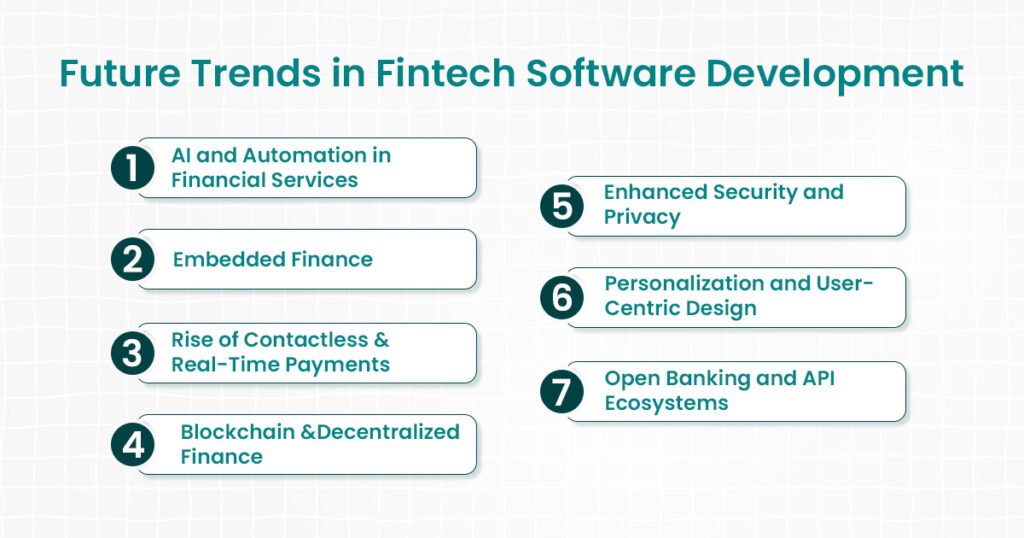
The fintech space is evolving rapidly, and staying ahead of trends is essential for building scalable and competitive products. Modern fintech software development is no longer limited to basic transactions; it’s moving toward smarter, faster, and more personalized financial experiences.
1. AI and Automation in Financial Services
One of the biggest shifts is the integration of AI app development into fintech apps. AI is being used for fraud detection, credit scoring, chatbots, and personalized financial insights. It helps automate complex processes, reduce human error, and improve decision-making in real time.
2. Embedded Finance
Financial services are increasingly being integrated into non-financial platforms. For example, e-commerce apps now offer built-in payments, lending, or insurance. This trend is shaping new fintech app solutions, where users don’t need to switch apps to complete financial actions.
3. Rise of Contactless and Real-Time Payments
With growing demand for speed, mobile payment apps are focusing on instant, contactless transactions using technologies like NFC and QR codes. Real-time payments are becoming the standard expectation in payment app development.
4. Blockchain and Decentralized Finance (DeFi)
Blockchain technology is gaining traction for secure and transparent transactions. It enables decentralized finance models where users can lend, borrow, or trade without traditional intermediaries, pushing the boundaries of fintech app development.
5. Enhanced Security and Privacy
As threats evolve, so do security measures. Advanced fintech app security solutions now include biometric authentication, behavioral analytics, and AI-driven fraud detection. Security will continue to be a top priority in future fintech innovations.
6. Personalization and User-Centric Design
Users now expect apps to understand their behavior and offer tailored experiences. From spending insights to investment suggestions, personalization is becoming a key differentiator in fintech mobile app development services.
7. Open Banking and API Ecosystems
Open banking allows third-party developers to build banking applications using financial data through APIs. This creates more flexible and interconnected fintech app solutions, enabling better services and innovation across platforms.
How Can EitBiz Help You Build a High-Performance Fintech App from Scratch?
Building a successful fintech product requires more than just coding; it demands the right strategy, security-first architecture, and deep industry understanding. EitBiz is a dedicated digital product development company with 9+ years of experience in delivering scalable and secure solutions across industries, including fintech. With 750+ projects delivered globally, the team understands what it takes to build reliable financial platforms that meet both user expectations and compliance standards. From fintech app development to payment app development, EitBiz focuses on creating products that are fast, secure, and built for long-term growth.
Whether you want to build a new fintech product from scratch or develop a cash app clone, EitBiz provides end-to-end support, including UI/UX design, backend engineering, payment gateway integration, and robust app security solutions. Their expertise in mobile application development and fintech software development ensures that every solution is optimized for performance, scalability, and seamless user experience.