You launched your mobile app, great!
The downloads started coming in. Reviews trickled onto the app stores. The team celebrated.
Then reality hit.
Bugs appeared on new devices. A payment gateway failed after an OS update. Load time increased as your user base grew. A negative review said, “Great idea, but crashes too often.”
This is where many businesses struggle. They invest heavily in development but underestimate what comes after launch. The truth is simple: development builds the app. Maintenance keeps it alive.
Did you know?
The global mobile application market size is projected to reach USD 626.39 billion by 2030.
If your app lags, crashes, or feels outdated, they leave. Studies show that nearly 70% of users abandon an app due to poor performance or bugs. The tolerance for friction is low.
Take Instagram as an example. It did not become dominant because of its initial version. It evolved continuously. Features were optimized. Security was strengthened. The UI adapts to user behavior. Without constant updates, it would not have survived in a competitive ecosystem.
Mobile apps are not static products. They are living systems. They interact with evolving operating systems, changing user expectations, security threats, and business models.
That is why mobile app maintenance must be part of your long-term strategy from day one.
Let’s dive into the complete mobile app maintenance guide!
What is Mobile App Maintenance, Really?
Maintenance is not an expense. It is risk management.
Mobile app maintenance is everything that happens after your app goes live to keep it stable, secure, relevant, and competitive.
It is not a single activity. It is an ongoing operational process.
Many businesses assume maintenance only means fixing bugs. That is only one part of the picture. In reality, maintenance covers technical health, performance stability, user experience refinement, security updates, infrastructure monitoring, and continuous improvement.
A mobile app operates in a dynamic ecosystem. Devices change. Operating systems update. User expectations evolve. Cyber threats increase. Third-party integrations release new versions. Your backend grows as users scale.
If your app does not adapt to these changes, it deteriorates.
Mobile app maintenance ensures that deterioration never happens. Let’s break this down clearly.
What If You Ignore the Mobile App Maintenance Cost?
Many businesses treat maintenance as optional. It is not.
When an app fails, you do not just lose users. You lose trust. You lose retention. You lose revenue.
Here is what typically happens when maintenance is ignored:
- Crash rates increase after OS updates
- Security vulnerabilities remain unpatched
- App store ratings decline
- Customer support tickets rise
- Churn increases
- Acquisition cost per user goes up
Each issue compounds the next.
Let’s say your app generates $50,000 per month. A 10% drop in retention due to performance issues could mean thousands in lost recurring revenue. That loss is often higher than the cost of structured mobile app maintenance support.
Why Maintenance Planning Should Start Before Development Ends
Most app failures do not result from poor ideas. They happen because businesses treat maintenance as an afterthought. Planning for maintenance before development ends ensures technical stability, financial predictability, and long-term scalability. Below are five evidence-backed reasons why early maintenance planning is quintessential.
1. Architecture Decisions Determine Future Maintenance Costs
The structure of your app defines how expensive it will be to maintain. Clean architecture, modular components, and scalable backend systems reduce long-term risk. According to IBM’s research on software defects, fixing issues after release can cost up to 15 times more than addressing them during development. That gap directly impacts maintenance budgets.
For example, Airbnb publicly shared how early architectural decisions affected scalability and forced major refactoring as they grew. Their engineering team had to restructure parts of their system to support rapid global expansion. If maintenance planning had been tightly aligned with scaling expectations from the beginning, transition friction could have been reduced.
2. Security Must Be Embedded Early, Not Patched Later
Security is not something you “add” after launch. It must be built into the architecture. Weak authentication logic, unsecured APIs, and outdated third-party libraries are common vulnerabilities introduced during development. According to IBM’s Cost of a Data Breach Report, the average global data breach cost exceeded $4 million in recent years.
Consider Facebook, which faced scrutiny after multiple data privacy incidents. While large enterprises can survive financial penalties, growing businesses often cannot. Early maintenance planning includes security audits, encryption strategies, and regular patch cycles. That approach reflects professional accountability and builds user trust from day one.
Reactive security is expensive. Proactive security is strategic.
3. Performance Optimization Starts During Development
Many founders assume App performance optimization happens after launch. In reality, performance begins with efficient coding practices. API structure, database indexing, caching mechanisms, and image compression decisions are made during development.
Google reports that 53% of mobile users abandon a site that takes longer than three seconds to load. The same behavior applies to mobile apps. If performance planning is ignored early, maintenance becomes reactive and costly.
Netflix invests heavily in performance engineering. Their tech blog explains how proactive monitoring and infrastructure optimization allow seamless streaming across devices. This is not post-launch improvisation. It is structured maintenance planning integrated from the development stages.
Speed is not cosmetic. It directly impacts retention and revenue.
4. Budget Planning Protects Long-Term Sustainability
Maintenance typically costs between 15–25% of initial development annually. If this is not accounted for before development ends, companies struggle with underfunded updates and delayed fixes. According to industry analysis by Gartner, ongoing application support consumes a significant portion of IT budgets globally.
Early financial forecasting for Post-launch app support ensures monitoring tools, developer bandwidth, server costs, and security audits are funded. Businesses that treat maintenance as a predictable operational expense maintain higher product reliability and better ROI.
From an EEAT perspective, financial transparency and operational planning demonstrate leadership maturity.
{Also Read: Mobile App Development Cost Breakdown}
5. Clear Ownership Prevents Operational Breakdowns
When maintenance planning is delayed, responsibility becomes unclear. Who tracks crash analytics? Who handles urgent hotfixes? Who ensures OS compatibility updates are released on time?
According to DevOps Research and Assessment (DORA) reports, organizations with clearly defined operational ownership deploy faster and recover from incidents more effectively. Early role assignment, whether internal or via a structured mobile app maintenance support model, reduces downtime and improves response times.
For example, companies like Uber operate with dedicated reliability engineering teams focused solely on system stability. That separation of responsibility ensures continuous uptime across millions of daily users.
How to Maintain an App Strategically?
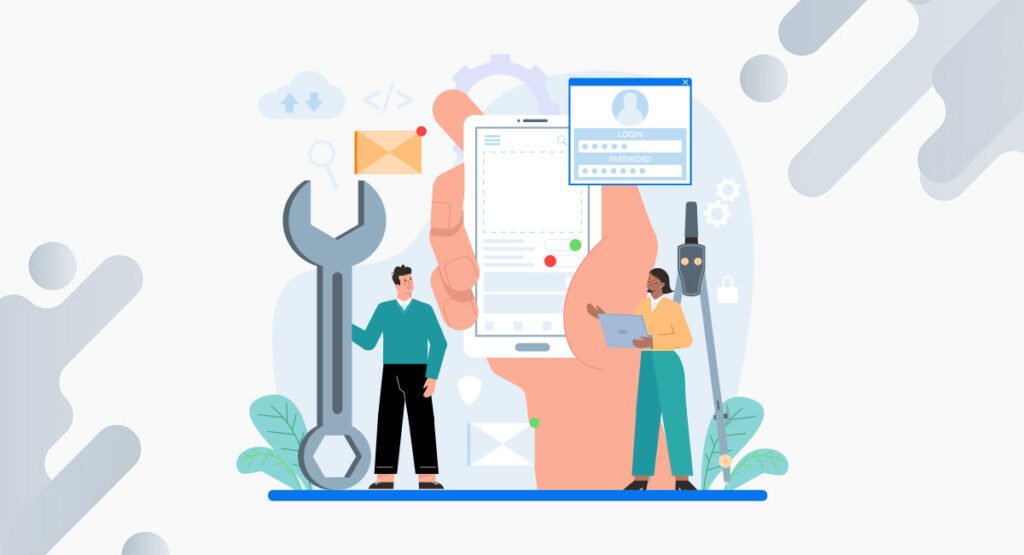
Strategic maintenance is not about fixing issues when they appear. It is about building a controlled, measurable system that protects performance, security, and long-term ROI. If you are wondering how to maintain an app properly, focus on the core pillars below. These are the most important areas every business must prioritize.
1. Define Clear Ownership and Response Protocols
Every app needs a designated maintenance owner. This can be an in-house team or a specialized mobile app maintenance company. What matters is clarity.
Define:
- Who monitors crashes daily
- Who approves urgent fixes
- Who reviews OS compatibility updates
- Who handles security patches
Also define response timelines. For example, critical bugs must be resolved within 24–48 hours. Without structured accountability, issues escalate and damage user trust.
Operational clarity reflects real-world product management experience.
2. Track Performance Metrics Continuously
Strategic maintenance is data-driven. You must measure app health consistently.
Key performance indicators include:
- Crash-free session rate
- App load time
- API response speed
- Retention rate
- Error frequency
This is where App performance optimization becomes critical. If load time increases after a feature update, you must investigate immediately. Small performance drops compound over time.
Performance monitoring prevents slow degradation and protects user experience.
3. Schedule Preventive Updates, Not Just Reactive Fixes
Many businesses only act when something breaks. Strategic teams schedule maintenance in advance.
Create a maintenance cycle:
- Monthly bug review
- Quarterly performance audit
- Bi-annual security testing
- Annual architecture review
Preventive maintenance reduces emergency fixes and long-term costs. It also ensures your app remains compatible with OS updates and device changes.
This structured approach defines strong Post-launch app support.
4. Prioritize Security as an Ongoing Responsibility
Security is not a one-time task. Threats evolve constantly.
Strategic maintenance includes:
- Updating third-party libraries
- Patching known vulnerabilities
- Monitoring unusual activity
- Reviewing authentication systems
- Conducting periodic penetration testing
A single breach can destroy credibility. Proactive security planning strengthens user trust and demonstrates accountability.
5. Manage Technical Debt Before It Slows Growth
Every new feature adds complexity. Without refactoring and cleanup, code becomes difficult to maintain.
Schedule regular:
- Code reviews
- Dependency cleanup
- Architecture refinements
- Documentation updates
Managing technical debt keeps your app flexible and easier to update. It lowers future maintenance costs and improves release speed.
6. Align Maintenance With Business Goals
Maintenance must support growth, not operate separately.
If you plan a marketing campaign, ensure infrastructure can handle traffic spikes. If you launch new monetization features, verify payment stability. If expanding globally, test multi-region performance.
Strategic mobile app maintenance support connects technical reliability with revenue protection.
What are the Types of Post-Launch App Maintenance?
Once your app goes live, maintenance does not follow a single pattern. It falls into structured categories. Each type serves a different purpose. Together, they ensure long-term stability, performance, and growth.
Understanding these types helps businesses plan budgets, assign teams, and choose the right mobile app maintenance services.
Below are the most important types of Post-launch app maintenance every business should understand.
1. Corrective Maintenance (Fixing What Breaks)
Corrective maintenance addresses issues discovered after launch.
No matter how rigorous testing is, real-world usage exposes unexpected bugs. Different devices, network conditions, and user behaviors reveal edge cases.
Corrective maintenance includes:
- Fixing crashes
- Resolving UI glitches
- Repairing broken APIs
- Correcting transaction failures
- Addressing data sync issues
This type of maintenance requires fast response times. Delays directly impact app ratings and retention.
Strong Post-launch app support systems include real-time monitoring tools and defined SLAs for critical bug resolution.
Corrective maintenance protects stability and reputation.
2. Adaptive Maintenance (Staying Compatible With Change)
The mobile ecosystem evolves constantly. Operating systems update. Devices change. App store policies shift.
Adaptive maintenance ensures your app remains compatible.
It includes:
- Updating SDKs
- Adjusting UI for new screen sizes
- Modifying permission structures
- Ensuring compliance with new platform guidelines
- Updating third-party integrations
When Apple or Android releases a major OS update, apps must adapt quickly. Failure to do so can cause crashes or removal from app stores.
Adaptive maintenance keeps your app aligned with external technological changes.
3. Perfective Maintenance (Improving and Enhancing)
Perfective maintenance focuses on improvement rather than repair.
It is driven by user feedback, analytics, and competitive analysis.
This includes:
- Enhancing UI/UX design
- Simplifying navigation flows
- Adding new features
- Improving onboarding
- Refining checkout processes
- Introducing personalization
This type of maintenance supports growth.
It improves engagement and retention. It directly contributes to revenue expansion.
Perfective maintenance often overlaps with App performance optimization, especially when updates streamline workflows or reduce friction.
4. Preventive Maintenance (Reducing Future Risk)
Preventive maintenance is proactive.
Instead of fixing visible issues, it reduces the likelihood of future breakdowns.
It includes:
- Refactoring complex code
- Removing deprecated libraries
- Updating security protocols
- Optimizing database queries
- Cleaning unused resources
- Strengthening encryption layers
Preventive maintenance reduces technical debt.
It lowers the probability of major failures and keeps long-term maintenance costs under control.
Businesses that ignore preventive maintenance often face expensive redevelopment later.
5. Performance Maintenance (Protecting Speed and Efficiency)
As apps grow, performance can decline. More features mean more load.
Performance-focused maintenance ensures the app remains fast and efficient.
It includes:
- Monitoring load times
- Reducing app size
- Optimizing memory usage
- Improving API response time
- Scaling backend infrastructure
- Managing caching strategies
This is a specialized branch of mobile app maintenance support that directly affects user retention.
Users expect speed. Even slight delays impact satisfaction.
Performance maintenance protects engagement metrics.
6. Security Maintenance (Protecting User Trust)
Security deserves its own category because of its importance.
Security maintenance includes:
- Patching vulnerabilities
- Updating encryption standards
- Monitoring suspicious activity
- Conducting penetration tests
- Reviewing authentication systems
- Ensuring compliance with privacy regulations
Cyber threats evolve rapidly. Maintenance must evolve with them.
A single breach can cause financial loss and reputational damage that takes years to recover from.
Security maintenance builds trust.
Key Metrics to Track After Launch
After launch, your app starts operating in the real world. Users behave differently than testers. Devices vary. Networks fluctuate. If you want strong mobile app maintenance support, you must track the right metrics consistently. These five core indicators reveal whether your app is stable, scalable, and profitable.
Below are the most important metrics to monitor, each supported by real-world examples.
1. Crash-Free Session Rate (Stability First)
Crashes directly impact retention and ratings. Track the percentage of sessions completed without failure. A healthy app should maintain 99%+ crash-free sessions.
If crash rates increase after an update, investigate immediately. Device-specific issues, OS changes, or SDK conflicts often cause sudden instability.
For example, when Spotify users reported crashes after certain updates, the company quickly rolled out patches to restore stability. Rapid corrective action protected user trust and ratings.
Crash tracking is the foundation of post-launch app support. If your app is not stable, performance and features do not matter.
2. App Load Time and Speed Performance
Users expect speed. Even small delays reduce engagement.
Google research shows that 53% of users abandon mobile experiences that take longer than three seconds to load. While this data focuses on the web, user expectations apply equally to apps.
Take Amazon. The company publicly states that even milliseconds of delay can impact revenue. That is why continuous App performance optimization is central to their digital operations.
Track:
- Initial app launch time
- Screen transition speed
- API response delay
Speed directly affects conversions and retention.
3. User Retention Rate (Day 1, Day 7, Day 30)
Downloads do not equal success. Retention does.
Track:
- Day 1 retention
- Day 7 retention
- Day 30 retention
If users install but do not return, something is wrong. It could be onboarding friction, poor UX, or performance issues.
For example, Duolingo continuously optimizes onboarding and gamification to improve retention. Their data-driven updates show how structured mobile app maintenance services can directly impact engagement.
Retention metrics help you prioritize feature improvements instead of guessing.
4. API Response Time and Backend Performance
Your app depends on backend infrastructure. Slow APIs cause content delays, failed payments, and syncing errors.
Monitor:
- Average API response time
- Peak traffic load handling
- Server uptime
During traffic spikes, performance stress becomes visible. For instance, Netflix invests heavily in performance engineering to maintain smooth streaming worldwide. Their engineering blog explains how backend optimization supports millions of simultaneous users.
Strong backend monitoring is a core part of professional mobile app maintenance support. Without it, scaling becomes risky.
{Also Read: What Are APIs? Simple Business Guide to API Meaning, Integration & Examples}
5. Error Rate and Failed Transactions
Not all issues cause crashes. Many errors happen silently.
Track:
- Payment failures
- Login issues
- Feature-specific errors
- Sync failures
For example, when PayPal experiences transaction issues, even minor disruptions can affect millions of users. Monitoring error rates allows quick corrective action before revenue loss escalates.
If checkout errors increase by even 1–2%, the financial impact can be significant. Maintenance teams must treat error spikes as priority alerts.
6. App Store Ratings and Review Trends
User feedback is public performance data.
Monitor:
- Average rating trends
- Volume of negative reviews
- Repeated complaints
When apps like Instagram introduce controversial updates, review trends often shift immediately. Companies analyze this feedback to adjust features or optimize performance.
Ratings influence downloads. Ratings reflect maintenance quality.
Active review monitoring strengthens Post-launch app support and demonstrates responsiveness.
Common Mistakes Businesses Make After Launch
Launching an app feels like the finish line. In reality, it is the starting point.
Many businesses invest heavily in development and marketing, but neglect structured mobile app maintenance support. The result? Declining performance, user churn, security risks, and lost revenue.
Below are the most common mistakes businesses make after launch and what experienced teams do differently.
1. Treating Maintenance as Optional
The biggest mistake is assuming the app will “run fine” without structured oversight.
Apps operate in dynamic environments. Devices change. Operating systems update. APIs evolve. Without ongoing monitoring and updates, performance declines gradually.
Businesses that skip professional mobile app maintenance services often react only when users complain. By then, ratings may already drop.
Maintenance is not an extra cost. It is operational protection.
2. Ignoring Performance Decline
Apps naturally become heavier over time as features are added. Without continuous App performance optimization, load times increase and responsiveness drops.
Users rarely say, “The app feels slightly slower.”
They uninstall.
Businesses often focus on new features while ignoring performance metrics. This creates bloated applications that struggle on mid-range devices.
Experienced teams monitor speed benchmarks after every release. They optimize images, clean unused code, and refine backend calls.
Performance must improve over time, not degrade.
3. Delaying Security Updates
Security patches often get postponed in favor of feature releases.
This is risky.
Outdated libraries, weak authentication flows, or ignored vulnerability warnings can expose user data. Many breaches happen because known vulnerabilities were never patched.
Strong Post-launch app support includes scheduled security reviews, dependency updates, and periodic penetration testing.
Security cannot wait until “later.”
4. Failing to Monitor User Behavior
Downloads do not guarantee engagement.
Some businesses celebrate install numbers but ignore retention rates, session duration, or churn patterns. Without behavioral analytics, you cannot understand why users leave.
For example:
- Are users dropping off during onboarding?
- Is checkout confusing?
- Are push notifications ineffective?
If you do not analyze user journeys, maintenance decisions become guesses.
Data-driven improvements are essential to long-term success.
5. No Clear Ownership of Maintenance
After launch, responsibility often becomes unclear.
Who monitors crashes?
Who reviews app store feedback?
Who handles emergency hotfixes?
Without defined accountability, issues remain unresolved longer than they should.
Whether you work with an internal team or a mobile app maintenance company, assign ownership clearly. Define response timelines. Establish escalation procedures.
Conclusion
Launching your app is an achievement, but sustaining its performance is what determines long-term success. Without structured mobile app maintenance support, even the most innovative applications gradually lose speed, stability, and user trust. Operating systems evolve, user expectations shift, security threats increase, and infrastructure demands grow. Businesses that fail to plan beyond development often experience declining retention, negative reviews, and rising technical debt. The key to understanding how to maintain an app lies in continuous monitoring, regular updates, proactive security management, and ongoing App performance optimization.
As a trusted mobile app development company, EitBiz delivers structured post-launch app support tailored to your app’s technical and business goals. From performance optimization and security patching to OS compatibility updates and backend management, our comprehensive mobile app maintenance services ensure your application remains stable, fast, and competitive in a constantly evolving digital environment.
Ready to build an app? Partner with EitBiz today and build a proactive maintenance strategy that keeps your mobile app fast, secure, and ready for growth.