Building an MVP in 2026 sounds exciting. But let’s be honest, it can also feel overwhelming.
You have an idea you believe in. Maybe investors are interested. Maybe users are already waiting. And then comes the big question that stops many founders in their tracks:
“What MVP development tech stack should I use?”
Pick the wrong one, and you risk slow development, high costs, and painful rewrites. Pick the right one, and you move faster, test smarter, and adapt with confidence.
Here’s a stat that puts things into perspective: CB Insights reports that 38% of startups fail due to cash shortages. One of the most common reasons? Spending too much time and money building something overly complex before validating the idea. Your technology choices play a huge role in that outcome.
- So, do you really need the latest framework everyone is talking about?
- Should you build for scale on day one- or focus only on speed?
- And how do you choose the best tech stack for MVP development without a CTO sitting next to you?
These are not theoretical questions. They are practical, high-stakes decisions that affect how quickly you launch, how easily you iterate, and how long your runway lasts.
The truth is simple: an MVP is not about building the perfect product. It’s about building the right product with the right tools. Your MVP development tech stack should help you validate assumptions, not lock you into technical debt.
In this guide, we’ll break down 10 proven, real-world tips to help you choose the best technology stack for MVP development.
Let’s get started.
What Is a Tech Stack for MVP Development?

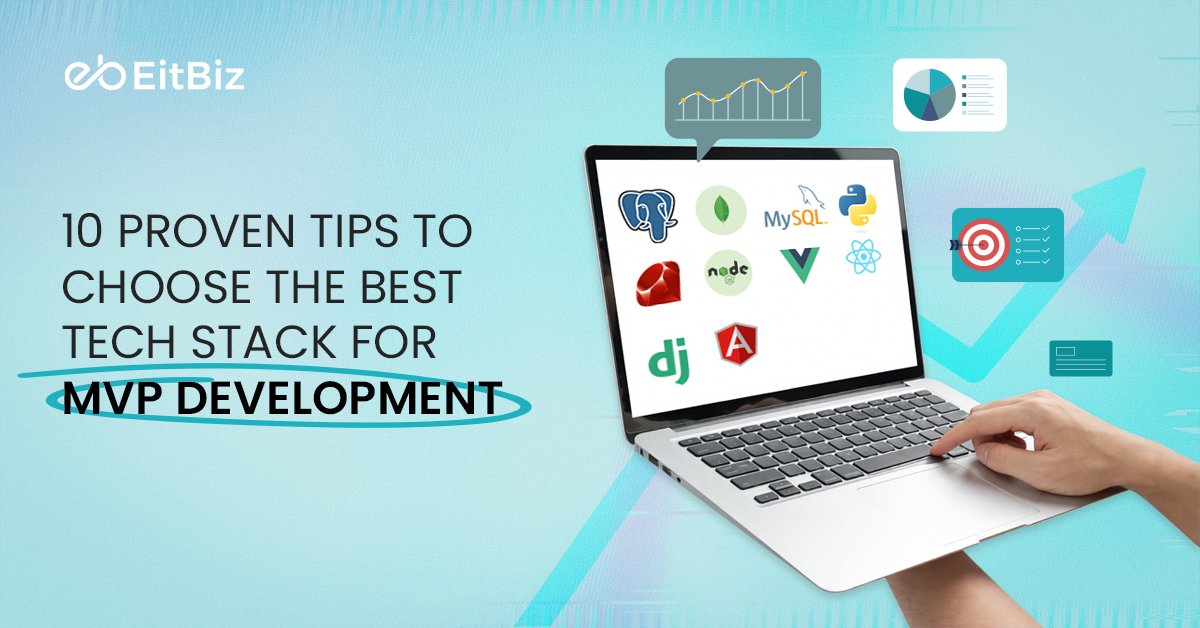
A tech stack is the collection of tools, programming languages, frameworks, and infrastructure that work together to build and run your product. It defines how your MVP looks, how it functions, and how it handles data behind the scenes.
But here’s the real question- Are you building technology, or are you solving a problem?
At the MVP stage, the tech stack is not about showing engineering brilliance. It’s about choosing tools that help you test your idea quickly and reliably.
For an MVP, the tech stack typically includes frontend technologies (what users see and interact with), backend technologies (business logic and APIs), a database to store data, hosting and cloud services to run the application, and third-party integrations like payments or authentication. The key is balance.
Do you really need a complex setup on day one? Or do you need something that lets you launch fast, change features easily, and control costs?
Your MVP development tech stack should prioritize speed, flexibility, and cost-efficiency over perfection, because in the early stages, learning fast matters far more than building something flawless.
{Also Read: MVP Development for Startups (2026 Guide)}
Top 10 Proven Tips to Choose the Best Tech Stack for MVP Development
Choosing the right tech stack is not a technical checkbox. It’s a business decision that directly affects your speed, budget, and ability to adapt. These proven tips will help you make that choice with clarity and confidence, without overthinking or overbuilding.
1. Start With the Problem You’re Solving
Before picking any tool, ask one simple question: What problem does my MVP need to solve right now? Not later. Not at scale. Right now.
Your tech stack should support the core value of your product, not distract from it. If your MVP is about validating demand, you don’t need complex architecture. You need reliability and speed. The best tech stack for MVP development always starts with clarity about the problem, not the technology.
2. Choose Speed Over Technical Perfection
Speed is your biggest advantage as a startup.
A study by Harvard Business Review shows that startups that launch faster learn quicker and adapt better to market feedback. That matters more than having the cleanest codebase. Your MVP should get into users’ hands as soon as possible.
Ask yourself: Can this tech help us build and iterate fast? If the answer is yes, you’re on the right path. A practical MVP development tech stack values execution over elegance.
3. Use Technologies With a Strong Developer Community
Technology does not live in isolation. People support it.
Frameworks with large communities offer better documentation, faster problem-solving, and long-term reliability. They also make hiring easier. You don’t want your MVP tied to a niche tool that only a handful of developers understand.
A widely adopted startup technology stack reduces risk and ensures your product can grow without technical bottlenecks.

4. Keep the Architecture Simple at the Start
Complex systems slow you down.
Many founders assume they need microservices, advanced pipelines, or distributed systems from day one. Most don’t. A simple monolithic setup often works better for MVPs because it’s easier to build, test, and modify.
Your startup MVP tech stack should reduce friction, not introduce it. You can always optimize later when you have real usage data.
5. Think About Scalability, But Don’t Overbuild
Yes, your MVP should be scalable. But scalable does not mean overengineered.
Most modern frameworks and cloud platforms scale well enough for early-stage products. Instead of building for millions of users, ask: Will this stack handle our next 1,000 users comfortably?
The best technology stack for MVP prepares you for growth without slowing your launch.
6. Evaluate Cost From Day One
The cost of MVP development goes beyond just building the product. It also includes hosting, ongoing maintenance, and future upgrades.
According to startup surveys, infrastructure and tech-related costs often exceed initial estimates by 30–40%. Choosing open-source tools and managed cloud services can help control expenses.
A cost-aware MVP development tech stack protects your runway and keeps your focus where it belongs on validating your idea.
7. Stick to Proven MVP Development Technologies
New tools appear every week. That doesn’t mean you should use them.
Proven MVP development technologies come with stability, documentation, and real-world use cases. They fail less often and are easier to debug. That reliability matters when every delay costs time and money.
Ask yourself: Has this technology been tested in production by real products? If not, it may not belong in your MVP.
8. Plan for Third-Party Integrations Early
Most MVPs depend on external services, including payments, emails, analytics, or authentication.
Your tech stack should support easy API integrations. If adding a payment gateway takes weeks, that’s a problem. Flexibility here saves time and reduces future rework.
A smart MVP development tech stack plays well with others.
9. Align the Tech Stack With Your Team’s Skills
Your team is your biggest asset.
If your developers already know certain technologies, let them use that advantage. Learning new tools slows development and increases errors. Familiar tech leads to faster decisions and cleaner execution.
A well-aligned startup technology stack boosts productivity and confidence, especially under tight deadlines.
10. Choose a Stack That Supports Easy Iteration
Your MVP will change. That’s guaranteed.
User feedback will push you to tweak features, adjust flows, or even pivot. Your tech stack must support that flexibility. Rigid systems make small changes expensive and slow.
The best tech stack for MVP development lets you evolve quickly without having to rebuild from scratch.
Conclusion
Choosing the right tech stack for your MVP is not about chasing trends or building for a future that may never come. It’s about making smart, grounded decisions that help you launch quickly, learn from real users, and adapt without friction. The best tech stack for MVP development is the one that aligns with your business goals, your team’s strengths, and your budget while keeping iteration easy and costs under control.
If you’re unsure which technologies fit your idea, or you want expert guidance to avoid costly mistakes, this is where the right partner makes a difference.
EitBiz is a trusted MVP development company that helps startups and growing businesses choose, design, and build MVPs with the right technology from day one. Our dedicated team of MVP development experts focuses on speed, clarity, and long-term viability, helping you validate your idea without overbuilding or overspending.
Connect with EitBiz today and turn your idea into a scalable, market-ready product, faster and with confidence.