If you’re here, you’re probably exploring how to grow your business. You might be wondering whether an app will move the needle. And if it will, which platform deserves your focus first?
Today, we focus on why iOS app development is worth it for your business and why many companies generate strong returns by building for Apple users first.
Let’s start with some context.
According to Business of Apps, Apple generated $416 billion in revenue in 2025.
That’s more than app revenue for Android by a wide margin. In the US., iPhone users also spend more on apps and in-app purchases than Android users.
This isn’t luck. It reflects deeper trends in user behavior, device demographics, and brand loyalty.
Meanwhile, top brands like Starbucks, Nike, Amazon, and Airbnb rely heavily on their iOS apps to drive user engagement, repeat purchases, and customer loyalty. These companies didn’t choose iOS by accident; they chose it because it delivers measurable returns.
So if you’re deciding between web, mobile, or cross-platform strategies, this blog will help you understand why iOS app development benefits businesses and how it can deliver real ROI.
Market Overview: iOS in the Global App Ecosystem
Before we explore specific business advantages, it’s important to understand the market context for iOS and mobile apps overall. These numbers show both scale and economic potential, giving your readers a grounded view of why iOS app development for business is strategic, not speculative.
- According to Statista, iOS accounts for about 23.2 % of the global mobile operating system market, while in the United States, its share rises to 57.1 % of mobile OS usage.
- Statista data shows that the App Store hosts approximately 1.54 million apps, including a robust category of business and productivity tools.
- According to recent data, iOS app downloads are projected to reach around 38 billion annually by 2026
What Makes iOS App Development Worth It for Your Business?
When you decide to invest in a mobile app, you’re making a decision about audience, revenue potential, trust, and long-term growth. But why should your business lean toward iOS app development specifically? Why is it not just another tech trend but a strategy capable of driving measurable returns?
1. A Massive, Engaged, and High-Value Market
The Apple App Store remains one of the world’s most valuable digital marketplaces, not just in downloads, but in spending power.
In 2025, the App Store had an average of 850 million weekly users globally, with developers earning a staggering over $550 billion in total earnings since 2008.
This signals something crucial for businesses:
- iOS users are not just numerous, they’re active.
- They interact with apps consistently and repeatedly, making them more valuable than passive audiences that visit a website or browse social media.
- A bigger, more engaged audience means higher potential conversions, whether you’re selling products, subscriptions, or services.
And here’s another striking statistic: the App Store ecosystem facilitated nearly $1.3 trillion in billings and sales worldwide in 2024, with the majority of that revenue flowing to developers.
That’s not fluff, that’s real economic value, and it’s one of the strongest arguments for iOS app development for business.
2. Users Who Spend More
If you compare iOS with Android, the two dominant mobile platforms, spending behavior is where the difference gets dramatic.
Across global markets:
- iOS captures a disproportionately higher share of app revenue than its market share of devices. Despite representing around 28–29% of smartphones worldwide, iOS users contribute about 67% of global app revenue.
- In North America, iOS holds over 57% of the smartphone market, and iOS users tend to have stronger purchasing power.
From in-app purchases to subscription revenue, this trend matters because:
- Your app isn’t just visible, it’s monetizable.
- The users you acquire are more likely to spend money within your product.
- Even if your initial customer base is small, higher spend per user translates to faster monetization cycles and stronger ROI.
This is why the iOS benefits for revenue are often cited first by business leaders.
3. A Premium User Base With Buying Power
Part of why iOS apps perform well financially is tied to the demographics of the typical Apple user.
Research and market data consistently show:
- iOS users are often based in high-income regions (such as the United States, Canada, and Western Europe).
- They are more likely to purchase digital goods, subscriptions, and in-app services than many Android users, who tend to use free apps more frequently.
For businesses selling premium content, services with recurring revenue (like memberships or software subscriptions), or products with in-app purchases, these aspects are important. These users aren’t just browsing, they’re buying.
This is one of the clearest iOS app benefits that influences long-term revenue.
4. The Power of Platform Stability and Quality
Another reason iOS app development is worth the investment is the technical predictability it offers.
In mobile development, unpredictability increases cost and risk. iOS offers something different:
- A controlled ecosystem with a limited number of devices and consistent operating system updates.
- Fewer device variations than Android, which reduces fragmentation during development and testing.
- A developer environment (Xcode + Swift) that supports rapid iteration, performance optimization, and modern coding standards, all of which make maintenance easier and future-proof your app.
What does this mean for your business?
- Faster development cycles.
- Fewer post-launch issues.
- A smoother user experience that keeps customers coming back.
This is a technical advantage that translates straight into business value, reducing costs and increasing user satisfaction.
5. Strong Monetization Models Built In
Economically, iOS apps still generate more revenue than Android apps across most categories, and it’s not just about user spend. It’s also about the app economy structure itself.
Key facts here include:
- In multiple markets, iOS consistently captures a larger share of digital revenue despite Android’s larger user base.
- Developers often find that launching on iOS first accelerates revenue growth, even before major marketing efforts begin.
- Premium pricing, in-app purchases, and subscriptions all tend to perform better on Apple’s platform.
This combination of monetization tools + a willing user base makes it easier to build a business model around your app.
What Are the Key Benefits of iOS App Development for Revenue and Growth?
Building an iOS app isn’t just about having a presence on the App Store; it’s about creating real business value. Companies that invest in iOS app development for business often see measurable growth in revenue, customer engagement, and brand credibility. Here’s a deeper look at the key benefits that make iOS apps a powerful tool for business success.
1. Higher Revenue Potential per User
One of the most compelling reasons to invest in iOS is the monetization potential. iOS users consistently spend more than Android users on apps and in-app purchases, which directly impacts your business’s bottom line. Globally, iOS accounts for approximately 67% of app revenue, despite having only about 28% of the smartphone market. This means that even if your app has fewer downloads on iOS than Android, your revenue per user is likely higher. For businesses, this translates into faster monetization cycles and a stronger ROI of iOS apps, especially for subscription-based or in-app purchase models.
2. Premium Audience with Strong Purchasing Power
iOS users tend to belong to higher-income brackets and are more willing to pay for premium products, services, and digital content. This demographic difference makes iOS users extremely valuable for businesses with apps designed for commerce, subscriptions, or premium services. These users not only convert more often but are also more likely to stay engaged over time. Investing in iOS app development benefits for companies targeting this segment ensures that your app reaches users who are ready to spend, boosting both short-term revenue and long-term customer loyalty.
3. Better App Store Discoverability and Monetization Opportunities
The Apple App Store offers unique features that give businesses a competitive edge. Featured placements, curated collections, and algorithmic ranking based on engagement and ratings can significantly increase your app’s visibility. Additionally, iOS integrates monetization options such as in-app purchases, subscriptions, and paid downloads, making it simpler for businesses to generate revenue. These advantages allow companies to maximize both reach and earnings while building a stronger market presence, which makes the iOS app benefits tangible and measurable.
4. Secure and Trustworthy Platform Increases User Confidence
Apple’s focus on security and privacy is a key reason why businesses prioritize iOS. Users trust that their data is protected, which leads to higher engagement and more willingness to make in-app purchases or subscribe to premium services. The App Store’s strict review process ensures quality and reliability, reducing the risk of bugs and security issues. For businesses, this trust translates into more transactions, higher retention, and a stronger overall brand reputation, a critical factor for long-term growth.
5. Streamlined Development and Maintenance
The controlled iOS ecosystem simplifies app development compared to Android. With fewer device variations and screen sizes, developers can build and test apps more efficiently, ensuring consistent performance across devices. Tools like XCode, Swift, and Apple’s extensive APIs allow for faster iteration and easier maintenance. This streamlined process not only reduces development costs but also lets businesses focus on adding features, improving user experience, and scaling the app, which directly contributes to the higher ROI of iOS apps.
How Does iOS App Development Support Technical Excellence and Reliability?
When businesses decide to invest in iOS app development for business, they aren’t just buying visibility; they’re investing in a platform built for technical excellence and reliability. Apple’s ecosystem is uniquely designed to reduce development complexity, minimize bugs, and deliver smooth, consistent experiences for users. These factors are not just “nice-to-haves”; they directly impact user engagement, retention, and revenue.
1. Controlled Ecosystem Reduces Fragmentation
One of the biggest challenges in mobile app development is device fragmentation. Android developers, for example, must account for thousands of devices with varying screen sizes, OS versions, and performance profiles. iOS, by contrast, runs on a limited number of devices, including iPhones, iPads, and Apple Watches, and Apple enforces regular software updates.
This controlled environment makes it easier for developers to ensure consistent performance, optimize the user interface, and avoid bugs that frustrate users. For businesses, this translates into faster development cycles, lower maintenance costs, and a more reliable product, which ultimately improves the ROI of iOS apps.
2. Powerful Development Tools Streamline Quality
Apple provides a comprehensive suite of tools that promote technical excellence:
- Xcode: Apple’s integrated development environment (IDE) streamlines coding, debugging, and testing.
- Swift: A modern programming language that’s fast, safe, and easy to maintain.
- Robust APIs: Access to features like Apple Pay, HealthKit, ARKit, and Core ML ensures businesses can build cutting-edge functionality without reinventing the wheel.
These tools allow developers to deliver stable, high-performance apps with fewer bugs and faster iteration cycles. When you partner with a custom iOS app development company, these built-in capabilities ensure your business app is both technically strong and scalable.
3. Fast OS Updates Ensure Compatibility
Another key advantage of iOS is OS uniformity. Over 80% of iPhones run the latest iOS version within months of release. This allows developers to adopt new features quickly and retire legacy code without worrying about a fragmented user base.
For businesses, this means your app can leverage the latest hardware and software features, remain secure, and consistently deliver a modern user experience. Users enjoy smooth, predictable interactions, which increases engagement and strengthens brand trust.
4. Predictable Hardware Integration Enhances Performance
Because Apple controls both the hardware and software, developers can optimize apps for specific device specifications like CPU, GPU, screen resolution, and sensors. This predictability enables:
- High-quality video and graphics
- Real-time processing for AR, gaming, or AI features
- Seamless integration with Apple Watch, AirPods, or HomeKit
For businesses, this means apps run efficiently, with fewer crashes and higher performance, creating a premium experience that users expect from iOS apps.
How Can iOS Apps Deliver Long-Term Strategic Value for Your Business?
Investing in iOS app development for business isn’t just about immediate revenue; it’s about creating a digital asset that drives long-term growth, loyalty, and competitive advantage. iOS apps offer businesses multiple ways to strengthen their market position, engage users, and generate sustainable ROI. Here are five key ways iOS app development benefits companies in delivering strategic value:
1. Direct Engagement with a Premium Audience
A major advantage of an iOS app is that it provides a direct channel to your customers, bypassing third-party platforms. With push notifications, in-app messaging, and personalized updates, businesses can consistently engage iOS users, who tend to have higher spending power and loyalty. This direct engagement increases user retention, drives repeat transactions, and enhances the ROI of iOS apps.
2. Actionable First-Party Data for Smarter Decisions
iOS apps allow companies to collect first-party user data safely and with consent. This data, including usage patterns, feature adoption, and purchase behavior, helps businesses make data-driven decisions. Insights gained from this data can optimize marketing strategies, improve product offerings, and enhance user experience, all of which contribute to long-term iOS benefits.
3. Enhanced Customer Loyalty and Lifetime Value
iOS users are known for their engagement and retention. By offering subscriptions, rewards programs, and exclusive content, businesses can strengthen customer loyalty and increase customer lifetime value (CLV). The combination of premium users and high-quality app experiences ensures that iOS apps become a strategic tool for long-term revenue growth.
4. Competitive Advantage and Brand Recognition
A well-designed iOS app positions your business as a market leader. By leveraging iOS app development benefits for companies, you can deliver superior user experiences, showcase innovation, and differentiate from competitors. Over time, this strengthens brand credibility and enhances visibility on the App Store, contributing to sustainable growth and strategic market positioning.
5. Scalability and Integration with Apple Ecosystem
iOS apps offer seamless integration with Apple technologies like Apple Pay, ARKit, Siri, and Apple Watch. This enables businesses to scale their apps efficiently, introduce new features, and explore innovative solutions without major redevelopment. Scalability ensures that your iOS app remains a long-term strategic asset, capable of evolving with market demands and delivering ongoing business value.
What Factors Affect the Cost of Custom iOS App Development Company Projects?
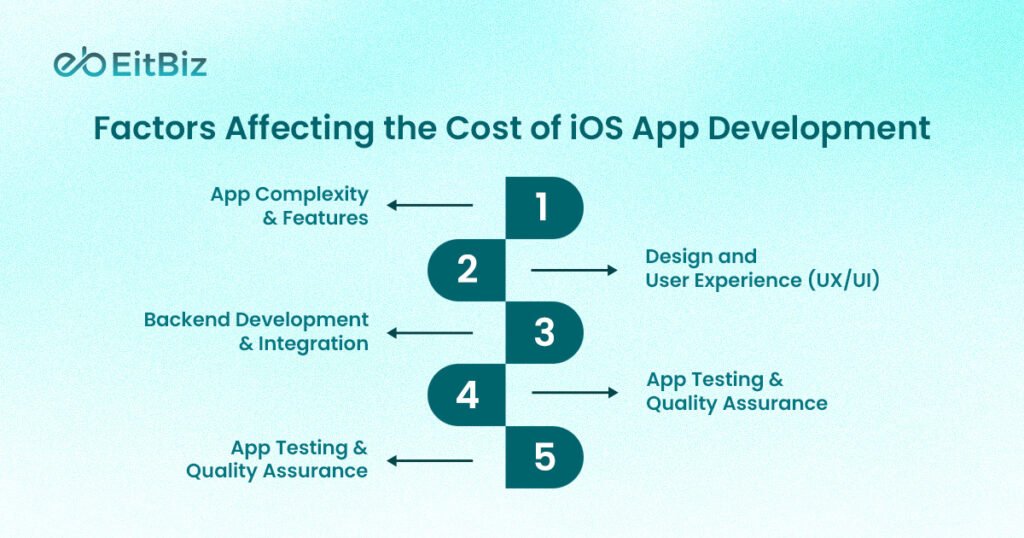
When businesses invest in custom iOS app development services, cost is often a major consideration. Understanding the key factors that affect pricing can help companies budget wisely and maximize the ROI of iOS apps. Costs vary widely depending on project complexity, functionality, design, and market requirements. Here’s a detailed breakdown of the most important factors:
1. App Complexity and Features
The complexity of the app is one of the primary cost drivers. Simple apps with basic features like content display, forms, or push notifications cost less than feature-rich, interactive applications. Advanced features such as:
- Payment gateways or Apple Pay integration
- Geolocation and GPS tracking
- In-app purchases and subscription models
- AR/VR capabilities with ARKit
- Machine learning features with Core ML
…can significantly increase development time and cost. Businesses aiming for iOS app development benefits for companies need to clearly define their feature set to avoid unexpected budget overruns.
2. Design and User Experience (UX/UI)
High-quality UI/UX design is critical for engaging iOS users and ensuring a seamless experience. Custom animations, complex navigation, and polished interfaces require additional design hours and testing. While premium design adds to upfront costs, it often results in higher user retention, better app store ratings, and increased revenue, making it a valuable investment for long-term growth.
3. Backend Development and Integration
Many business apps rely on backend systems to manage user data, analytics, or content. Backend complexity impacts cost significantly. Examples include:
- Cloud database integration
- Real-time updates and notifications
- Third-party API integration (e.g., CRM, payment systems)
- Enterprise systems or ERP connections
The more sophisticated the backend, the higher the development cost. Investing in a robust backend ensures scalability, reliability, and long-term strategic value, key aspects of iOS app benefits.

4. App Testing and Quality Assurance
Ensuring your app works flawlessly across all supported devices requires thorough testing and QA. Costs rise with the number of devices, screen sizes, and OS versions you need to support. iOS reduces fragmentation compared to Android, but testing for performance, security, and usability is still critical. Proper QA reduces post-launch fixes, improves user experience, and protects your ROI of iOS apps over time.
5. Maintenance and Updates
The cost of an app doesn’t end at launch. Regular updates and maintenance are essential to fix bugs, improve performance, and remain compatible with the latest iOS versions. Apple frequently releases OS updates, and apps that fail to update may lose functionality or users. Long-term budgeting for maintenance ensures your app continues to deliver business growth and strategic value.
How Do Businesses Measure the ROI of iOS Apps?
Measuring the ROI of iOS apps is critical for businesses investing in iOS app development for business. ROI isn’t just about total revenue; it’s about understanding the financial, operational, and strategic benefits an iOS app delivers over time. By tracking the right metrics, companies can determine whether their app investment is generating sustainable value and growth.
1. Revenue Generated Through In-App Purchases and Subscriptions
The most direct way to measure ROI is by tracking monetary transactions within your app. iOS users are known for higher spending power, and apps that include subscriptions, in-app purchases, or premium content can generate significant revenue. Metrics to track include:
- Total revenue from in-app purchases
- Subscription conversion rates
- Average revenue per user (ARPU)
Monitoring these metrics over time helps businesses understand how iOS app benefits translate into tangible financial returns.
2. Customer Acquisition and Retention Rates
ROI isn’t just about money coming in; it’s also about building a loyal customer base. Businesses measure the effectiveness of their iOS apps by tracking:
- New user acquisition through the App Store or marketing campaigns
- Retention rates (how many users continue using the app over time)
- Churn rates (how many users stop using the app)
High retention rates indicate that your app is providing value, keeping users engaged, and enhancing long-term customer lifetime value (CLV).
3. Engagement Metrics and User Activity
User engagement is a strong indicator of an app’s performance and ROI. Key engagement metrics include:
- Daily and monthly active users (DAU/MAU)
- Session duration and frequency
- Feature adoption rates
- Interaction with push notifications
Engaged users are more likely to convert, make purchases, and recommend the app to others. Tracking these metrics demonstrates how iOS app development benefits for companies extend beyond immediate revenue.
4. Cost Savings and Operational Efficiency
Some iOS apps deliver ROI indirectly by improving business operations. For example, apps can streamline workflows, automate customer service, or reduce dependency on physical stores. Metrics to track include:
- Reduction in support requests or operational overhead
- Efficiency gains from automated features
- Time saved in internal processes
Measuring these operational benefits alongside revenue shows the full financial impact of your iOS app.
5. Brand Value and Strategic Growth
Finally, ROI includes intangible benefits like brand awareness, credibility, and market positioning. Businesses can track:
- App store ratings and reviews
- Social media mentions and shares
- Expansion into new markets
- Customer advocacy and referrals
A well-performing iOS app strengthens your brand, drives organic growth, and creates long-term strategic value, all of which are important components of the ROI of iOS apps.
What Real-World Examples Show iOS Apps Driving Business Success?
When businesses invest in iOS app development for business, it’s helpful to look at real-world examples that demonstrate how iOS apps generate measurable revenue, engagement, and brand growth. Here are some illustrative examples:
1. Starbucks
Starbucks’ iOS app is a classic example of iOS app benefits in action. The app allows users to order ahead, earn rewards, and make mobile payments. iOS users account for a significant portion of Starbucks’ mobile sales, and the app contributes to higher average transaction values.
Key outcomes:
- Increased customer loyalty through a seamless rewards program
- Faster order processing and repeat purchases
- High engagement and retention from push notifications and personalized offers
The Starbucks iOS app demonstrates how custom iOS app development company projects can boost both revenue and customer satisfaction.
2. Nike
Nike leverages its iOS apps, such as Nike Run Club and Nike Training Club, to engage users with personalized workout plans, challenges, and product recommendations. The apps integrate seamlessly with Apple Watch and HealthKit, providing a premium, connected experience.
Key outcomes:
- Increased app usage and higher engagement with the brand
- Strengthened customer loyalty through gamification and community features
- Direct sales uplift via app-driven product promotions
This shows how iOS app development benefits for companies extend beyond transactions to brand engagement and customer lifetime value.
3. Uber
Uber’s iOS app demonstrates the power of technical reliability and user experience. iOS users benefit from fast, responsive, and consistent service across multiple devices. The app integrates with Apple Pay for seamless payments, enhancing trust and convenience.
Key outcomes:
- High retention and repeat usage among iOS users
- Faster onboarding and transactions
- Scalable global growth thanks to consistent iOS performance
Uber illustrates how iOS app development for business can accelerate market expansion while maintaining user satisfaction and operational efficiency.
4. Starbucks, Nike, and Uber Showcase Key iOS Benefits
Across these examples, common patterns emerge:
- Premium user engagement drives higher in-app spending
- Integration with the Apple ecosystem enhances the user experience
- Reliable performance and security maintain trust and loyalty
- Direct communication and personalized offers increase retention
These companies prove that iOS app benefits go beyond simply having a mobile presence; they generate measurable ROI, strategic growth, and long-term brand value.
5. Lessons for Businesses Considering iOS Apps
- Invest in high-quality UX/UI: Users expect smooth and visually appealing experiences
- Leverage Apple’s ecosystem: Features like Apple Pay, ARKit, and HealthKit enhance engagement
- Focus on retention and repeat revenue: iOS apps work best when integrated with loyalty programs, subscriptions, or gamified experiences
By learning from these real-world examples, businesses can see that iOS app development for business is a strategic investment that delivers results in revenue, engagement, and brand credibility.
Conclusion
Investing in iOS app development for business is no longer optional; it’s a strategic move that drives revenue, engagement, and long-term growth. From premium user acquisition and higher ARPU to enhanced brand recognition and operational efficiency, iOS apps provide measurable benefits that extend far beyond downloads.
Businesses that leverage iOS effectively gain access to a controlled ecosystem, reliable devices, and users with strong purchasing power. By focusing on technical excellence, security, and seamless user experience, companies can maximize the ROI of iOS apps and create digital assets that continue generating value over time.
For businesses looking to turn ideas into high-performing iOS apps, EitBiz is a trusted iOS app development company in the USA that has unmatched expertise in custom iOS app development to help companies build apps that engage users, drive revenue, and strengthen brand presence.
Ready to unlock the full potential of your business with a premium iOS app? Contact EitBiz today and let’s start building your next revenue-driving digital asset.
FAQs About iOS App Development for Businesses
1. Why do businesses choose iOS app development?
Businesses choose iOS app development for premium user engagement, higher revenue, and a secure, reliable platform. iOS users are more likely to pay for apps and subscriptions, boosting the ROI of iOS apps. Apple’s controlled ecosystem also ensures smoother development and maintenance.
2. How do iOS apps generate ROI for businesses?
iOS apps deliver ROI through in-app purchases, subscriptions, customer retention, and operational efficiency. They also enhance brand value and market positioning, making iOS app development benefits for companies measurable in revenue and long-term growth.
3. Should a business build an iOS app or an Android app first?
Choose iOS first if targeting premium users, high ARPU, and engagement. Opt for Android first when prioritizing user volume in markets where Android dominates. Your decision should consider audience, revenue strategy, and development resources.
4. How long does it take to build an iOS business app?
- Simple apps: 2–3 months
- Moderate apps (APIs, payments): 4–6 months
- Complex apps (AR, ML, enterprise features): 6–12 months
Partnering with a custom iOS app development company can streamline timelines and ensure quality.
5. What affects the cost of iOS app development for businesses?
Cost of iOS app development depends on app complexity, design, backend integrations, testing, and maintenance. Advanced features, custom UI, and ongoing updates increase investment, but they also maximize the ROI of iOS apps.