Since the aftermath of COVID-19, people have started prioritizing their health over anything else!
And that’s for good reason!
From enhanced heart health to better overall well-being, exercise is the best way to strengthen immunity and provide maximum protection against viruses and bacteria.
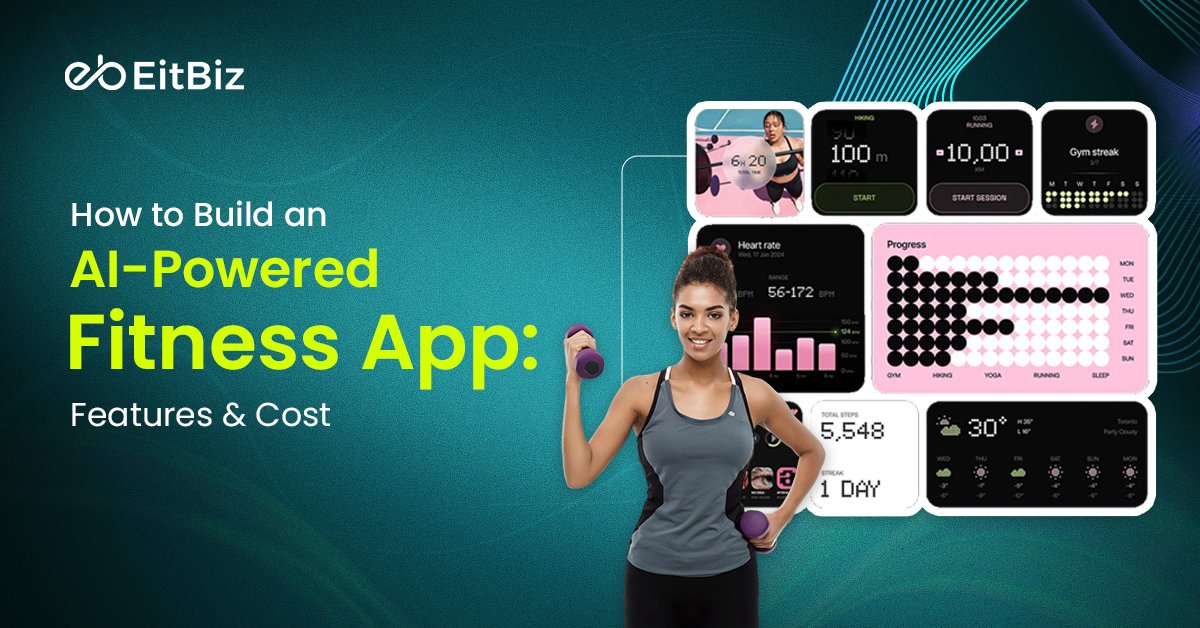
Businesses already understand the concept and are focusing on building an AI-powered fitness app that helps people stay fit while generating revenue for the company.
But why fitness apps?
Well, the stats don’t lie!
The global fitness app market size is all set to reach USD 33.58 billion by 2033, growing at a CAGR of 13.59 from 2025 to 2033. (Source: Grand View Research).
Sounds interesting, doesn’t it!
These AI-driven fitness apps have completely redefined the field of health, and people have also started embracing the trend because of custom workout plans, diet schedules, correction of incorrect movements, performance trackers, and more.
Ready to build your own AI-powered fitness app? If so, let’s dive into the features, cost, and steps for your fitness mobile app development.
What is an AI-Powered Fitness App?
To put it simply, an AI-driven fitness app is a modern workout app that leverages AI to enhance users’ experience and help them achieve their fitness goals. Furthermore, it helps individuals create a custom workout plan, evaluate their progress, and receive continuous feedback.
Many businesses have often built such fitness applications that can analyze all movements and even suggest the right form of exercises, making the experience better. These apps often offer meals and health tips, motivating users to go the extra mile and achieve the physique they want.
What are the Key Market Trends & Insights Related to Fitness App Development?
Here are some popular market trends and insights for building AI-powered fitness apps.
- Last year, fitness apps in the North American region dominated the global market, accounting for the largest revenue share of 39.33%.
- The exercise and weight loss segment accounted for the largest share in 2024.
- Speaking of the platform segment, iOS leads the race with the largest revenue share.
What are the Key Features of AI-Powered Fitness Apps?
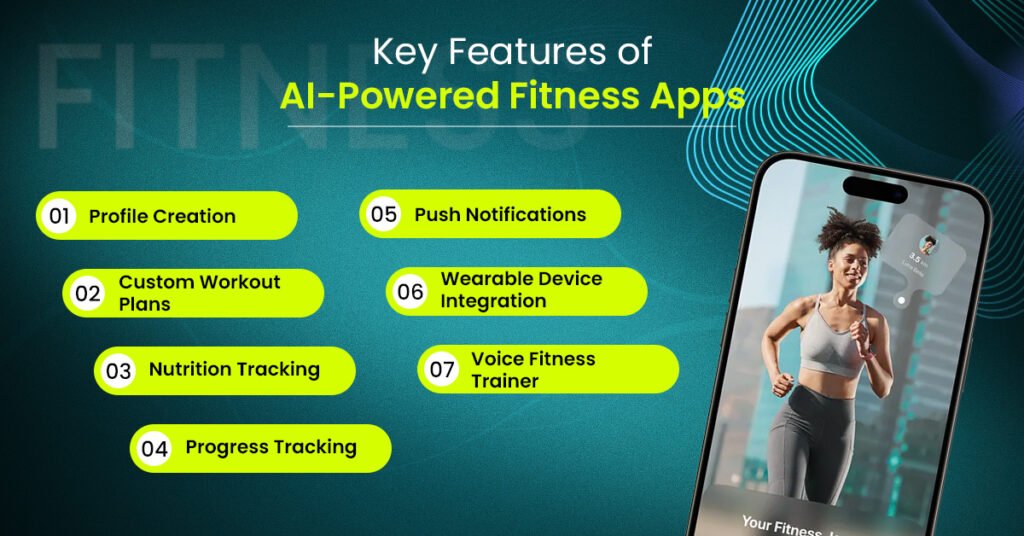
Given that the market is flooded with AI-powered fitness apps, you need to incorporate the right features to make your app stand out. Here are the top features of AI-powered fitness apps.
1. Profile Creation
Users can create their profiles to set their fitness goals, preferences, and health metrics. When the app has this information, it can provide recommendations and tips to users based on the details they enter.
2. Custom Workout Plans
When you’re building an app, including this feature will help you stand out. A user should enter the type of workout they’re interested in, such as strength training, weightlifting, cardio, bodyweight exercises, and more. With the help of AI, the app can create personalized plans based on the data given by a specific user.
3. Nutrition Tracking
Incorporating a nutrition track into your AI-driven fitness app will help users plan their meals. Furthermore, the app will remind users to consume necessary supplements to achieve their goals.
4. Progress Tracking
Ensure you incorporate a progress-tracking feature into the fitness app so users can track their progress through graphs and insights. It will help users to see where they are falling back and plan their workout accordingly to focus on improvements.
5. Push Notifications
During fitness mobile app development, including this feature will send timely reminders to your users about workout times, meal times, and other activities. When users receive notifications, they won’t miss their workout.
6. Integration With Wearable Devices
While building the app, ensure it can be easily integrated with smartwatches so users don’t need to open the app repeatedly. They can easily access the information and track their progress on the go.
7. Voice-Activated Fitness Trainer
It’s an essential feature to incorporate into your AI-powered fitness app, which helps users get feedback during workouts. For example, the app can say “One more rep” or “Hold it for 10 more seconds”. It will engage users more and interact with them like a human trainer.
Now that you have learned about the features of AI-powered fitness app development, it’s time to know the cost to build a fitness app.
{Also Read: From Chatbots to AI Recommendations: Keeping Users Engaged Through Smarter Features}
How Much Does It Cost to Build an AI-Powered Fitness App?
The cost to build an AI-powered fitness app can range from $5,000 to $50,000 or more, depending on features, complexity, tech stack, and app size. To give you a quick overview, here’s an estimate cost of AI-powered fitness app development.
| Feature Set | Development Time | Cost (USD) |
| Basic Fitness App with Pre-Defined Workout Schedules | 2-3 months | $5,000 – $20,000 |
| AI Form Correction with Wearable Integration | 3-5 months | $20,000- $40,000 |
| Complete AI fitness coach, including Chatbot, nutrition, reminders, and analytics | 5-7 months | $40,000 – $50,000 or more |
Note: For monetization, you can implement a subscription plan, a freemium model, in-app purchases, or brand partnership.
Step-by-Step Process to Build an AI-Powered Fitness App
Planning to build a fitness app? If so, here’s how you can build a dedicated AI-powered fitness app for your business.
Step #1: Research & Planning
In the first step, you’ll need to gather information about your users’ needs and the latest market trends. Simply identify the right audience and build the app to cater to their mushrooming needs. It will give you an idea of whether you need to incorporate exercise tracking, form correction, or a meal planning feature.
Step #2: Verify Features & Design
Make sure you list out the features that you want to include in your AI-powered fitness app development. Once you’re done, you need to design an engaging UI/UX that enables smooth, beautiful, lag-free navigation so people can use your app again and again.
Step #3: Invest in the Right Tech
Technology can make or break your app development project. Simply invest in the right AI tech, including machine learning, cloud storage, motion tracking, and more. If your maximum users are on Android, build for Android users; choose iOS if your audience has Apple devices. On the other hand, consider cross-platform app development for both.
Note: If you don’t have enough time or access to the latest technologies, hire the best mobile app development agency in the US that can help in scalable AI-powered fitness app development that attracts, engages, and converts.
Step #4: Testing is a Must
Once you are done with fitness app development, it’s time to launch it. But before that, you should consider rigorous testing to remove bugs and enhance its performance. Ask your AI mobile app development company to test the app across different devices to ensure smooth, bug-free functionality.
Step #5: Launch & Update Regularly
After testing, simply launch your AI-powered fitness app on relevant online stores. Furthermore, once done, start collecting user feedback to make modifications to features, navigation, fonts, or anything else. Provide regular updates so your audience won’t miss out on new tech that could help their workout routine.
Technology Stack for AI Fitness App Development
An AI fitness app needs a technology stack that supports personalization, real-time data processing, scalability, and secure integrations. The right stack helps deliver intelligent workout recommendations, track user progress, and integrate seamlessly with wearables and third-party services.
| Frontend (Mobile App) | React Native, Flutter, Swift (iOS), Kotlin (Android) |
| Frontend (Web Admin Panel) | React.js, Angular, Vue.js |
| Backend Development | Node.js, Python (Django, FastAPI), Ruby on Rails |
| AI & Machine Learning | TensorFlow, PyTorch, Scikit-learn |
| Data Processing & Analytics | Apache Spark, Pandas, NumPy |
| Database | PostgreSQL, MongoDB, Firebase, DynamoDB |
| Cloud Infrastructure | AWS, Google Cloud, Microsoft Azure |
| Wearable & Device Integration | Apple HealthKit, Google Fit, Fitbit API |
| Authentication & Security | OAuth 2.0, JWT, Firebase Authentication |
| AI APIs & Services | OpenAI, Google ML Kit, AWS SageMaker |
| Payment Integration | Stripe, PayPal, Razorpay |
Challenges Founders Face in AI Fitness App Development
Building an AI-powered fitness app is exciting, but it’s far from simple. Founders often enter this space with strong ideas and high expectations, only to discover that combining artificial intelligence, fitness data, and user experience introduces unique technical and business challenges. Below are some of the most common challenges founders face when developing AI fitness apps, along with why they matter.
{Also Read: A Founder’s Guide to Software Development for Startups}
1. Collecting and Managing High-Quality Fitness Data
AI fitness apps depend heavily on data, but getting clean, reliable data is harder than it looks. Founders often struggle with inconsistent inputs from users, wearables, and third-party platforms. One user may track workouts daily, while another skips entries for weeks. This creates gaps that affect AI accuracy. Managing diverse data formats, syncing real-time updates, and handling missing or noisy data further complicates matters. Without high-quality data, even the best AI models fail to deliver meaningful recommendations.
2. Building Accurate and Personalized AI Models
Users expect personalization from day one. But training AI models that truly adapt to individual fitness levels, goals, and limitations takes time. Founders face challenges in selecting the right algorithms, defining training parameters, and avoiding generic outputs. AI models also need continuous improvement based on user behavior. If recommendations feel repetitive or irrelevant, users quickly lose trust. Balancing model accuracy with performance and development timelines remains a significant hurdle.
3. Integrating Wearables and Third-Party Platforms
Wearable integration is essential for AI fitness apps, but it’s rarely smooth. Different devices provide different data types, update frequencies, and access permissions. APIs change, data policies evolve, and syncing errors occur frequently. Founders must ensure consistent data flow from platforms like Apple Health, Google Fit, or Fitbit. Any mismatch can lead to inaccurate tracking and user frustration. Managing these integrations while keeping the app stable requires constant attention.
4. Ensuring Data Privacy and Regulatory Compliance
Fitness apps handle sensitive personal and health data. That brings serious responsibility. Founders must comply with data protection laws like GDPR or HIPAA, depending on the market. Many underestimate the effort needed to implement encryption, secure authentication, and consent management. A single data breach can damage user trust permanently. Building privacy and security into the system from the start is not optional; it’s essential.
5. Balancing Development Costs With Performance Expectations
AI development is expensive. Cloud infrastructure, AI model training, and real-time data processing all increase costs. At the same time, users expect fast performance and seamless experiences. Founders often struggle to balance budget constraints with technical requirements. Overengineering can drain resources, while underinvestment leads to poor app performance. Making intelligent trade-offs early is one of the toughest challenges in AI fitness app development.
Final Thoughts
So, there you have it! That’s a wrap on the AI-powered fitness app development! From custom workout plans to AI-powered coaching, building the right fitness app could be highly beneficial for your target audience and ultimately increase your revenue in the long run. When your users love the app, they will likely recommend it, which will enhance engagement.
Need a helping hand in AI fitness mobile app development? If so, look no further than EitBiz!
We are a dedicated AI mobile app development company that efficiently harnesses proven methodologies and the latest tech stack to build apps that attract users, drive engagement, and convert. Our team of AI mobile app developers is certified and experienced, delivering a secure, scalable fitness app that defines your business, conveys your vision to your audience, and drives substantial revenue.
Are you ready to build a remarkable fitness app for your business? If so, call us at +1(317)463-7064 today!