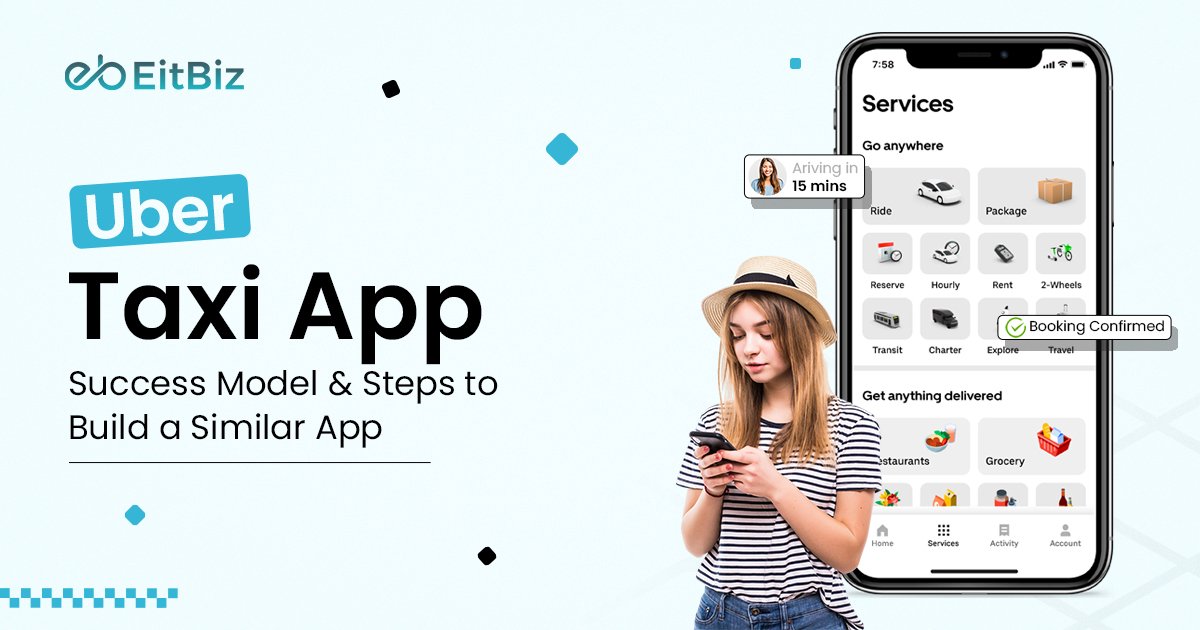
For more than a decade, Uber has reshaped how the world moves. It offered convenience at scale and turned a basic transportation need into a billion-dollar tech ecosystem. The success was not luck or timing alone; it was a structured model built around real-world movement, technology, and a scalable business strategy.
Today, many entrepreneurs, transportation companies, and tech founders want to replicate this success. They ask:
How did Uber grow so rapidly?
Why do users trust it more than traditional taxi systems?
And most importantly, how do we build a taxi app like Uber efficiently and sustainably?
This article answers these questions in-depth. We’ll explore the Uber taxi app’s business model, revenue streams, system architecture, customer acquisition logic, and a practical roadmap for building an app like Uber, including the tech stack, development modules, and cost breakdown.
The Core Uber Taxi App Business Model
The business model revolves around connecting riders who need transportation with drivers who offer rides. Uber acts as a mediator. It doesn’t own vehicles. Instead, it monetizes the network. The scalability of this model is the reason it works in 70+ countries today.
Key Functional Pillars of the Uber taxi app business model:
1. Two-sided marketplace
Uber connects two user groups, riders and drivers. More drivers reduce waiting time. More riders increase driver earnings. This flywheel increases value for everyone.
2. On-demand availability
Instant booking replaces outdated manual phone calls or street searches for taxis. The system uses real-time GPS tracking to auto-match passengers with nearby drivers.
3. Dynamic pricing model
Fare changes based on traffic, demand, supply, and location. Surge pricing helps balance rider and driver distribution and increases revenue during peak hours.
4. Transparent payment workflow
Users see estimated pricing beforehand. Cashless payments reduce disputes and speed up bookings. Drivers receive payouts weekly or daily, depending on the region.
5. Automated rating and review flow
Every ride affects reputation scores. This ensures service quality without external supervision and helps remove unsafe or non-performing drivers.
6. Lean asset approach
Uber doesn’t buy cars. It leverages people’s existing assets to scale. Instead of scaling infrastructure, it scales network participation.
This is why Uber grew without high fixed operational costs. The business model is efficient, scalable, and adaptable.
What are the Features of the Uber App Taxi Business Model?
Before building or analyzing an Uber-like platform, it’s important to understand the core features that make such apps reliable, fast, and scalable. Below is a complete breakdown of features for the rider, driver, and admin panels.
Rider App Features
- Instant Ride Matching
Instantly connects passengers with the nearest available driver using real-time GPS and smart allocation logic to reduce wait times, ensure faster pickups, and improve user satisfaction consistently.
- Live GPS Tracking & Route Optimization
Riders can track routes live, view estimated arrival times, and receive dynamic route adjustments for traffic, ensuring transparency and shorter travel times with minimal confusion.
- Upfront Fare Calculation
The app displays estimated trip cost before booking to avoid negotiation, confusion, or disputes, using distance, time, and regional surge multipliers for accurate pricing.
- Multiple Payment Integrations
Supports cards, wallets, UPI, PayPal, and auto-billing to simplify checkout, improve retention, and encourage cashless experiences across global regions.
- In-App Safety Toolkit
SOS alert, trip sharing, live monitoring, and trusted contacts ensure real-time safety, with emergency assistance integrated directly with local authorities.
- Ride Scheduling & Recurring Trips
Ideal for office commuters and airport travelers, schedule future rides or recurring daily pickups with automated reminders and assured driver availability.
- Smart Ride Preferences
Riders choose vehicle segment, AC preference, quiet mode, luggage capacity, or wheelchair-friendly options for comfort-personalized travel experience.
Driver App Features
- Auto Trip Assignment & Smart Acceptance
Matches drivers with rides based on distance, ratings, and driving patterns, saving fuel and increasing trip conversion, earnings, and utilization rate.
- Real-Time Navigation & Traffic Insights
Integrated direction guidance with live congestion alerts, alternate route suggestions, and toll predictions to reduce delays and improve trip quality.
- Earnings Dashboard & Payout History
Drivers track daily/weekly income, surge bonuses, incentives, and pending settlements transparently, improving trust and motivation to stay active.
- Driver Availability Scheduling
Work flexibly, toggle between online/offline, schedule availability slots, and receive suggestions for high-demand timings and zones.
- Document Upload & Digital Verification
Upload license, RC, insurance, and ID proof securely. AI verification reduces onboarding delay, ensuring faster workforce activation and compliance.
- Heat-Zone Recommendations
Shows zones with surge pricing and high ride requests, guiding drivers to profitable locations and maximizing earnings.
Admin Panel Features
- Unified Fleet, Driver & Rider Control
Approve drivers, monitor trips, resolve disputes, manage documents, accounts, and suspensions, ensuring regulatory compliance and fraud-free operations at scale.
- City-Level Real-Time Trip Monitoring
View every moving vehicle, ongoing ride, unsafe deviation, or suspicious route live, enabling rapid intervention and strong safety control.
- Dynamic Pricing & Surge Automation
Adjust rates by time, traffic, weather, region, or demand. Automated surge increases profitability while keeping the marketplace balanced.
- Promotions, Referrals & Coupon Engine
Launch discount campaigns, referral rewards, loyalty tiers, and free-ride credits to drive growth, retention, and app virality.
- Deep Analytics & Business Intelligence
Track revenue, user churn, success rate, peak-timings, trip volume, lifetime value, and heat-map utilization, enabling data-backed scaling and optimization.
How to Build a Taxi App Like Uber?
Building a successful taxi app requires more than coding; it demands understanding user needs, local markets, and scalable technology. Below is a step-by-step approach for Uber-like app development and ride-sharing app development, designed for clarity and practical implementation.
Step 1: Define Your Target Market and Niche
The first step in creating an app like Uber is to clearly define your target audience. A generic taxi app may struggle against established players. Instead, focus on a niche that aligns with regional demand and user behavior. For example, some cities may require affordable rides for daily commuters, while others might benefit from premium or eco-friendly taxi services. By narrowing your target market, you can design features, pricing, and promotions that appeal specifically to that audience.
Step 2: Identify Core Features for Your MVP
Before investing heavily, plan the minimum viable product (MVP) for your Uber clone app development. The MVP should include essential features like user registration, ride booking, GPS tracking, fare estimation, payment gateway integration, and ratings. For drivers, features should include account verification, ride management, navigation, and earnings tracking. By focusing on core functionalities first, you ensure faster deployment and gather real user feedback.
Step 3: Choose the Right Technology Stack
The success of your Uber-like app development largely depends on the tech stack you choose. For front-end, frameworks like Flutter or React Native allow cross-platform development for iOS and Android. For back-end, Node.js, Django, or Laravel are popular for handling real-time requests. Database solutions such as MongoDB or PostgreSQL are ideal for storing user, driver, and trip data efficiently. Additionally, integrating APIs for maps, navigation, and payments is essential. Selecting the right stack ensures your taxi booking app development is scalable, secure, and fast.
| App Component | Technologies / Tools |
| Frontend (Mobile Apps) | Flutter, React Native |
| Backend Framework | Node.js, Django, Laravel |
| Database | MongoDB, PostgreSQL, MySQL |
| Real-Time Communication | WebSockets, MQTT, Firebase Realtime DB |
| Maps & Navigation | Google Maps API, Mapbox, OpenStreetMap |
| Payments & Wallet | Stripe, Razorpay, PayPal, Braintree |
| Push Notifications | Firebase Cloud Messaging (FCM), Apple Push Notification Service (APNS) |
Step 4: Design Intuitive UI/UX
User experience is critical in how to make an app like Uber. Users prefer apps with minimal friction and instant usability. The passenger app should allow easy location input, one-tap ride booking, real-time GPS tracking, and seamless payments. Driver apps should offer quick ride acceptance, turn-by-turn navigation, and earnings management. The admin panel should provide comprehensive analytics and control over drivers and rides. Prioritising UI/UX in your ride-sharing app development increases user engagement, reduces churn, and boosts ratings.
Step 5: Test Rigorously Before Launch
Before releasing your Uber-like app development to the market, rigorous testing is essential. Perform functional testing to ensure all features work correctly, usability testing for smooth navigation, and performance testing to handle multiple users simultaneously. Security testing must validate payment gateways and data protection protocols. Rigorous QA ensures your Uber clone app development is robust, reducing the chances of negative user experiences at launch.
Step 6: Launch and Promote Locally
Once tested, it’s time for a local launch. Instead of rolling out nationally, start with a single city or region. This localized strategy allows you to manage drivers, ensure ride availability, and respond to user feedback quickly. Use promotions, referral campaigns, and partnerships with local businesses to drive adoption. A well-executed launch strategy can strengthen your taxi booking app’s early traction and position it as a trusted alternative to existing options.
How Much Does it Cost to Build a Taxi App Like Uber?
Cost depends on features, region, development partner, platform (iOS/Android), and tech integration.
| Complexity | Approx Cost |
| Basic MVP | $5,000 – $25,000 |
| Mid-scale App | $25,000 – $45,000 |
| Enterprise-Level Uber Clone | $50,000+ |
Note: If the budget is limited, consider Uber clone app development with custom rebranding and incremental scaling.
Final Thoughts
Uber didn’t win only because of technology. It won because it understood movement patterns, user gaps, and scaled through real-world logic. If you plan to build a taxi app like Uber, start with data-driven decision-making, local compliance, user safety, simple UI, and smart monetization strategies.
And if you want expert guidance, development support, or a reliable tech partner that specializes in mobile app development and full-cycle taxi booking app development, EitBiz is here to help.
At EitBiz, we specialize in Uber-like app development, taxi booking app development, Uber clone app development, and ride-sharing app development with scalable architecture, seamless UI, and advanced GPS-based features. Whether you need an MVP or a full-fledged multi-city launch, we have the experience, technology, and strategy to bring your idea to life.
Ready to turn your taxi app dream into a successful business? Get in touch with EitBiz today & start building your Uber-style app!
Frequently Asked Questions
1. How much does it cost to build an app like Uber?
The cost of developing an Uber-like app can vary a lot depending on features, technology, design complexity, and the team you hire. A basic version with essential ride-booking features may start around $ 5,000, while a full-scale app with real-time tracking, multiple payment options, advanced analytics, and driver management features may cost $50,000 or more. The best approach is to discuss your requirements with a development team so they can provide an accurate estimate of app’s cost based on your goals.
2. Can I launch an Uber-style app in just one city first?
Yes! Many successful taxi apps begin with a single location to test the concept, refine features, and gradually build their user base. Starting local allows you to understand demand, streamline operations, and fix issues before expanding. Once the model works well in one region, you can scale to new cities or even new countries with more confidence and better insights.
3. How long does it take to develop a taxi booking app?
The timeline depends on the project’s size and the features you want. A basic version may take a few months, while a more advanced app with AI-based matching, dynamic pricing, and multi-platform development will take longer. Development usually includes planning, UI/UX design, backend work, mobile app development, testing, and deployment, so having a clear feature list helps speed things up.