Key Takeaways
- dApp development lets businesses build secure, transparent, decentralized apps without central intermediaries.
- Success requires the right blockchain, smart contracts, wallet integration, decentralized storage, and dev tools.
- A structured process, from planning to deployment, reduces risk and improves outcomes.
- Costs typically range from $5,000 to $50,000+, depending on complexity, features, and scalability needs.
Web3.0 products are live every quarter. Building them today is not as difficult. But building one that users trust, developers can maintain, and the business can scale is. At the centre of this challenge are dApps (Decentralized Applications).
Introduced in 2015, but many businesses are still struggling with selecting the right blockchain, overlooking smart contract security, or failing to create a trusted wallet experience. As the Web3 space matures, success increasingly depends on the technical decisions made before launch.
This guide breaks down the essential components of modern dApp development. Continue reading this blog for a more in-depth understanding.
What Are dApps?
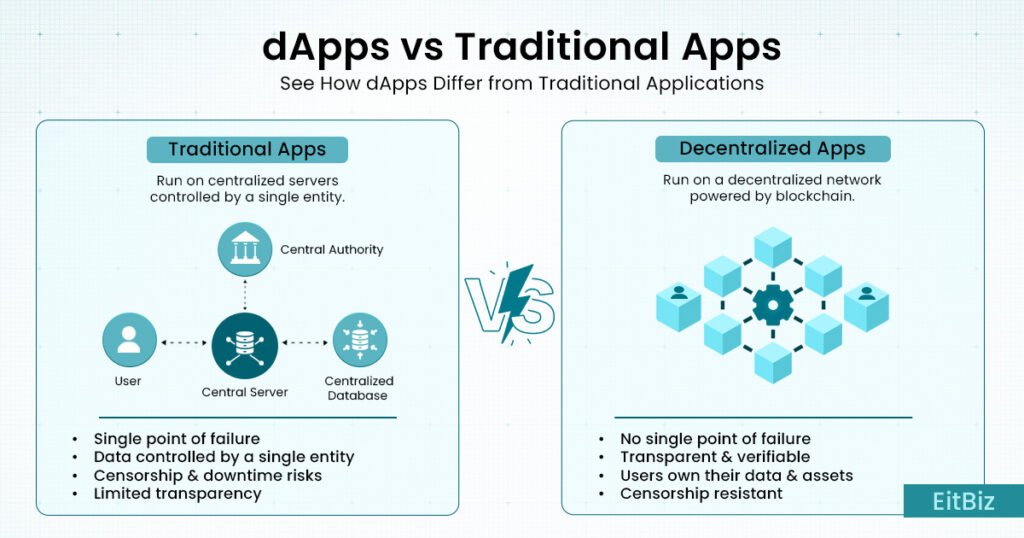
Decentralized Applications (dApps) are software programs that run on a blockchain, a peer-to-peer (P2P) network. These serve various purposes like building fintech apps, games, and social media platforms, and are often built on Ethereum. dApps are highly secure; however, a user must stay cautious while interacting with them.
Why? dApps can have security gaps in the front-end, APIs, and smart contracts, which can still expose users to data breaches and major losses. Web3 security report states that over $2bn has been lost in hacks and scams in 90 days.
Despite security gaps, the prowess of dApps remains unmatched in restoring digital sovereignty and eliminating the middlemen.
- No single point of failure
- Ultimate transparency
- True digital ownership
- Censorship resistance
How does a dApp work?
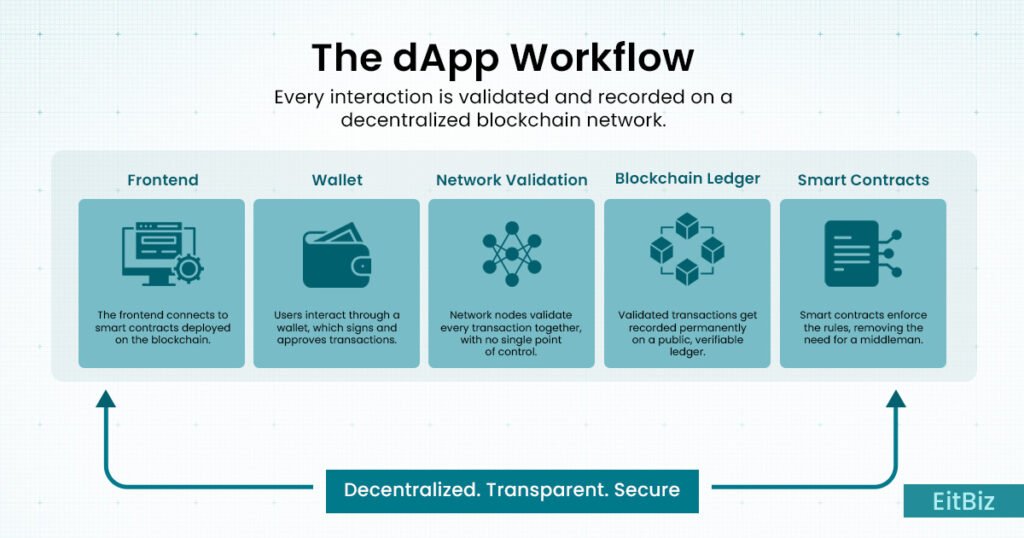
Unlike ordinary apps, dApps don’t run on a single centralized server. Instead, they use a distributed blockchain or peer-to-peer network to keep the application live.
- The frontend connects to smart contracts deployed on the blockchain
- Users interact through a wallet, which signs and approves transactions
- Network nodes validate every transaction together, with no single point of control
- Validated transactions get recorded permanently on a public, verifiable ledger
- Smart contracts enforce the rules, removing the need for a middleman
Key Components Involved in a dApp Architecture
A decentralized application (dApp) relies on several core components that work together to deliver secure, transparent, and efficient operations.
- Frontend & UI: Allows users to interact with the dApp and access its features
- Smart Contracts: Execute business logic and automate blockchain transactions
- Blockchain Network: Records, validates, and stores transactions on a decentralized ledger
- Digital Wallet Integration: Enables user authentication, transaction signing, and asset management
- Oracles: Supplies external data, such as market prices or weather updates
- APIs & Communication Layer: Connects the frontend with smart contracts and blockchain networks
- Backend Services (Optional): Support off-chain functions such as analytics, 667notifications, and reporting
- Decentralized Identity & Governance (Optional): Allows users to participate in platform governance and decision-making
Steps Involved in the dApp Development Process
If you want to build dApps, it requires a strategic development process that balances functionality, security, scalability, and user experience. Here is a list of the structured steps for dApp development.
Step 1: Define the Use Case and Plan the Architecture
Every successful dApp development project starts with a clear understanding of the problem it aims to solve. Businesses must identify a use case that benefits from decentralization, such as digital payments, NFT marketplaces, gaming platforms, and supply chain tracking.
Step 2: Develop Smart Contracts
The next step involves creating the smart contracts that power the application’s core functionality. Developers set up development environments using popular dApp development tools such as Hardhat, Foundry, or Truffle, and write the business logic using languages like Solidity or Rust.
Step 3: Test Smart Contracts in a Local Environment
Before moving to a public blockchain environment, teams thoroughly test their smart contracts locally. This stage helps identify bugs, validate transaction flows, and optimize performance without incurring blockchain transaction fees.
Rigorous testing is a critical part of effective dApps programming and helps prevent costly errors later in the development cycle.
Step 4: Deploy to a Testnet
After successful local testing, developers deploy the smart contracts to a blockchain test network such as Sepolia or Mumbai. This environment allows teams to evaluate how the application performs under real-world conditions while avoiding risks associated with live assets. Contract verification also improves transparency and simplifies future audits.
Step 5: Build the Frontend Interface
Once the blockchain layer is stable, developers create the user-facing application. Using frameworks such as React, Next.js, or Vue.js, they design intuitive interfaces that enable users to interact with blockchain functionality seamlessly.
A skilled dApp developer focuses on creating a frictionless experience that simplifies complex blockchain interactions.
Step 6: Integrate Wallets and Blockchain Services
At this stage, the application is connected to blockchain networks, digital wallets, and supporting services. Wallet integration enables users to authenticate, sign transactions, and manage digital assets securely.
Developers also connect decentralized storage solutions, APIs, and blockchain communication libraries to ensure smooth application performance.
Step 7: Perform End-to-End Testing and Security Audits
Comprehensive testing verifies that every component works together correctly. Teams evaluate smart contracts, wallet interactions, transaction flows, and frontend functionality. Security audits play a crucial role in identifying vulnerabilities before launch, making them an essential part of professional decentralized application development services.
Step 8: Deploy to the Mainnet
After testing and auditing are complete, developers deploy the application to the main blockchain network. Smart contracts become publicly accessible, and users can begin interacting with the platform using real digital assets and transactions.
Step 9: Monitor, Maintain, and Optimize
The development process continues even after launch. Teams monitor performance, track security issues, release updates, and implement new features as user needs evolve. Many businesses partner with a blockchain dApp development company for ongoing maintenance, optimization, and long-term support to ensure their applications remain competitive and secure.
Essential Tech Stack for Building dApps
Each component in a dApp needs the right tools to function well. The table below lists popular options for every layer of the stack.
| Tech Stack Layer | Popular Options |
|---|---|
| Frontend Development | React, Next.js, Vue.js, Angular |
| Smart Contract Development | Solidity, Rust, Vyper |
| Blockchain Network | Ethereum, Polygon, Solana, Avalanche, BNB Chain |
| Wallet Integration | MetaMask, Trust Wallet, Phantom, Coinbase Wallet |
| Blockchain Libraries | Ethers.js, Web3.js, Viem |
| Decentralized Storage | IPFS, Filecoin, Arweave |
| Development Frameworks | Hardhat, Truffle, Foundry |
| Oracle Services | Chainlink, API3, Band Protocol |
| Backend Services (Optional) | Node.js, Python, Firebase |
| Testing & Security Tools | OpenZeppelin, Slither, Mythril |
How Much Does dApp Development Cost?
The cost of building a decentralized application (dApp) usually ranges from $5,000 to $50,000. However, the final cost depends on the application’s complexity, features, blockchain network, security requirements, and overall development scope.
The major factors that affect the cost of developing dApps are:
- Project Complexity: Applications with advanced features, automation, and custom workflows require more development effort.
- Blockchain Network: Development requirements vary across Ethereum, Polygon, Solana, Avalanche, and other blockchain ecosystems.
- Smart Contract Development: Complex smart contracts increase coding, testing, and optimization efforts.
- UI/UX Design: Custom interfaces and enhanced user experiences can raise development costs.
- Wallet and Third-Party Integrations: Integrating wallets, decentralized storage, APIs, and external services adds to the project scope.
- Security Audits: Comprehensive audits are essential for identifying vulnerabilities and protecting user assets.
- Development Team Expertise: Experienced blockchain professionals often deliver higher-quality solutions and faster project execution.
| Project Complexity | Estimated Cost Range |
|---|---|
| Basic dApp | $5,000 – $15,000 |
| Mid-Level dApp | $15,000 – $30,000 |
| Advanced dApp | $30,000 – $50,000+ |
Why is dApp Development Transforming Digital Businesses?
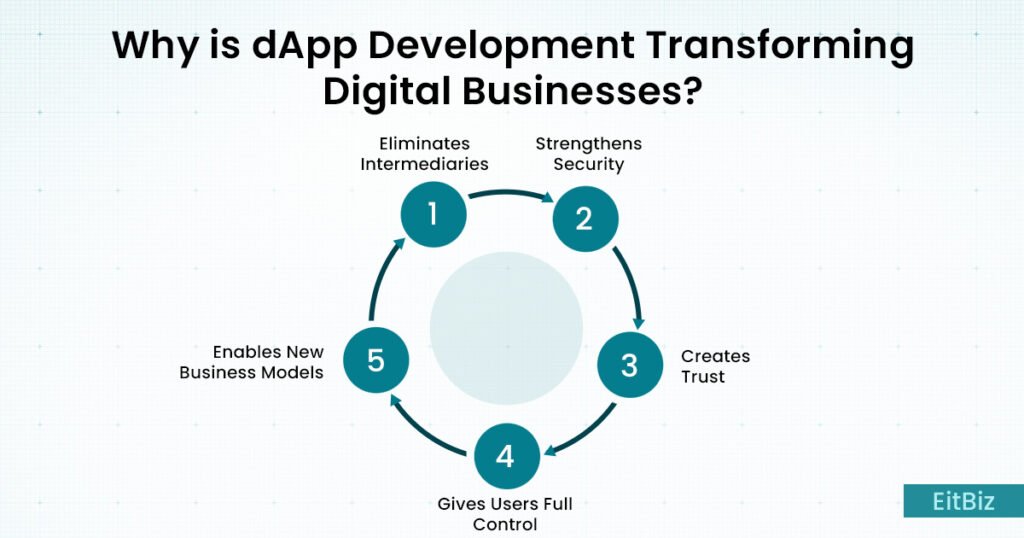
The growing demand for secure, decentralized, and user-centric solutions is driving businesses toward dApp development. Here’s why it’s revolutionizing digital businesses.
Eliminates Intermediaries
Smart contracts automate transactions and workflows without third parties. This cuts operational costs and reduces delays across the process. Payments and supply chains move faster with fewer manual steps.
Strengthens Security
dApps spread data across a blockchain network instead of one server. This removes single points of failure in the system. Unauthorized data changes become far harder to carry out.
Creates Trust
Every transaction gets recorded on an immutable, verifiable ledger. This builds trust with customers, partners, and regulators. Auditing and compliance become simpler with full transaction visibility.
Gives Users Full Control
Users manage their own identity, data, and digital assets directly. No centralized platform stores or controls customer information. This shift puts ownership back in the hands of users.
Enables New Business Models
Businesses can launch decentralized marketplaces and tokenized ecosystems with dApps. These models operate without geographical limits. OpenSea proved this by letting users trade NFTs without intermediaries.
Real-World Examples of dApp Development
The growing adoption of dApp development across industries demonstrates the practical value of decentralized applications. Here are some notable use cases:
NFT Marketplaces
NFT marketplaces enable users to create, buy, sell, and trade digital assets without relying on centralized intermediaries. Platforms like OpenSea have transformed digital ownership by allowing creators to monetize artwork, collectibles, music, and virtual assets through blockchain technology.
DeFi Platforms
Decentralized finance applications provide services such as lending, borrowing, staking, and token swapping without traditional banks. Platforms like Uniswap and Aave showcase how DeFi dApp development is reshaping financial services.
RWA Tokenization Platforms
Real-World Asset (RWA) tokenization converts physical assets such as real estate, commodities, artwork, or bonds into blockchain-based digital tokens. This approach improves liquidity, enables fractional ownership, and broadens investment access. As a result, RWA tokenization is becoming one of the fastest-growing segments in decentralized application development services.
Blockchain Gaming
Gaming dApps allow players to own, trade, and monetize in-game assets. Blockchain-based ownership models create new revenue opportunities for both players and developers while enhancing transparency within gaming ecosystems.
What are the Challenges in dApp Development?
While building dApps offers significant advantages, businesses must address several challenges to ensure successful implementation.
Scalability Constraints
Many blockchain networks experience limitations in transaction throughput, which can affect application performance during periods of high demand.
Security Risks
Smart contract vulnerabilities, coding errors, and wallet-related attacks can expose users and businesses to financial losses if proper security measures are not implemented.
User Experience Complexity
Wallet setup, private key management, and transaction approvals can create friction for new users. Simplifying onboarding remains a major priority for dApp developers.
Regulatory Uncertainty
Blockchain regulations continue to evolve across different jurisdictions. Businesses must stay informed about compliance requirements when launching decentralized applications.
Integration and Maintenance Challenges
Integrating wallets, decentralized storage, blockchain networks, and third-party services can increase development complexity. Ongoing monitoring and updates are also necessary to maintain performance and security.
How EitBiz Helps Businesses Build Secure and Scalable dApps?
Building a successful dApp takes more than blockchain integration. Businesses must choose the right network, design scalable architecture, secure smart contracts, integrate wallets, and deliver a smooth user experience. Without the right expertise, this leads to higher costs and longer timelines.
This is where we come in as your dApp development partner. We help you simplify the development process and speed up deployment. We build decentralized applications that are secure, scalable, and ready for growth.
We offer end-to-end dApp development services built around your business goals. As a blockchain dApp development company, we build custom decentralized applications across finance, healthcare, gaming, supply chain, and e-commerce.
From choosing the right blockchain to launching on mainnet, we guide you through every step. Our team handles smart contract development, wallet integration, and secure architecture design. You get a dApp built to scale with your business.
Contact us today to discuss your project. Let us help you turn your idea into a live, decentralized application.