If you’ve ever wondered how apps like MyFitnessPal dominate the health tech space, you’re not alone.
As fitness and wellness move deeper into our daily routines, digital tools are becoming the go-to choice for millions of users worldwide.
Fitness apps aren’t just a trend; they’re a fundamental part of how people manage their health every day. In 2024, health and fitness app downloads hit approximately 3.6 billion worldwide, showing steady annual growth as more people invest time and money in digital health tools.
Apps like MyFitnessPal not only track daily calories but have become lifestyle companions, helping users manage workouts, nutrition, goals, and long-term wellness.
In 2023, MyFitnessPal generated over $310 million in revenue and boasted 200 million users, making it one of the most successful fitness platforms ever built.
Did you know that even in 2026, MyFitnessPal is a leading health app with over 200 million users worldwide as of 2026.
So how do you build something like this? Is it worth the investment? What goes into the fitness app development process? And how much should you expect to spend? Let’s break it down, in plain language, from idea to launch.
Why Fitness Apps Still Matter Today?
Before we dive into the “how-to,” it helps to understand why these apps are so valuable.
- People use fitness and health apps for tracking, motivation, and accountability, especially in a world where personalized coaches are expensive and time-consuming.
- Consumer spending on fitness apps has risen year after year, with millions choosing premium subscriptions instead of free versions.
- Integration with wearables (like Apple Watch and Fitbit) and smart tech is now common, giving users real-time data and personalized feedback.
Take the example of global fitness trends: in 2025, MyFitnessPal consistently ranked among the top downloaded fitness apps, alongside trackers and activity platforms.
This shows that demand isn’t slowing; it’s evolving. People want better insights, smarter recommendations, and apps that feel like personal trainers without the cost of a human coach.
What is a Fitness App?
At its core, a fitness app is a software application designed to help people improve or manage their health and wellness goals. There are different types:
Nutrition & Diet Tracking
Apps that help users log meals, count calories, track macros, and monitor nutrition.
Workout & Training Platforms
Apps with guided workouts, training scheduling, and personalized fitness plans.
Activity Trackers
Platforms that sync with wearable devices to monitor steps, heart rate, and sleep patterns.
Hybrid Solutions
Combinations of all the above, like MyFitnessPal with food logging, activity tracking, progress dashboards, and more.
Each of these requires different development investments, technical expertise, and user experience considerations.
What Features Should Your App Include?
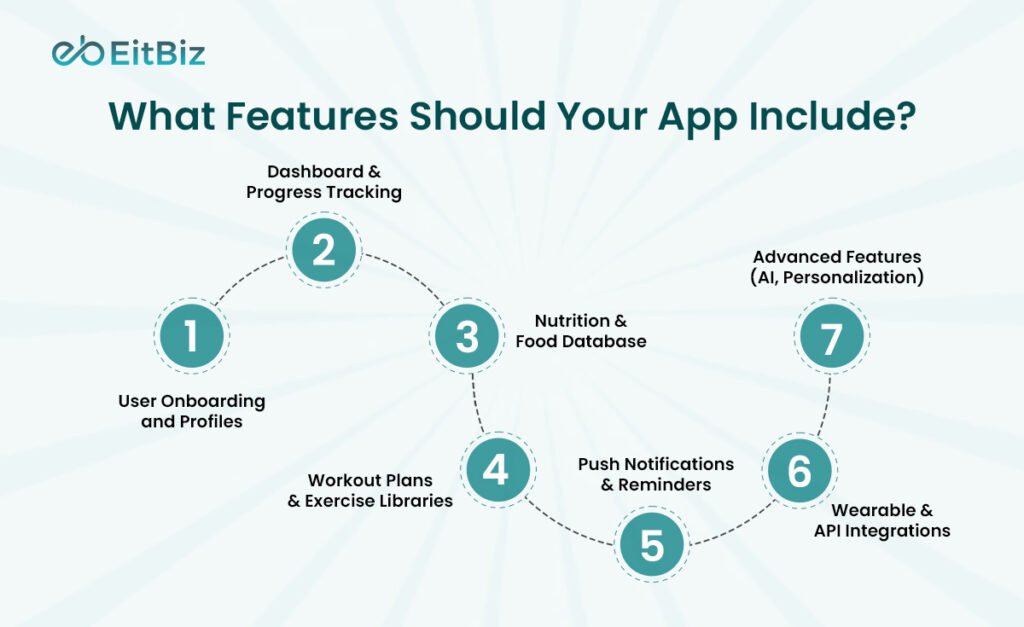
To understand how to develop a fitness app, you need to know what features matter most and why. Here are the core categories:
1. User Onboarding and Profiles
Users must be able to:
- Register with email or social sign-in
- Create profiles with demographic info
- Set fitness goals (weight loss, muscle gain, etc.)
A seamless onboarding experience builds trust and reduces early churn.
2. Dashboard & Progress Tracking
Users expect a central dashboard:
- Daily activity summary
- Calories burned vs. calories consumed
- Progress over time (weekly/monthly trends)
This is where users check in repeatedly, so a clean UI/UX is essential.
3. Nutrition & Food Database
One of MyFitnessPal’s biggest strengths is its massive food database. Users can:
- Search foods
- Scan barcodes
- Log meals with calorie and macro breakdowns
Building or licensing such a database is a significant task, but it’s a major value driver.
4. Workout Plans & Exercise Libraries
Whether users want beginner workouts or advanced training, structured plans and curated exercise libraries keep them engaged.
Include:
- Video demonstrations
- Custom routines
- Save and repeat predefined workouts
5. Push Notifications & Reminders
Push notifications are one of the most effective ways to keep users engaged.
- Reminders to log meals
- Alerts for workouts
- Progress nudges
This helps improve user retention.
6. Wearable & API Integrations
Integrations with Apple HealthKit, Google Fit, and wearables dramatically expand your app’s capabilities.
70%+ of users connect their fitness apps to wearables, making this feature a near necessity.
7. Advanced Features (AI, Personalization)
As the fitness space gets more competitive, features like:
- AI-powered coaching
- Personalized workout and diet recommendations
- Social challenges and gamification
- Real-time analytics
…are becoming differentiators.
Steps in the Fitness App Development Process
Building a successful fitness app like MyFitnessPal doesn’t happen overnight. It requires clear planning, structured execution, and collaboration with experienced health and fitness app developers. Let’s break down the fitness app development journey into actionable steps, so you know exactly what to expect.
1. Define Your Core Idea
Before writing a single line of code, start by clarifying your app’s purpose. Ask yourself:
- What problem does my app solve for users?
- Who is my target audience: beginners, fitness enthusiasts, or professionals?
- Do I want an MVP (minimum viable product) first or a full-featured platform?
Defining your core idea upfront saves time and money. It also sets the stage for efficiently developing a fitness app workflow, helping your team prioritize features that truly matter.
2. Design UX/UI
Once the concept is clear, the next step is designing the user experience. Fitness apps thrive on simplicity, so your UI must be intuitive and visually appealing. Key considerations include:
- Easy navigation and minimal steps to log workouts or meals
- Engaging dashboards that display progress clearly
- Responsive design for both iOS and Android devices
Working with a skilled mobile application development company ensures your app looks professional while keeping users engaged, reducing the risk of churn.
3. Choose Your Tech Stack
Choosing the right technology stack is critical for fitness mobile app development. Your options generally include:
- Native development: Swift for iOS and Kotlin/Java for Android
- Cross-platform development: Flutter or React Native
Native apps deliver better performance but can be more expensive. Cross-platform frameworks save time and reduce costs without sacrificing functionality. Your choice affects both the cost to develop a fitness app and long-term scalability.
4. Development Sprint
With designs and tech stack in place, development begins. The process usually splits into backend and frontend tasks:
- Backend: Handles servers, APIs, databases, authentication, and data storage. Accuracy is crucial for features like nutrition tracking and progress analytics.
- Frontend: Brings the design to life. Developers implement screens, interactive elements, and connections to backend systems.
Agile sprints are common in developing a fitness app, allowing teams to build features incrementally and gather feedback quickly.

5. Testing & Quality Assurance (QA)
Testing is a critical stage in fitness app development. A small bug can undermine trust, especially when users rely on your app for health tracking. QA involves:
- Functional testing to ensure features work as intended
- Performance testing for speed and smooth interactions
- Integration testing with wearables, APIs, and third-party services
- Security testing to protect sensitive health data
Working with experienced health and fitness app developers ensures your app meets quality standards before release.
6. Deployment
Once testing is complete, it’s time to launch your app. Deployment involves:
- Publishing on Apple App Store and Google Play Store
- Ensuring compliance with platform guidelines
- Setting up analytics and crash reporting tools for monitoring
A proper deployment plan reduces downtime and ensures users can download your app seamlessly.
7. Post-Launch Support & Updates
The app launch is just the beginning. User feedback drives improvements, and ongoing updates are essential to stay competitive. Typical post-launch activities include:
- Fixing bugs and addressing user-reported issues
- Rolling out new features based on analytics and trends
- Enhancing UX/UI for smoother interaction
Long-term support is a key aspect of fitness app development challenges. Apps that remain static tend to lose users quickly, while continuous updates encourage engagement and retention.
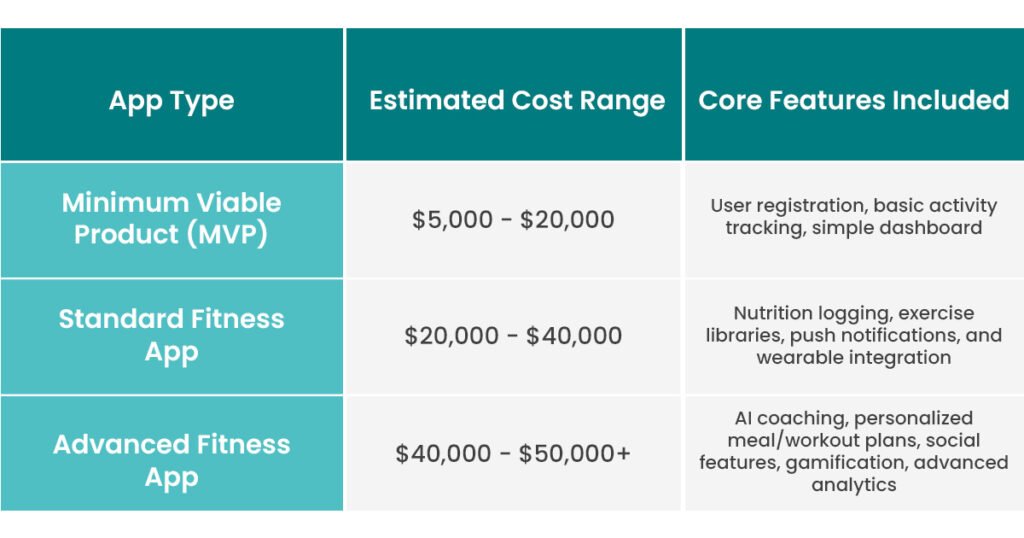
How Much Does it Cost to Build a Fitness App?
When planning your fitness mobile app development, it’s important to understand the typical cost ranges based on app complexity and features:
Factors That Influence Fitness App Development Cost
The cost to develop a fitness app isn’t fixed. Multiple factors directly affect your budget, timeline, and final product quality. Understanding these elements helps you plan efficiently and avoid surprises during fitness mobile app development. Let’s break them down.
1. Feature Complexity
The more features you include, the higher the development effort and cost. Basic tracking apps are simpler and cheaper, while advanced features like AI-powered coaching, meal suggestions, social challenges, and gamification require extensive coding, testing, and integration.
When developing a fitness app, clearly prioritize features. Launching an MVP first can help you validate ideas without overspending.
2. Platform Choices
Deciding whether to launch on iOS, Android, or both impacts your budget significantly:
- Native apps for each platform require separate codebases, increasing cost.
- Cross-platform solutions like Flutter or React Native reduce time and expense but may limit certain platform-specific features.
Your choice also affects maintenance and updates, which are ongoing parts of fitness app development challenges.
3. Design Customization
Custom UI/UX design improves user engagement but adds to development costs. Features like interactive dashboards, animations, personalized themes, and adaptive layouts require more designer and developer hours.
Working with an experienced mobile application development company ensures your app looks professional while keeping costs optimized.
4. Integrations
Integrating third-party services like wearables (Apple Watch, Fitbit), nutrition databases, or cloud APIs adds complexity. Each integration requires testing, error handling, and continuous support.
These integrations are essential for a competitive app, but they increase the cost to develop a fitness app. Planning integrations strategically helps manage expenses.
5. Security and Compliance
Fitness apps handle sensitive health data, so security is non-negotiable. You must comply with laws like GDPR, HIPAA (for certain markets), and implement secure authentication and encrypted storage.
While necessary, security features increase development time and cost, making them a crucial factor in fitness app development challenges.
6. Team Location and Expertise
Finally, the team you choose has a major impact on cost. Hiring top-tier health and fitness app developers or a reputable mobile application development company in North America or Europe usually costs more than offshore teams in Asia or Eastern Europe.
However, higher rates often mean faster delivery, fewer errors, and long-term support, which can save money over time.
What are the Challenges in Fitness App Development?
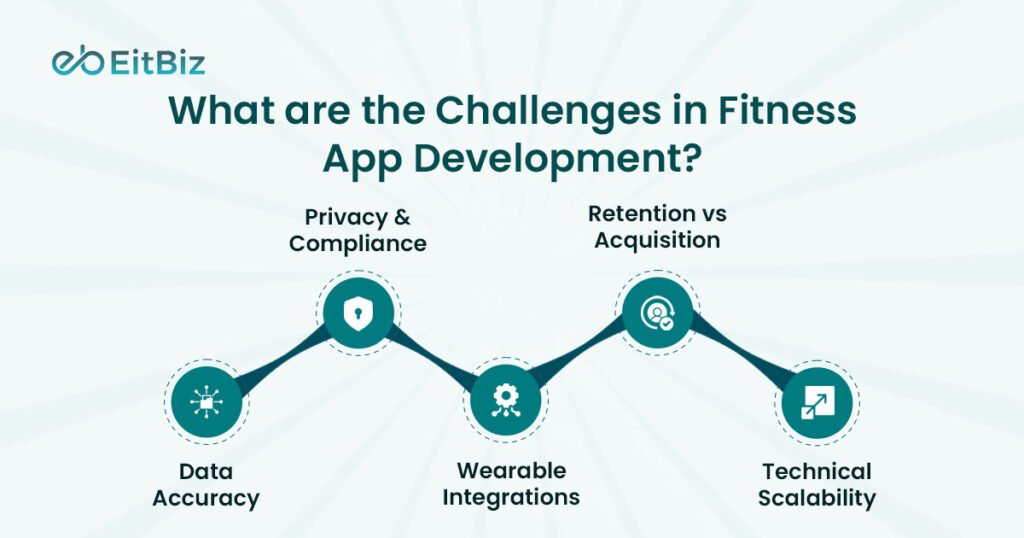
Building a fitness app like MyFitnessPal is exciting, but it comes with unique hurdles. From handling sensitive health data to ensuring smooth performance across devices, understanding these fitness app development challenges helps you plan better and avoid costly mistakes. Let’s explore the most common issues developers face and strategies to overcome them.
1. Data Accuracy
Users trust your app to track calories, workouts, heart rate, and other health metrics. Even small inaccuracies can damage credibility and lead to user churn.
- Logging errors, database inconsistencies, or miscalculations in algorithms can affect user trust.
- Accurate food databases, verified exercise libraries, and precise calculation methods are essential.
When developing a fitness app, investing time in data validation and testing ensures your app delivers reliable results, which is critical for long-term success.
2. Privacy & Compliance
Fitness apps deal with sensitive health data, making privacy and compliance non-negotiable. Laws like GDPR in Europe, HIPAA in the US, and local regulations in other markets govern how data is stored, processed, and shared.
- Secure authentication, encrypted storage, and user consent protocols are mandatory.
- Failure to comply can result in legal penalties and loss of user trust.
Partnering with experienced health and fitness app developers or a reputable mobile application development company ensures your app meets all security and compliance requirements.
3. Wearable Integrations
Most modern fitness apps rely on data from smartwatches, fitness bands, and other IoT devices. Integrating multiple wearables is complex:
- Each device has different APIs and data formats.
- Syncing data in real time without errors requires a robust backend architecture.
Handling these integrations efficiently is a critical part of fitness mobile app development. Well-executed integrations improve user experience and retention.
4. Retention vs Acquisition
Acquiring users is just the first step. Retaining them is a bigger challenge. Fitness apps often see high churn if users don’t feel progress or engagement.
- Notifications, gamification, social challenges, and progress tracking are essential for keeping users active.
- Poor onboarding or complicated workflows can discourage users early.
Understanding the psychology of fitness app users and designing for engagement is a key strategy for overcoming this fitness app development challenge.
5. Technical Scalability
Apps can grow quickly, especially if they become popular or go viral. Your backend must handle increasing users and data without crashing.
- Scalable cloud infrastructure and load balancing are crucial.
- Poorly designed systems can lead to slow performance, outages, or data loss.
Planning scalability during fitness app development avoids costly redesigns later and ensures your app can support millions of users if it succeeds.

How Should You Plan Your Launch Strategy and Marketing?
Launching a fitness app is just as important as building it. Even a well-designed app can fail if users don’t know it exists or don’t see its value. Effective marketing ensures your fitness mobile app development investment reaches the right audience and converts downloads into active users.
Pre-Launch
The pre-launch phase sets the foundation for a successful debut. Start by creating buzz around your app: tease features on social media, run early email campaigns, and offer beta access to a select group of users. Collecting feedback during beta testing is invaluable; it helps you fix bugs, optimize the user experience, and refine messaging before your official release. Collaborating with experienced health and fitness app developers ensures your app is technically ready and smooth for early testers.
Launch
When you’re ready to go live, focus on making a strong first impression. Submit your app to the Apple App Store and Google Play Store, ensuring compliance with all guidelines. Simultaneously, implement a marketing push through press releases, influencer partnerships, and social media campaigns targeting fitness enthusiasts. Highlight unique features, such as AI-powered coaching, nutrition tracking, or wearable integrations, to differentiate your app in a crowded market. A well-executed launch amplifies visibility and increases initial downloads.
Post-Launch
After launch, the work isn’t done. Monitor user analytics closely to understand engagement patterns, feature usage, and churn rates. Collect reviews, respond to feedback, and release timely updates with bug fixes or new features. Post-launch marketing can include community challenges, referral programs, and push notifications to retain users and encourage long-term engagement. Continuous improvement and attentive support are key components of developing a fitness app that grows sustainably.
How the right development approach can turn a fitness idea into a scalable, user-focused app.
What Does the Future Hold for Fitness Apps?
The fitness app industry is evolving faster than ever, driven by technology, user expectations, and lifestyle trends. For anyone developing a fitness app, understanding where the market is headed is crucial for staying competitive and creating long-term value.
AI and Machine Learning Will Personalize Experiences
Artificial intelligence is transforming fitness mobile app development by making workouts and nutrition plans more personalized. Apps can now analyze user behavior, performance, and health data to provide custom recommendations. Imagine a platform that adjusts your workout intensity in real-time or suggests meals based on your caloric burn that day. AI makes this possible, increasing user engagement and improving results.
Wearables and Real-Time Data Will Become Standard
The future of fitness apps is inseparable from wearables like smartwatches, fitness bands, and heart rate monitors. These devices provide real-time data that apps can use to track performance, sleep, stress levels, and recovery. Future apps will integrate seamlessly with multiple wearables, providing richer insights without manual logging, a key trend for health and fitness app developers to embrace.
AR/VR and Immersive Workouts
Augmented reality (AR) and virtual reality (VR) are starting to redefine how users engage with workouts. Picture guided yoga sessions in immersive virtual landscapes or cycling through virtual routes while monitoring heart rate and performance stats. These innovations make fitness fun, interactive, and more engaging, setting a new standard for fitness app development.
Holistic Health and Mental Wellness Integration
Future fitness apps won’t just focus on calories burned or steps taken. Mental health, mindfulness, sleep, and stress management are becoming integral to overall wellness. Platforms will combine physical fitness with meditation exercises, sleep tracking, and mood monitoring to create holistic wellness experiences. Apps that address both body and mind will attract more users and increase retention.
Data-Driven Gamification and Community Features
Gamification is becoming more intelligent. Future apps will use AI and data analytics to create personalized challenges, social competitions, and rewards that keep users motivated. Community features like group challenges or social sharing will enhance engagement while encouraging healthy habits. These approaches are essential for overcoming retention vs acquisition challenges in fitness app development.
Insurance and Health Incentives
The integration of fitness apps with health insurance and wellness programs is on the rise. Insurers may reward users for meeting fitness goals, tracking workouts, or maintaining healthy lifestyles. Apps that can connect with healthcare systems or wellness programs will not only provide value to users but also create new revenue opportunities for developers.
Final Thoughts
Building a fitness app like MyFitnessPal is both exciting and challenging. From defining your core idea, planning features, and managing fitness app development challenges, to budgeting for the cost to develop a fitness app and implementing effective marketing, every step plays a crucial role in your success.
The key takeaway is simple: focus on delivering real value to users. Accurate tracking, seamless integrations with wearables, engaging dashboards, AI personalization, and gamification are no longer optional; they are expected. Coupled with smart monetization strategies like freemium models, in-app purchases, ads, and affiliate marketing, your app can attract users, retain them, and generate sustainable revenue.
As the industry evolves, trends like AR/VR workouts, mental wellness integration, AI-driven coaching, and insurance-linked incentives will redefine what users expect. Staying ahead requires foresight, technical expertise, and a partner who understands both technology and the health space.
If you’re looking to develop a fitness app that stands out in this competitive market, working with an experienced mobile application development company is essential. EitBiz specializes in fitness mobile app development, helping startups and enterprises turn ideas into fully functional, scalable apps. From strategy and design to development and launch, we ensure your app delivers value, engages users, and succeeds in the evolving health tech ecosystem.
Ready to turn your fitness app idea into reality? Contact EitBiz today to get started and bring your vision to life with expert guidance, cutting-edge technology, and a team that understands the health and fitness industry inside out.