Enterprises face growing cyber risks as they expand cloud services, support remote work, and connect more business systems. According to an investigation report, third-party involvement doubled to 30% of breaches, while attacks exploiting vulnerabilities rose by 34%.
These threats make traditional security models less reliable because they are typically suitable for static business environments. However, with increasing reliance on AI, it becomes crucial to save businesses from the evolving cyberthreat. Models like zero trust security play a pivotal role in strengthening the guardrails by implementing their core principle, “never trust, always verify.”
This blog explains how enterprises can adopt Zero Trust, understand its core components, address implementation challenges, and align security efforts with long-term business goals.
Why Enterprises Need a Zero Trust Approach
Businesses need a secure network that management and clients can trust, but credential stuffing, low-security networks, or malicious staff actions can put key business data at risk.
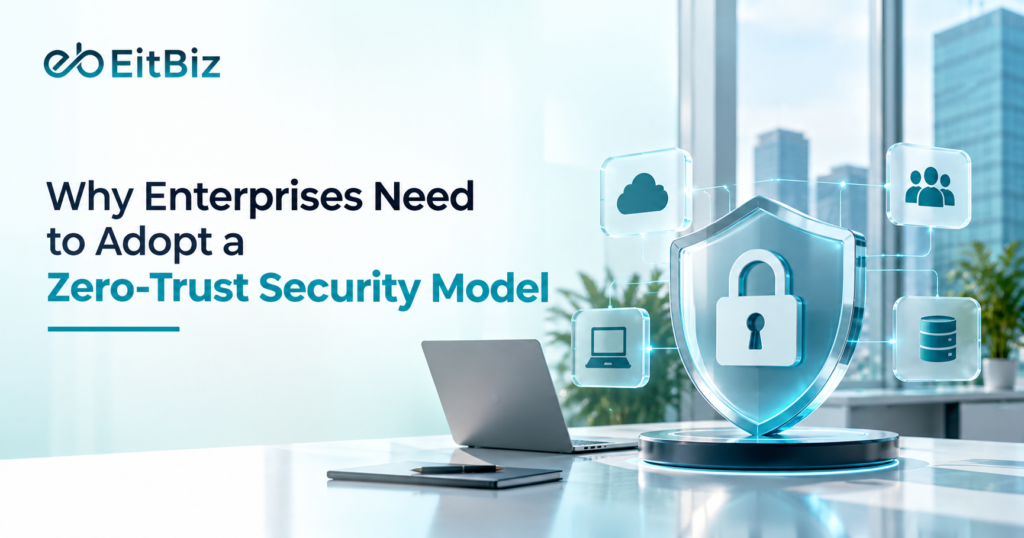
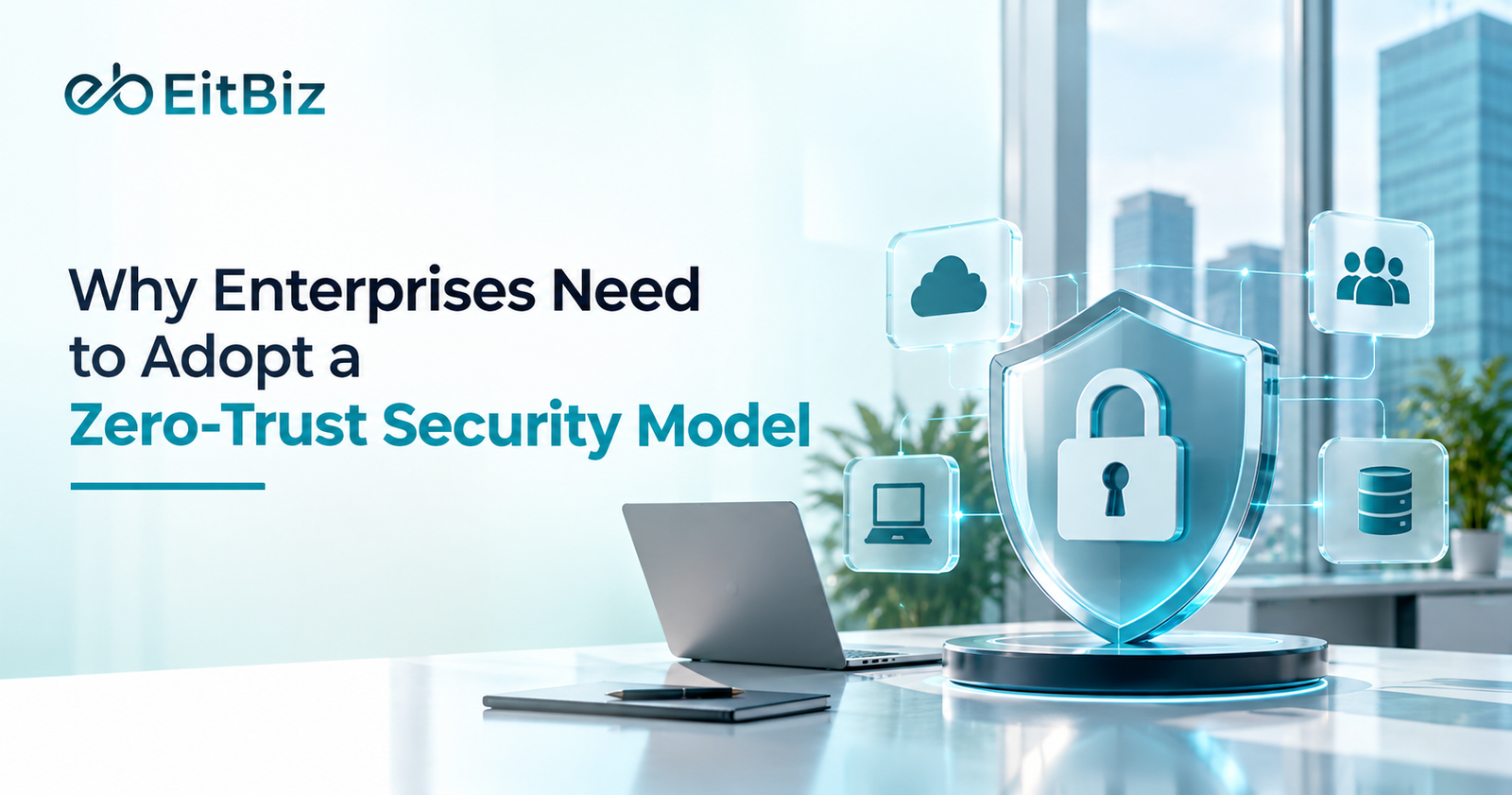
A strong enterprise cybersecurity strategy helps businesses protect sensitive data. A zero-trust security approach always verifies every request before granting the permissions users require.
Key business benefits include:
- Block access to key business tools.
- Guard data across remote work sites.
- Support safe cloud use and remote work.
- Limit harm from security attacks.
- Meet rules and lower business risks.
This approach supports modern cybersecurity by linking safety plans with business goals and clear results.
Business Drivers Behind Security Transformation
Companies use many tools and work with many partners. They need clear rules to keep data safe. Laws, customer needs, and partner links also push firms to improve how they control access. Zero trust protects firms and supports modern cybersecurity strategy during their daily work while they grow and adopt new tech.
Core Components of an Effective Zero Trust Framework
Zero trust network security works on a few key rules that help firms set clear access limits and track what happens across their systems.
The core parts include:
- Check each request before granting access.
- Give users only the access they need.
- Track user actions to spot strange behavior.
- Split networks to contain security threats.
- Apply clear rules across cloud systems.
It helps to remove unnecessary access and protect systems from attacks.
Strengthening Identity, Authentication, and Access Controls
This is a practical solution for rising cybersecurity issues. It protects business data from credential stuffing by attackers. Firms should create strong login checks, set clear access rules, and review them often.
Multi-factor authentication provides a double layer of security, which helps businesses secure their network in an advanced manner during any kind of internal and external change.
How Zero Trust Security Works in Enterprise Systems
A strong zero trust implementation needs a clear plan that keeps work running. Firms do not need to replace every tool at once. They can start with key assets and add stronger checks in steps.
Step 1: Assess Risks and Define Priorities
Before firms choose security tools, they need to know what systems they use, who can access them, and where gaps exist. An AI readiness assessment plays a critical role in auditing data classification, sensitivity labels, and data pipelines to help you strengthen your digital security.
Recommended actions include:
- Map key data and business apps.
- Find weak access rules and security gaps.
- Check risks across users and devices.
- Set clear safety and business goals.
By guarding key assets first, teams can use funds well and show leaders clear progress.
Step 2: Implement Controls and Integrate Systems
Once teams set their goals, they can add strong login checks, device checks, network limits, and activity tracking. They must also make sure these tools work with current systems.
Firms that use customized software development should build safety checks into their app plans. In a microservices architecture, teams must also track service IDs and guard data that moves between parts.
Key steps include:
- Link identity checks with business apps.
- Check device health before allowing access.
- Separate key tasks and sensitive systems.
- Apply clear rules across linked tools.
A step-by-step rollout helps teams find gaps, fix issues, and grow their security plan without stopping daily work.
Step 3: Monitor, Measure, and Improve
This security model works on an ongoing basis; teams need to access it regularly to update rules as risks and business needs change. It guards enterprise application development, failed login attempts, rule breaks, and access to key accounts. Regular reviews help leaders see what works and where they need stronger checks.
Integrating Zero Trust with Modern Enterprise Technology
Many firms use cloud tools, smart devices, modular apps, and older systems. Their safety rules must cover each tool and close any gaps.
For example, MACH architecture uses small linked parts that need clear access rules. This includes safe login steps and clear user rights; it can check device IDs and limit network access. Teams should also add safety checks for AI working platforms, mainly when tools use private data or link to outside services.
Firms can boost safety by:
- Guard cloud systems and business apps.
- Protect APIs and links between services.
- Check access across connected devices.
- Add safety checks during each build stage.
- Track activity across all linked systems.
These steps help firms guard their tools as they add new services.
Common Zero Trust Implementation Challenges and Solutions
Zero Trust can bring issues such as hard system links, staff concerns, and tight budgets. Older apps may lack support for new login tools. Strict rules can also block real work if teams skip testing. Firms can solve these issues through clear plans, tests, and step-by-step changes.
| Implementation challenge | Recommended solution |
|---|---|
| Older systems | Add checks in small steps. |
| Login issues for staff | Make login steps simple. |
| Poor view of system activity | Keep logs and track key events. |
| Complex app links | Map links before setting access rules. |
| Tight budgets | Guard key assets and track results. |
Teams that use full-stack development services can also add app safety checks during design and build work. Staff training, clear roles, and rule tests help firms guard their systems without slowing daily tasks.
Aligning Zero Trust with Long-Term Business Strategy
A successful implementation of this model requires a systematic approach to phased development for ongoing optimization to achieve its security objective. Organizations can focus on adaptations strategically rather than attempting a complete transformation at the same time across the whole system.
Building Security into AI
As companies adopt AI development, they must protect the data, systems, and tools that power their AI solutions. Strong access rules help teams limit who can use sensitive data and keep AI systems within approved boundaries.
Secure Your Software Development
Through custom software development, businesses can add security checks from the start of a project. Teams can set user access rules, protect key data, and test for risks before they launch an application.
Empower the Zero Trust Security Model With EitBiz
Cyber threats have grown a lot lately. Implementing a basic security model won’t provide the necessary guardrails required to safeguard your data. One cyberattack and your years of credibility can be in vain. Here, the inclusion of a promising approach can bring significant advantages to a business. Zero Trust security is one such model that further strengthens your security pipeline by implementing a verify-first approach. Its precise implementation requires expertise, and working with an experienced partner like EitBiz can help you build one.
With over 9 years of experience in the industry, we have worked across businesses serving different industries and have built solutions specific to their security needs. From implementing role-based access to applying a complete zero-trust model, our team understands the “why” behind the implementation of modern security models. We take data privacy seriously and implement it right from the start.